
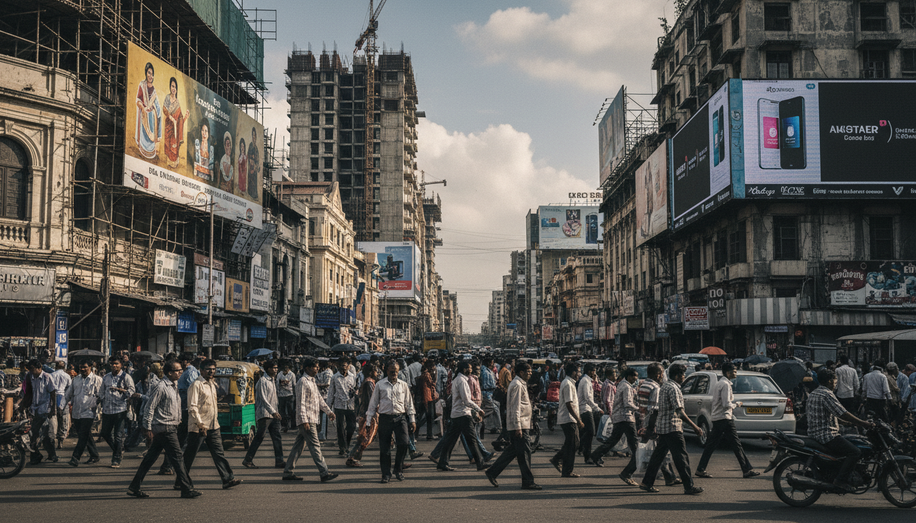

As urban populations swell toward an estimated 68% of the global total by 2050, outdoor advertising faces both unprecedented opportunities and profound challenges in capturing attention amid the chaos of megacities. Rapid urbanization, marked by denser populations, expanded transit networks, and evolving consumer mobility, is reshaping how out-of-home (OOH) campaigns are designed, placed, and measured. In high-growth centers like Philadelphia, where 2026 events including the FIFA World Cup and semiquincentennial celebrations are drawing millions, advertisers must adapt to infrastructure upgrades and shifting foot traffic patterns that amplify visibility but demand precision targeting.
Strategic placement has always been the cornerstone of OOH success, but urbanization intensifies its importance. City centers, transit hubs, and retail corridors now teem with pedestrians and vehicles, offering brands access to diverse demographics spending more time in public spaces. High-traffic zones such as highways, bus shelters, and urban panels provide mass awareness through formats like billboards and street furniture, which remain dominant even as digital variants proliferate. In Philadelphia’s Center City and South Philadelphia districts, for instance, enhanced bus lanes and event corridors create premium slots near sports venues and fan festivals, where dwell times extend due to celebrations and tourism surges. Retail brands exploit these by positioning near shopping areas, aligning with commuter routes analyzed via foot traffic data to boost recall and engagement.
Yet urbanization’s density introduces clutter—billboards compete with skyscrapers, digital screens, and dynamic street life, forcing advertisers to prioritize high-visibility, large-scale formats. Billboards excel here, commanding attention in city centers and intersections without relying on user interaction, their enduring scale ideal for brand awareness in mobile urban environments. Traditional static and vinyl options persist as backbones, complemented by transit ads on buses, trains, and taxis that reach commuters throughout the day. As cities invest in infrastructure—over $30 million in Philadelphia alone for 2026 marketing—new opportunities emerge along improved routes, blending OOH with real-life moments like global sporting events.
Digital out-of-home (DOOH) is accelerating this evolution, projected to claim over 40% of outdoor ad spend by 2026, driven by LED displays, mobile integration, and interactive screens. Urbanization favors these tech-forward strategies: IoT sensors and real-time analytics enable context-aware messaging tailored to traffic flow, weather, or events, turning static displays into dynamic tools. Hyper-local targeting leverages location data for neighborhood-specific campaigns, while augmented reality (AR) overlays and touch-enabled kiosks boost dwell times by 20 to 40%, fostering participation through gamified contests or product demos. In dense urban fabrics, this interactivity cuts through noise, as seen in AR billboards that invite smartphone scans for immersive experiences, blurring physical and digital boundaries.
Sustainability emerges as a non-negotiable amid eco-conscious urbanites and green city mandates. Brands adopt solar-powered billboards, recyclable materials, and energy-efficient LEDs to align with carbon-neutral standards, appealing to environmentally aware audiences while minimizing footprint in space-constrained metros. This shift supports broader industry growth, with global OOH markets forecasted at $33.1 billion by 2026, fueled by urban expansion and wider audiences.
Integration with smart cities and programmatic buying further refines urban OOH. AI optimizes content for peak exposure, linking screens to urban infrastructure for automated, precise delivery. In transit-heavy metros, this means ads syncing with commuter patterns or local happenings, amplifying digital campaigns with physical reinforcement—billboards validating online messages to build trust. Airports, metros, and premium formats capture prolonged engagement, as evidenced by India’s OOH spend surpassing Rs 4,500 crore in 2024, propelled by such infrastructure.
Challenges persist: regulatory hurdles in overcrowded skylines, rising costs for prime real estate, and the need for data privacy in hyper-targeted setups. Urban mobility shifts—more walking, biking, and ridesharing—demand eye-level formats like urban panels and EV charging screens over highway behemoths. Success hinges on data-driven refinement: mapping audience segments, evaluating dwell times, and iterating based on performance metrics.
Ultimately, urbanization propels OOH toward a hyper-relevant, experiential future. Brands leading in 2026 will harness immersive tech, smart integrations, and sustainable practices to embed advertising seamlessly into city life, turning urban hustle into high-impact canvas. As populations concentrate, those mastering placement amid the sprawl will not just reach audiences—they will resonate. Navigating this intricate landscape requires advanced precision; Blindspot empowers advertisers with crucial location intelligence for strategic site selection, coupled with audience measurement and real-time performance tracking to optimize programmatic DOOH campaigns for maximum impact and measurable ROI amidst urban density and evolving consumer mobility. Learn how to master urban OOH at https://seeblindspot.com/