
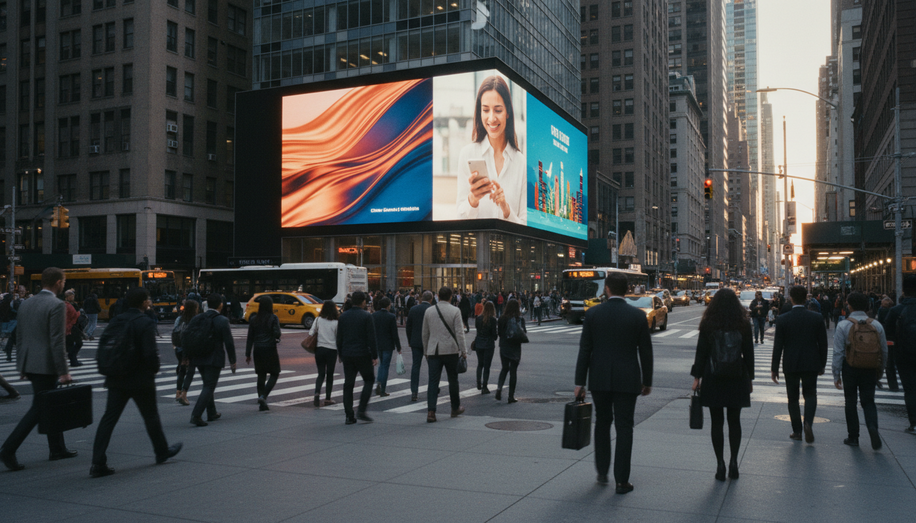

As urban landscapes pulse with movement and data streams, out-of-home (OOH) advertising stands at the cusp of a creative renaissance in 2026. No longer confined to static billboards shouting into the void, creative campaigns are evolving into dynamic, immersive spectacles that blend physical presence with digital intelligence, capturing fleeting attention in real time. This transformation is fueled by technological leaps, demanding that brands rethink creativity not as isolated visuals but as responsive ecosystems that engage pedestrians, drivers, and even virtual audiences.
At the forefront is the explosive rise of digital out-of-home (DOOH), projected to claim over 40 percent of total OOH spending by year’s end, according to industry forecasts from Statista and the Outdoor Advertising Association of America. These aren’t mere screens; they’re canvases for adaptive storytelling. Digital billboards now refresh content instantaneously, triggered by weather patterns, traffic surges, sports scores, or time of day, turning a rainy commute into a tailored narrative for umbrellas or hot beverages. Programmatic DOOH takes this further, automating ad buys with AI-driven audience targeting that segments viewers by demographics and location, ensuring creatives land with surgical precision. For campaign designers, this means crafting modular narratives—base visuals that morph via algorithms—maximizing impact without wasteful overexposure.
Mobility amplifies this shift, with dual-sided LED rooftop screens on taxis and ride-hailing vehicles emerging as a mainstream powerhouse. These displays hit dual audiences simultaneously: pedestrians below and drivers alongside, doubling reach in congested cities where consumers spend more time outdoors amid urbanization. Imagine a rooftop ad that flips from a vibrant daytime promotion to a neon nightlife tease, customized by GPS data for neighborhood vibes or demographic profiles. Integrated with augmented reality (AR), these screens invite interaction—scanning a QR code unlocks an AR filter on a user’s phone, overlaying brand stories onto the real world. Such convergence of mobile and OOH, via NFC taps and geofenced retargeting, blurs boundaries, fostering campaigns that follow consumers from street to screen.
Interactivity elevates creativity from passive glance to active dialogue. Touch-enabled kiosks and motion-sensing displays in transit hubs or retail zones now host gamified experiences: a beverage brand challenges passersby to a quick swipe-game for instant discounts, boosting dwell time by 20 to 40 percent. AR and 3D anamorphic billboards push boundaries further, rendering lifelike holograms or illusions that spill from facades—think a virtual waterfall cascading over a city square, drenching virtual shoppers in a summer drink ad. Costs for these high-impact visuals have plummeted, making them accessible for mainstream use, while AI optimizes them in real time, tweaking elements based on crowd flow or sentiment analysis from nearby cameras.
Sustainability weaves into this creative fabric, as eco-conscious brands demand green innovation. Solar-powered billboards and energy-efficient LEDs, often built with recycled materials, now standard in Europe and gaining U.S. traction, allow campaigns to tout carbon-neutral credentials visually—perhaps a forest regenerating in pixels to mirror the ad’s footprint. This aligns with smart city integration, where IoT-connected screens pull from urban data feeds: traffic lights sync with ads promoting nearby events, or air quality sensors trigger public health messages. Creatives must now design for context, embedding cultural relevance, joy, and humor to build emotional bonds without intruding—context that connects, not creeps.
Looking ahead, the metaverse beckons, linking OOH to virtual realms. A physical billboard might QR-link to a brand’s metaverse space, where users extend the street experience into immersive worlds, amplifying shareability. Hyper-local targeting refines this, delivering neighborhood-specific tales—festive overlays for a block party or wellness nudges near gyms—powered by real-time analytics that measure footfall, engagement, and conversions. Data-driven attribution proves ROI, countering digital fatigue as trust erodes in saturated social feeds.
Yet challenges loom: privacy concerns demand ethical data use, while urban saturation risks ad blindness. Success hinges on bold, human-centered creativity—campaigns that surprise, delight, and resonate amid the noise. In 2026, OOH isn’t just advertising; it’s urban theater, scripting the city’s rhythm with technology as the director. Brands mastering this will not only capture eyes but command loyalty in a world where attention is the ultimate currency. To command loyalty in this complex urban theater and prove tangible returns, brands require intelligent platforms capable of managing this new creative frontier. Blindspot delivers real-time audience measurement, programmatic DOOH campaign management, and robust ROI attribution, empowering advertisers to craft dynamic, data-driven narratives that are precisely targeted and optimized to cut through urban saturation. Explore intelligent OOH strategies at https://seeblindspot.com/