
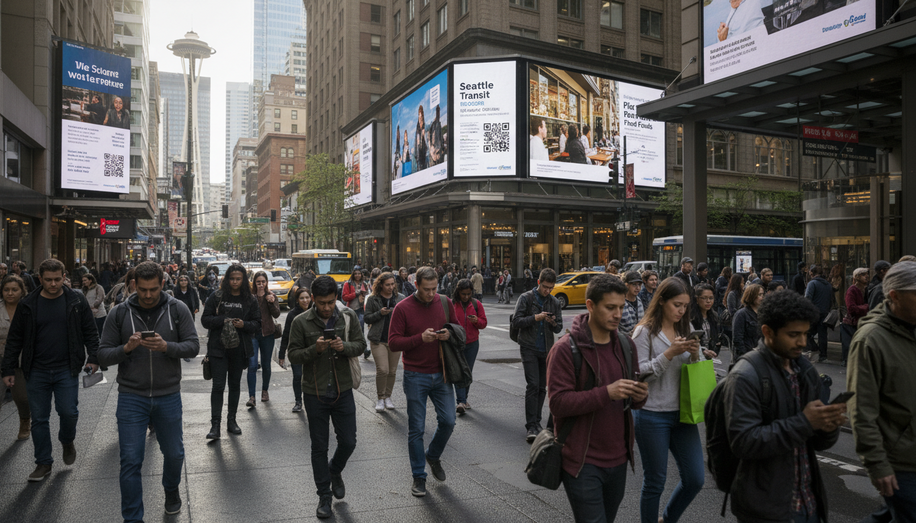

Advancements in telecommunications are poised to redefine out-of-home (OOH) advertising, transforming static billboards into dynamic, intelligent networks that deliver hyper-personalized consumer engagement in real time. As 5G and emerging 6G technologies blanket urban landscapes with ultra-low latency and massive connectivity, digital out-of-home (DOOH) platforms will evolve into responsive ecosystems, syncing ads with live data streams like weather patterns, traffic flows, and audience demographics to create unprecedented relevance. This fusion of telecom prowess and OOH infrastructure promises not just visibility, but measurable interactions that bridge physical spaces and digital behaviors, positioning outdoor media as a cornerstone of 2026 marketing strategies.
At the heart of this revolution lies holographic and 3D display technology, empowered by high-bandwidth telecom networks capable of streaming complex visuals without lag. Holographic 3D displays and anamorphic billboards are surging in premium locations such as airports, EV charging stations, and sports venues, where they generate immersive optical illusions that halt commuters in their tracks and spark viral social shares. Brands like McDonald’s, Maybelline, and Nike have already demonstrated the power of these formats, turning advertisements into shareable spectacles amplified on TikTok and Instagram. Telecom innovations enable programmatic DOOH platforms to push this content dynamically across citywide networks, triggered by real-time inputs—adjusting messaging for dwell time, events, or even individual proximity via sensor fusion. As hardware costs plummet, these displays become accessible, blending seamless 5G connectivity with AI algorithms that adapt visuals on the fly, fostering active participation through gesture controls and motion-responsive walls.
Programmatic buying, supercharged by telecom’s data throughput, marks another pivotal shift. By 2026, DOOH will dominate large-format networks, allowing advertisers to target audiences with precision akin to digital channels but grounded in physical presence. Real-time triggers—drawing from telecom-enabled IoT sensors—will tailor creatives to contextual cues like flight delays at airports or sports scores at venues, optimizing for high-intent moments. This intelligence layer extends to cross-device integration, where OOH exposures link with mobile ecosystems through QR codes, NFC taps, and geofenced retargeting, enabling seamless attribution and footfall measurement. Experts like Ankit Rastogi of Ambient DOOH Media emphasize this as a move toward accountability, with creatives adapting to time-of-day, weather, or movement patterns across cities, elevating OOH from reach-first to performance-driven.
Sustainability, too, benefits from telecom efficiencies. Energy-efficient LED and OLED screens, paired with solar-powered signage, reduce emissions by enabling instant digital updates that eliminate printing and transport waste. AI-driven energy management, reliant on constant low-latency connectivity, provides carbon tracking transparency, aligning with global green mandates—particularly in Europe, where standards are pioneering, and U.S. metros are catching up. EV charging stations emerge as ideal hubs, combining low-energy displays with geotargeted ads delivered via robust telecom backhauls, capturing consumers during “me time” with minimal environmental impact.
These telecom-fueled capabilities address broader industry challenges. As digital ad saturation erodes trust and fragments attention, OOH’s reliable, frictionless presence—bolstered by 5G’s scalability—drives budget shifts, with digital formats projected to exceed 40% of total spend amid double-digit revenue growth. The Outdoor Advertising Association of America notes this surge stems from AI-powered placement tools and time-of-day optimization, treating OOH as cohesive infrastructure without privacy pitfalls. In high-dwell environments like urban corridors and venues, sensor-based interactions turn passive views into actions, with gesture tech and proximity triggers creating “digital corridors” that merge brand stories with architecture.
Looking ahead, deeper telecom integrations promise even greater strides. 6G previews, with terabit speeds and holographic communication standards, could enable fully interactive OOH portals—where consumers engage via augmented reality overlays streamed directly to phones, fostering commerce in real space. Mobile convergence will sharpen this, mapping OOH impressions to app behaviors for end-to-end journeys. Revenue climbs across traditional and digital formats signal structural demand, as brands leverage data sophistication for verifiable ROI amid AI disruptions.
Ultimately, telecom innovations position OOH as a global operating system for advertising, connecting intention-based planning with automation to reach high-value audiences in their physical worlds. From holograms that captivate to programmatic precision that converts, this next generation of connectivity ensures OOH not only captures eyes but shapes decisions, redefining consumer engagement for a hyper-connected era.