
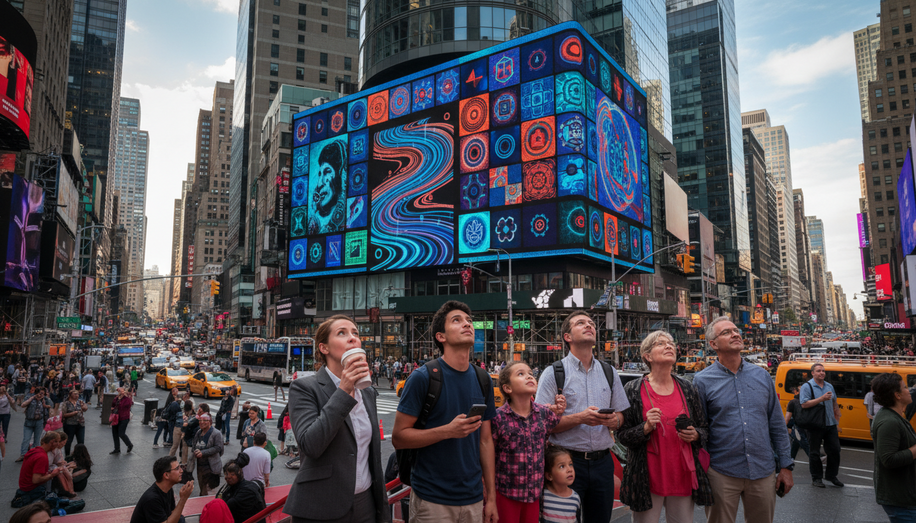

5G technology is transforming out-of-home (OOH) advertising from static displays into dynamic, interactive experiences that captivate audiences in real time. With its blistering speeds—up to 10-60 gigabits per second—near-zero latency, and massive connectivity, 5G empowers digital billboards to deliver high-resolution videos, augmented reality overlays, and personalized messages that respond instantly to passersby.
Once limited to printed posters or basic LED screens, OOH advertising has evolved rapidly, and 5G accelerates this shift toward digital out-of-home (DOOH) formats. Real-time updates are now possible, allowing advertisers to swap content on the fly based on live events, weather, or traffic patterns. A billboard might flash current sports scores during a game or promote evening specials at a nearby restaurant as dusk falls, creating relevance that static ads could never match. This agility stems from 5G’s low latency, which enables seamless data transmission even for complex animations and ultra-high-definition graphics, making visuals sharper and more immersive than ever.
Interactivity takes this revolution further, blending the physical world with digital innovation. Campaigns like British Airways’ “Magic” billboard, which tracked real aircraft overhead using location data, hint at 5G’s potential to make ads responsive and memorable. Facial recognition, gesture controls, and geofenced notifications could soon turn billboards into conversation starters—imagine a screen detecting a crowd near a gaming convention and projecting tailored AR challenges via smartphone apps. In stadiums or public spaces, LED walls powered by 5G already support live crowd participation, dynamic sponsorships, and even selfie cams for user-generated content, fusing entertainment with branding.
Hyper-personalization emerges as another game-changer, fueled by 5G’s ability to process vast data streams from IoT devices, beacons, and mobile signals. Advertisers can target messages based on proximity, preferences, or mood, such as offering deals to shoppers passing a store or weather-appropriate promotions during a sudden rain. Programmatic advertising benefits too, with machine learning enabling precise ad placement in milliseconds, boosting return on investment through real-time analytics. Deloitte forecasts that AR and VR applications in retail alone could generate over $10 billion by 2025, a trend 5G supercharges for OOH by rendering immersive 3D content on the go.
This technological leap extends OOH’s reach through mobile integration. QR codes, hashtags, and location-based pushes link billboards to social media and apps, tracking engagement via scans and clicks while extending campaigns online. As 5G proliferates, interactive billboards could respond to voice commands or gestures, while IoT-connected smart devices trigger proximity-based ads—envision a display lighting up with product demos as you approach. Even the metaverse beckons, with AR/VR bridging physical billboards to virtual worlds, allowing brands to create hybrid experiences that pop off the screen.
Yet, implementation hurdles persist. Upgrading infrastructure for 5G compatibility demands significant investment in high-end LED displays and networks, potentially raising initial costs. Data privacy concerns loom large, as hyper-targeted ads rely on user data that must be handled ethically amid tightening regulations. Weather or signal interference can disrupt outdoor 5G signals, and brands need tech-savvy partnerships to navigate these complexities. Despite this, maturing technology promises price stabilization, spurring wider adoption.
Looking ahead, 5G heralds a future where OOH advertising converges speed, data, location, and creativity to deliver value rather than interruptions. Experts envision “self-aware” signage attuned to user needs, from mood-based messaging to AI-driven optimization that minimizes annoyance and maximizes impact. In retail environments, companies like Lightbox are already deploying such systems to drive foot traffic unexpectedly. As global 5G adoption hits 15% of mobile users by 2025, early adopters—those tackling costs and privacy head-on—stand to dominate this dynamic landscape.
The promise is clear: OOH will shed its static past for a vibrant, engaging era. Billboards evolve into portals of interaction, where a glance sparks a transaction or story, redefining how brands connect in public spaces. With 5G, advertising doesn’t just shout—it listens, adapts, and delights.