
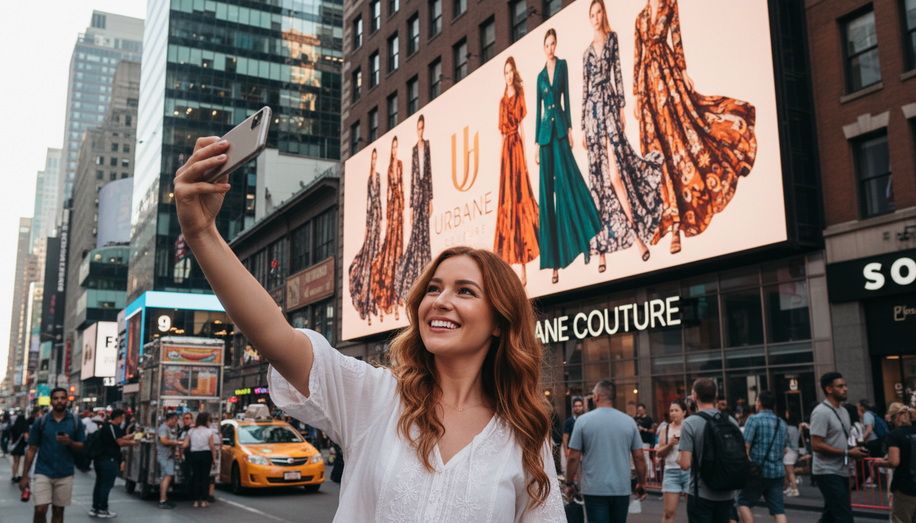

In the evolving landscape of advertising, out-of-home (OOH) campaigns are finding a powerful ally in influencer marketing, creating seamless bridges between static billboards and dynamic digital conversations. Brands are increasingly pairing towering visuals in high-traffic areas with the authentic voices of influencers to amplify reach, foster engagement, and drive measurable results. This integration transforms traditional OOH from a one-way broadcast into a multi-channel dialogue, where physical ads spark social buzz and vice versa.
Consider Nike’s regional push targeting fitness enthusiasts, a textbook example of synergy in action. The brand erected billboards featuring local influencers near gyms and running tracks, capturing the energy of everyday athletes. These influencers, in turn, flooded their social feeds with workout routines and product shoutouts, urging followers to hunt down the nearby billboards. The result was a hyper-local fusion of community immersion and global brand equity, turning passive passersby into active participants. This approach not only boosted visibility but also layered emotional resonance onto the OOH canvas, proving that familiar faces on a billboard can ignite shares, likes, and real-world foot traffic.
Outdoor brands have particularly embraced this model, leveraging influencers whose lifestyles mirror their products. Ortlieb, renowned in cycling, sought to conquer the broader outdoor market with its waterproof packs and duffels. Partnering with agencies like Spring PR, the campaign enlisted hikers, photographers, and wild swimmers—passionate voices with engaged audiences. Influencers tested the gear in rugged terrains, posting carousels, stories, and videos that reached over 311,000 enthusiasts on Instagram and TikTok. High engagement rates underscored the authenticity, positioning Ortlieb as an indispensable player in packs and hardware. While not explicitly tied to OOH, the campaign’s success highlights how influencer content can extend OOH narratives, imagining billboards of those same influencers mid-adventure, prompting viewers to seek out the social proof online.
Patagonia’s collaboration with Lake District retailer George Fisher offers another blueprint. In 2017, outdoor bloggers donned Patagonia gear for hikes and climbs, blending it organically with other brands to avoid contrived endorsements. Their high-quality photos, videos, and blogs—promoted via the retailer’s channels and targeted social ads—reached 134,358 individuals passionate about outdoor pursuits. Sales at George Fisher surged, with staff noting more customers hunting for Patagonia stock. Integrating this with OOH could mean lakefront billboards showcasing those influencer-captured moments, directing traffic to the store or digital content, while remarketing pixels nurture leads into loyal buyers.
YETI has scaled this philosophy masterfully, evolving from fishing and hunting ambassadors in 2006 to 15 communities by 2023, encompassing surfers, alpinists, and even rodeo enthusiasts. The brand’s video-driven storytelling emphasizes lifestyle fit, with influencers demonstrating coolers and gear in authentic scenarios. For OOH, picture rugged billboards in adventure hubs featuring these ambassadors, QR codes linking to their videos, and geo-targeted social boosts from the influencers themselves. This cross-pollination extends visibility exponentially, converting one-off impressions into sustained conversations.
Destination marketing reveals the tactic’s versatility. Panama City Beach hosted an InstaMeet, flying in ten influencers for bespoke itineraries and live X chats. Their posts funneled audiences to an interactive online guide, showcasing beaches and activities. Pairing this with beachside DOOH screens displaying influencer highlights—updated in real-time via social feeds—could create an immersive loop, where beachgoers snap their own photos, tag the influencers, and perpetuate the cycle.
The mechanics of integration are straightforward yet potent. Start with alignment: select influencers whose demographics and vibes match the OOH placement—urban fitness stars for city billboards, adventure creators for trailside digital screens. Provide them creative briefs mirroring the ad creative, ensuring products or messages sync seamlessly. Tactics include featuring influencers directly on OOH assets, as Nike did, or embedding QR codes that lead to their content. Digital out-of-home (DOOH) elevates this further, allowing real-time updates synced to influencer posts, like dynamic screens reacting to nearby social activity.
Support is key to authenticity. Brands like Hoka validate influencers’ pursuits, sponsoring trips to events like UTMB, yielding TikToks that humanize the partnership. Ortlieb’s team handled logistics, from product delivery to content approval, ensuring posts hit deadlines and aligned with goals. Measurement compounds the value: track impressions via OOH metrics, overlay social engagement from influencer content, and use UTM links or pixels for attribution. Patagonia built a half-million-strong engaged audience through such precision, ripe for future OOH extensions.
Challenges persist—coordinating timelines, negotiating costs, and maintaining genuineness amid paid partnerships. Yet, as seen in these cases, the ROI speaks volumes: Ortlieb’s awareness lift, Patagonia’s sales bump, Nike’s community activation. For brands, the directive is clear: treat influencers not as add-ons but as extensions of the OOH story. In a fragmented media world, this hybrid amplifies static ads into living narratives, blending the unmissable scale of OOH with the trusted intimacy of social influence. The future favors those who master the blend, turning billboards into conversation starters and influencers into brand evangelists.
Mastering this nuanced integration of OOH and influencer marketing demands sophisticated tools to ensure precision and prove impact. Platforms like Blindspot offer crucial support, providing location intelligence for optimal site selection and programmatic DOOH management to dynamically align physical campaigns with real-time influencer content. This enables comprehensive audience measurement, performance tracking, and granular ROI attribution, converting integrated campaigns into verifiable brand success stories. Learn more at https://seeblindspot.com/