
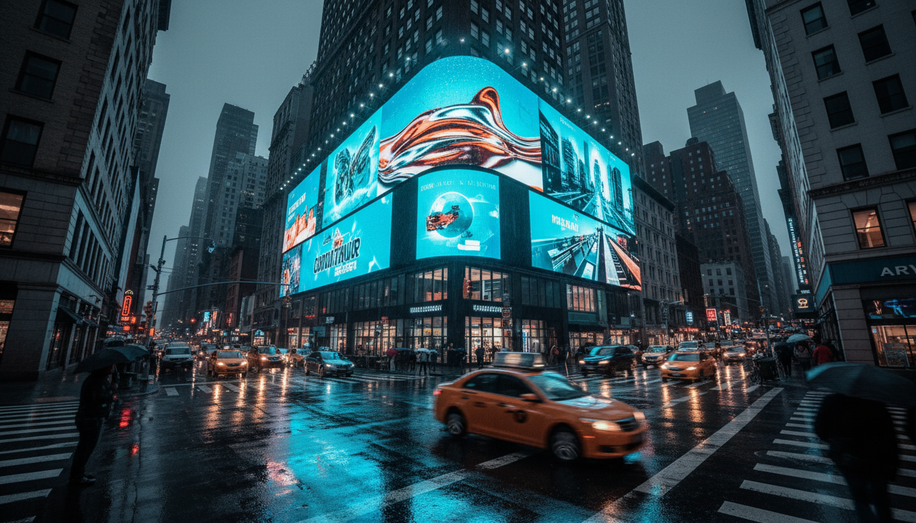

In the relentless blur of urban life, where drivers glance at billboards for mere seconds and pedestrians weave through crowds glued to their phones, outdoor advertising faces its toughest foe: distraction. Yet, masterful OOH campaigns cut through the chaos by embracing simplicity as their sharpest weapon, delivering one unforgettable idea amid the frenzy. Designers who succeed don’t overload the senses; they strip away excess to forge instant connections, turning fleeting exposures into lasting impressions.
The cornerstone of distraction-proof design is ruthless simplicity. With viewing times often limited to three to five seconds, ads must convey a single, crystal-clear message supported by bold visuals that pop from afar. Vistar Media emphasizes focusing on “one strong idea, one crisp visual and a single, unmistakable message,” avoiding the temptation to cram in details that dilute impact. This principle echoes across industry experts: limit headlines to six to eight words maximum, ensuring they stand alone without explanation. Consider a busy highway billboard; a cluttered design vanishes into the rearview mirror, while a stark, high-contrast image paired with punchy copy—like a vivid product shot against a minimalist black background—seizes the eye. Contrasting colors are non-negotiable: bright hues that align with brand identity but clash boldly against the environment, evoking emotion while demanding attention.
Visual dominance takes this further by leveraging scale and novelty. High-quality, high-resolution images reign supreme, but they must be relevant and resonant, free of fine details that blur at distance. Pushing boundaries with 3D illustrations or sculptural elements creates physical depth, making flat surfaces leap forward in a viewer’s peripheral vision. Award-winning efforts, such as those reacting to environmental triggers like weather or traffic patterns, transform static displays into dynamic spectacles. A digital sign shifting creatives throughout the day—morning commutes get motivational bursts, evening rushes playful humor—mirrors audience rhythms, heightening relevance in high-traffic zones like shopping centers or transit hubs. These tactics exploit the medium’s flexibility, turning distraction into an ally by syncing with the environment’s pulse.
Location strategy amplifies these design choices, as no ad, however brilliant, thrives in obscurity. High foot-traffic areas—busy intersections, public transport points, highways—offer clear lines of sight and captive audiences, but demand designs tailored to context. On a crowded street, legible fonts (bold, sans-serif, oversized) ensure readability from 50 feet away, while QR codes at eye-level spots like bus shelters invite interaction without halting momentum. Highways favor massive printed billboards for sheer exposure; nighttime digital or video variants glow with motion, drawing gazes in low light. Strategic placement considers demographics and flow: position near retail for impulse drivers or events for buzz-building urgency, like temporary signs screaming “This Weekend Only.”
Interactivity bridges the gap between glimpse and engagement, countering distraction with curiosity. QR codes and augmented reality extend the canvas beyond the physical, linking OOH to mobile worlds for deeper dives—scan for personalized offers or stories that resonate. This omni-channel approach fosters participation; viewers don’t just see, they act, scanning en route to purchase points. Coca-Cola’s “Share a Coke” exemplified this by sparking social hunts for named bottles, blending OOH visibility with digital sharing for viral lift-off. Humor and storytelling amplify memorability: a witty one-liner or narrative visual hook plants seeds that bloom later, far from the initial chaos.
Beyond billboards, diversification multiplies touchpoints. Digital signs update remotely—lunch specials at noon, happy hour at dusk—delivering fresh relevance without static fatigue. Mobile LED on event vehicles, drones, or even blimps introduce surprise, while mixing formats (airport screens to taxi wraps) builds frequency across journeys. Guerilla tactics like sidewalk stencils or building projections inject creativity into unexpected spaces, ensuring brands linger in minds bombarded by sameness.
Yet, strategy must precede artistry. Align every element with objectives—brand awareness, foot traffic, product launches—then evaluate relentlessly, tweaking based on performance. Does the design fit its spot? A QR on a highway flops; eye-level urban panels thrive. Visible logos and taglines in unobstructed spots cement recall, turning passive passersby into active seekers.
In busy environments, standing out demands counterintuitive restraint: less is exponentially more. By wielding simplicity, bold contrasts, contextual smarts, and interactive sparks, OOH designers don’t just compete with distraction—they harness it, crafting moments that stick long after the crowd disperses. As cities pulse faster, these techniques ensure brands don’t fade into the background; they become the pulse itself.