
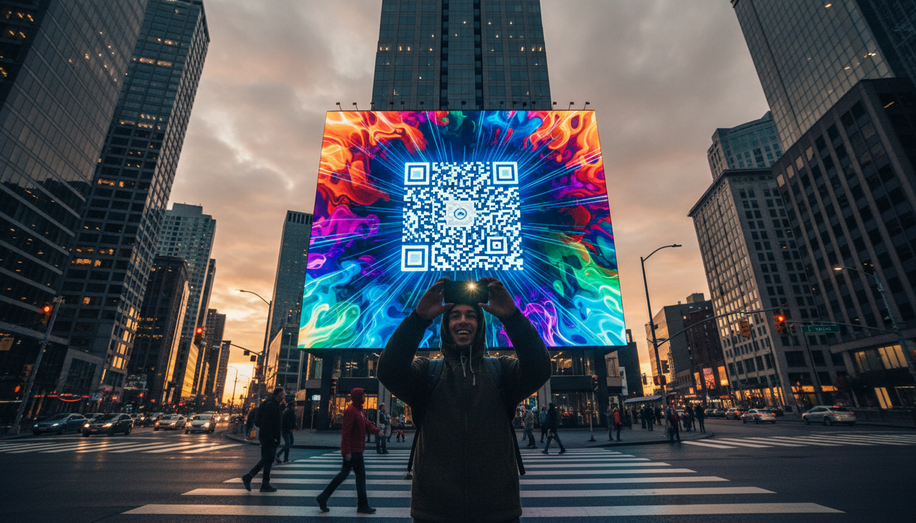

Out-of-home advertising has long operated in a peculiar space: brands invest heavily in billboards, transit ads, and digital displays to capture attention in physical spaces, yet measuring what actually happens after someone sees an advertisement has remained frustratingly opaque. Quick response codes—those square barcades of black and white pixels—have emerged as a transformative solution to this challenge, fundamentally changing how advertisers connect offline impressions with online engagement.
The adoption of QR codes in out-of-home advertising has accelerated dramatically in recent years. U.S. QR code usage surged 323% between 2021 and 2023, driven largely by the ubiquity of smartphone cameras that can instantly recognize and decode these patterns. This technological shift has opened possibilities that seemed impossible just a few years ago: turning a static billboard or bus shelter advertisement into an interactive gateway to digital content.
The primary value proposition is straightforward yet powerful. QR codes bridge the physical-digital divide by allowing consumers to move seamlessly from an offline ad directly to a website, product page, special offer, or video content. A retail brand might place a QR code on a bus shelter advertisement offering an exclusive discount when scanned, enabling shoppers to take immediate action from their phones. This integration transforms what was previously a passive viewing experience into a two-way interaction that extends the advertisement’s impact far beyond its physical location.
What distinguishes QR codes from traditional out-of-home advertising is the unprecedented ability to measure engagement. Unlike conventional metrics that count impressions, QR codes provide real-time performance data: the exact number of scans, when scans occurred, geographic location, and device types used. This granular insight allows advertisers to understand not just how many people saw an ad, but how many actually engaged with it and what actions they took afterward. For brands and agencies operating on tight budgets, this measurability represents a significant advancement in justifying spending decisions.
The results speak for themselves in many cases. A pharmaceutical company promoting a new pet antiparasitic product launched a programmatic digital out-of-home campaign across Spanish cities incorporating dynamic QR codes. The campaign achieved a staggering 254% boost in positive brand perception. Nielsen research indicates that 38% of people are motivated to visit a website after viewing an out-of-home advertisement, and QR codes provide the frictionless mechanism to act on that motivation.
Dynamic QR codes add another layer of sophistication by enabling real-time campaign optimization. When integrated with programmatic digital out-of-home platforms, these codes capture data that can be mapped to specific audience segments, locations, times of day, and even weather conditions. This intelligence allows advertisers to adjust messaging in real-time, making each advertisement more relevant and impactful than static campaigns ever could be.
Success with QR codes, however, requires strategic implementation. Best practices include placing a clear call-to-action near the code—such as “Scan for a Great Offer” or “Scan Me”—to encourage engagement. For video advertisements, keeping the code persistent throughout ensures viewers have multiple opportunities to scan. Landing pages must be fast-loading and responsive, with clear pathways for action whether that’s purchasing, downloading an app, or requesting more information.
The effectiveness data presents a nuanced picture. The highest-performing QR code campaigns achieved a 12.1% increase in attention compared to network averages, demonstrating significant potential when properly executed. However, the lowest-performing campaigns saw attention decrease by 3.5%, indicating that poor implementation can actually detract from an advertisement’s impact. Geography and context matter considerably—a QR code on a highway billboard viewed by drivers traveling at highway speeds presents impractical scanning challenges compared to transit shelter advertisements where audiences have time and proximity to engage.
As out-of-home advertising continues evolving, QR codes represent more than a fleeting trend. They address a fundamental challenge: how to measure and optimize the return on physical advertising in an increasingly digital world. By thoughtfully leveraging this technology, brands can transform billboards, posters, and transit ads from one-way broadcasts into interactive experiences that engage consumers, generate measurable data, and drive tangible business results.