
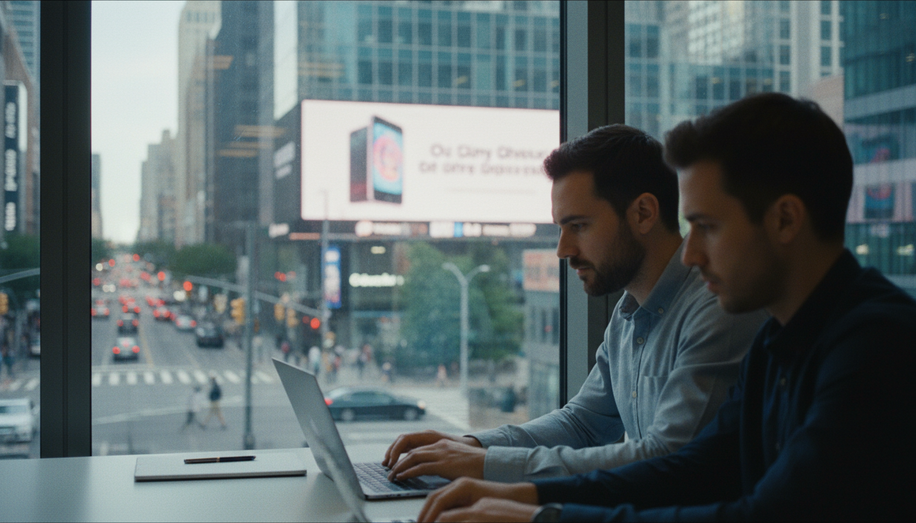

In the evolving landscape of advertising measurement, out-of-home (OOH) campaigns have long struggled to prove their worth beyond raw impressions. Advanced attribution models are changing that narrative, enabling marketers to link billboard exposures, transit ads, and street-level displays directly to offline conversions like store visits and in-person sales. These sophisticated techniques draw on machine learning, location intelligence, and controlled experimentation to isolate OOH’s true impact amid a sea of competing influences.
Traditional metrics such as reach and frequency fall short because they cannot account for the delayed, nonlinear paths consumers take from seeing an ad to making a purchase. Enter modern attribution methodologies, which employ statistical rigor to disentangle OOH effects from factors like weather, seasonality, and rival promotions. Machine learning algorithms process vast datasets—millions of data points from mobile movements, purchase records, and environmental variables—to generate precise lift estimates complete with confidence intervals and significance testing. Providers like Veraset, SafeGraph, and PlaceIQ supply the granular location intelligence that makes this possible, matching digital ad standards with foot traffic patterns and geofenced exposures.
One practical gateway to attribution lies in digital integrations that bridge OOH’s physicality with trackable online behaviors. QR codes, vanity URLs, and unique promotional codes printed on billboards create direct response paths, transforming passive impressions into measurable actions. For instance, a campaign might track QR scans for immediate engagement, vanity URL visits for website traffic spikes, or promo code redemptions at point-of-sale systems. Smart campaigns layer these with mobile ad ID (MAID) technology to capture broader digital fallout, such as app downloads or social hashtag usage from exposed audiences. This hybrid approach not only quantifies immediate responses but also reveals how OOH sparks longer-term brand consideration.
For purer causality, geo-lift studies stand as the gold standard, mimicking clinical trials in advertising. Marketers select matched pairs of geographically similar markets: one receives the OOH campaign (test), the other does not (control). Pre-campaign baselines establish normal performance, followed by post-exposure comparisons of key metrics like sales volume or foot traffic. Major brands including Coca-Cola, McDonald’s, and Walmart routinely deploy these to validate ROI, often uncovering lifts of 10-20% in targeted outcomes with statistical backing. Geofencing enhances this by drawing virtual boundaries around ad sites, using mobile data to count how many exposed devices subsequently visit stores—ideal for location-based tactics like mall-adjacent billboards.
Beyond single-campaign experiments, multi-touch attribution models distribute credit across the consumer journey, recognizing OOH’s role alongside digital channels. Linear models assign equal weight to every touchpoint, ensuring billboards get fair share in journeys blending Facebook views, email opens, and OOH sightings. Time-decay variants prioritize recent exposures, crediting OOH heavily if it precedes a store visit, while position-based (U-shaped) frameworks allocate 40% each to first-touch awareness (often OOH) and final conversion drivers, splitting the rest evenly. Algorithmic approaches, powered by machine learning, go further with incremental attribution: they simulate “what if” scenarios to credit only the conversions that OOH uniquely enabled, factoring in external variables.
Marketing mix modeling (MMM) elevates this to enterprise scale, analyzing OOH within holistic channel ecosystems. By regressing sales data against spend across online, TV, and offline media—while controlling for pricing, promotions, and macroeconomics—MMM reveals synergies and diminishing returns. For OOH, it captures halo effects, such as how a billboard campaign amplifies e-commerce spikes in targeted zip codes. Platforms like Outbuzz integrate 50+ data sources, from geofencing to competitive intel, delivering real-time dashboards with metrics like exposure-verified impressions, foot traffic lift, and attributed sales. Custom models tailor these to business specifics: first-touch for awareness-heavy OOH, last-touch for direct-response plays, or W-shaped for B2B funnels emphasizing lead and opportunity creation.
Implementing these models demands quality data partnerships and analytical expertise, but the payoff is undeniable. Real-time dashboards allow mid-flight optimizations—swapping underperforming placements within days—while post-campaign reports provide budget justification with courtroom-level evidence. Challenges persist: data privacy regulations limit granular tracking, and offline sales often rely on inferred lifts rather than pixel-perfect attribution. Yet, as MAID providers refine privacy-safe aggregates and AI sharpens predictions, OOH’s black box is yielding to transparency.
Brands embracing these advances report ROAS figures rivaling digital channels, with geo-lifts proving billboards drive measurable offline action. For advertisers, the message is clear: in 2026, dismissing OOH as unmeasurable is no longer defensible. Sophisticated attribution isn’t just best practice—it’s the new baseline for proving campaign value and commanding larger shares of the marketing mix. Blindspot empowers marketers to achieve this clarity, offering robust ROI measurement and attribution alongside real-time campaign performance tracking. Through advanced location intelligence and audience analytics, Blindspot transforms OOH into a fully quantifiable channel, driving data-backed optimizations and demonstrable returns. Learn more at https://seeblindspot.com/