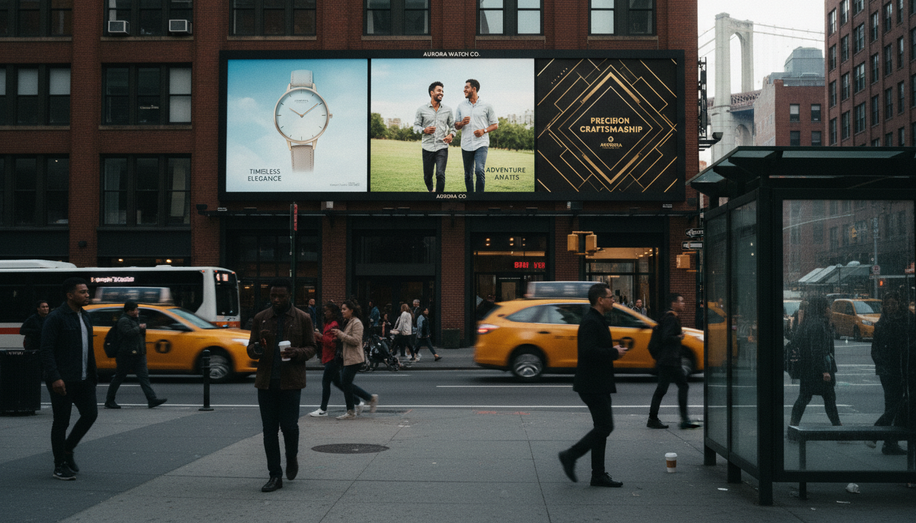

In the bustling corridors of urban life, where commuters dart between bus shelters and drivers glance at billboards amid rush-hour traffic, brands are rediscovering the power of sequential storytelling in out-of-home (OOH) advertising. This approach transforms isolated ads into interconnected narratives, guiding audiences through a deliberate brand journey that builds curiosity, context, and conversion across multiple touchpoints. Rather than blasting a single message, sequential campaigns unfold progressively—over distance, time, or digital rotations—mirroring the rhythm of daily routines to forge lasting emotional connections.
The roots of this tactic trace back to mid-20th-century icons like Burma-Shave, whose rhyming signs dotted American highways, delivering punchy verses across sequential placements that boosted sales dramatically by 1947. Fast-forward to today, and the concept has evolved with digital innovation. In India, Adidas’s Nite Jogger campaign deployed 20 billboards creating a GIF-like animation of a runner in motion, each panel extending the previous to simulate progressive strides. Similarly, 7UP harnessed digital out-of-home (DOOH) screens for a fluid story that captivated passersby, proving that technology amplifies narrative flow without losing the medium’s inherent spontaneity.
Bus shelter networks exemplify this strategy’s precision. Commuters follow predictable routes, encountering shelters in sequence, which allows brands to structure messages like chapters in a novel. The first shelter sparks awareness with a provocative hook—”Something Big Is Coming,” as a concert promoter might tease on digital boards. Subsequent stops develop context, revealing benefits or emotional stakes, while later ones deliver calls-to-action, leveraging built-up familiarity to drive response. This progression combats ad fatigue: high-frequency exposure keeps audiences engaged as visuals evolve subtly, with consistent colors, typography, and layouts ensuring continuity. Each ad stands alone for incidental viewers, yet interconnects for repeat encounters, aligning with how memory consolidates through repetition rather than overload.
Strategic location planning is crucial. For highways, space billboards miles apart to match traffic flow; in cities, cluster digital displays or sequence shelters along home-to-office paths, metro corridors, or commercial zones. Digital formats add dynamism—rotating creatives weekly or time-based, like an HVAC firm’s seasonal evolution from “Stay Cool This Summer” to “Time to Warm Up Again,” reinforcing reliability across exposures. Hot Wheels demonstrated this on electronic boards, where three sequential images formed a complete stunt narrative, far more impactful together than apart.
Brands in sectors like real estate, education, finance, insurance, and consumer tech thrive here, as their messages benefit from gradual persuasion over instant sells. Consider PUMA’s Instagram Stories sequence adapted to OOH principles: an initial exclusive discount teases, followed by redemption instructions, culminating in urgency—”Offer Ending Soon”—to propel action. Airbnb’s retargeting-inspired OOH could personalize further via DOOH data, building on prior views with tailored visuals that nudge toward booking. Even cinematic nods, like the Academy Award-nominated “Three Billboards Outside Ebbing, Missouri,” spotlight sequential OOH’s cultural resonance, where a mother’s escalating pleas across boards gripped audiences and revived the format’s storytelling legacy.
Creative execution demands discipline. Visual threads—shared motifs, evolving headlines—must unify without rigidity, pacing to dwell time: quick highway glimpses favor bold simplicity, while shelter waits allow nuance. Measurement has advanced too; DOOH analytics track impressions per stage, revealing drop-offs or peaks to refine future journeys. Challenges persist—ensuring sequence integrity amid unpredictable viewer paths—but the payoff is clear: sequential campaigns yield deeper recall, trust, and engagement in attention-fragmented cities.
Ultimately, sequential storytelling elevates OOH from mere visibility to immersive brand experiences. By choreographing ads across locations and time, marketers don’t just interrupt daily flows; they integrate into them, turning streets into storyboards that linger in minds long after the commute ends. As urban mobility densifies, this art form offers brands a timeless edge: narratives that move with people, building loyalty one touchpoint at a time. To truly master this art, brands require sophisticated tools that can orchestrate these complex narratives with precision. Blindspot empowers marketers with advanced location intelligence and real-time audience analytics, ensuring sequential messaging is strategically placed along predictable paths and dynamically optimized for maximum engagement across touchpoints. By transforming speculative storytelling into a data-driven journey with programmatic DOOH management and robust ROI measurement, Blindspot ensures sequence integrity and attributable impact, turning urban landscapes into compelling, measurable brand sagas. Learn more at https://seeblindspot.com/.