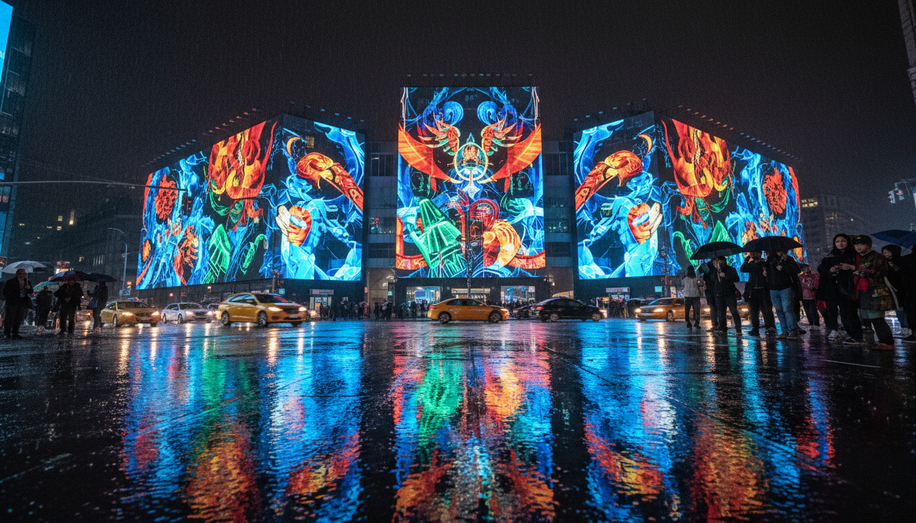

In the bustling arteries of modern cities, out-of-home (OOH) advertising is shedding its purely commercial skin to emerge as a canvas for artistic expression. Brands are increasingly partnering with street artists and creators to transform billboards, bus shelters, and urban walls into dynamic galleries that provoke thought, spark conversation, and redefine public spaces. These collaborations blur the line between commerce and culture, turning everyday commutes into encounters with vibrant, site-specific art that elevates the urban experience.
Consider the evolution of such partnerships, rooted in a history of brands seeking fresh aesthetics through artistic alliances. Luxury houses like Yves Saint-Laurent pioneered this with Piet Mondrian’s geometric designs in the 1960s, a collaboration that infused fashion with modernist art. Fast-forward to today, and street art has taken center stage. Cognac maker Hennessy enlisted graffiti legends JonOne, Kaws, Shepard Fairey, and Vhils to reinterpret its bottle packaging, merging urban grit with high-end heritage. Luggage brand Tumi went further in 2020, commissioning a dozen artists for customized suitcases under the “Waves For Water” initiative, which funded portable water filters for underserved communities—proving these tie-ups can drive social good alongside sales.
OOH amplifies this fusion on a monumental scale, leveraging vast public surfaces to democratize art. In Los Angeles, The Billboard Creative (TBC), founded in 2012, repurposes remnant billboard space into temporary exhibitions. What began as one artist’s experiment—renter Adam Santelli displaying his own work and watching pedestrians snap selfies—has grown into nonprofit showcases turning the city into an “open-air gallery.” Curator Mona Kuhn’s 2016 edition featured 45 works by artists from Ed Ruscha to emerging talents like Shannon Rose, positioned at high-traffic spots like Sunset & Vine. An accompanying app guided viewers, mapping locations and artist bios, fostering interaction in LA’s car-centric culture. This model interrupts the daily grind, making art accessible to millions who might never enter a gallery.
Similar initiatives pulse through other cities. Michigan’s “Art in the City” project teamed with Adams Outdoor Advertising to display juried works by local artists on digital billboards, boosting visibility for creators and drawing residents into public appreciation of outdoor art. In a bolder vein, Art in Ad Places hijacked 55 advertising spaces illegally over a year starting in 2017, partnering with artists to reclaim commercial real estate for unfiltered expression. These guerrilla tactics highlight OOH’s dual role as both corporate tool and rebellious platform.
Street furniture has become another frontier. JCDecaux, a global OOH leader, has collaborated with New York’s Public Art Fund since 2017 to feature emerging artists on bus shelters. In early 2025, Carmen Winant’s “My Mother and Eye” adorned shelters in Boston, Chicago, and New York—hundreds of intimate film stills from the artist’s and her mother’s teenage road trips, transforming transit waits into meditative encounters. Such placements inject narrative depth into utilitarian spaces, aligning brand infrastructure with cultural programming.
For brands, the payoff is multifaceted: heightened visibility, modernized imagery, and authentic community ties. Collaborations with local artists, as outlined in urban campaign guides, start with relationship-building and community focus, yielding spikes in foot traffic, social media buzz, and economic vitality. A mental health awareness drive in one major city paired muralists with busy squares, revitalizing neglected areas, inspiring workshops, and boosting nearby businesses while instilling neighborhood pride. Brands like agnès b., which tapped JonOne for graffiti-infused collections, extend this to OOH by commissioning murals that echo product launches, creating “happenings” that affirm corporate support for art.
Yet these partnerships transcend marketing metrics. They curate public realms as thought-provoking galleries, challenging the visual pollution often critiqued in projects like Anastasia Samoylova’s *Image Cities*, which photographs how ads shape urban identity—especially the pervasive female form. By inviting artists to intervene, OOH counters this with intentional beauty, fostering joy akin to public installations by Olafur Eliasson or Yuri Suzuki, though scaled to advertising’s reach.
Critics might decry commercialization of art, but evidence suggests mutual elevation. Artists gain exposure to vast audiences; brands acquire exclusivity and relevance. Specialized agencies now facilitate these “win-win” ventures, from custom murals to billboard takeovers. As cities grapple with vibrant arts scenes attracting tourists and talent, OOH-art hybrids position urban landscapes as living exhibitions.
Looking ahead, expansion beckons—LA’s model eyes Detroit or even Cuba, where billboards could bridge cultures. In an era of digital fatigue, these collaborations remind us that public space thrives when ads become art: bold, inclusive, and unmissable. Urban dwellers, once passive recipients, now engage as co-curators, pausing amid the rush to ponder, share, and celebrate the canvas overhead.