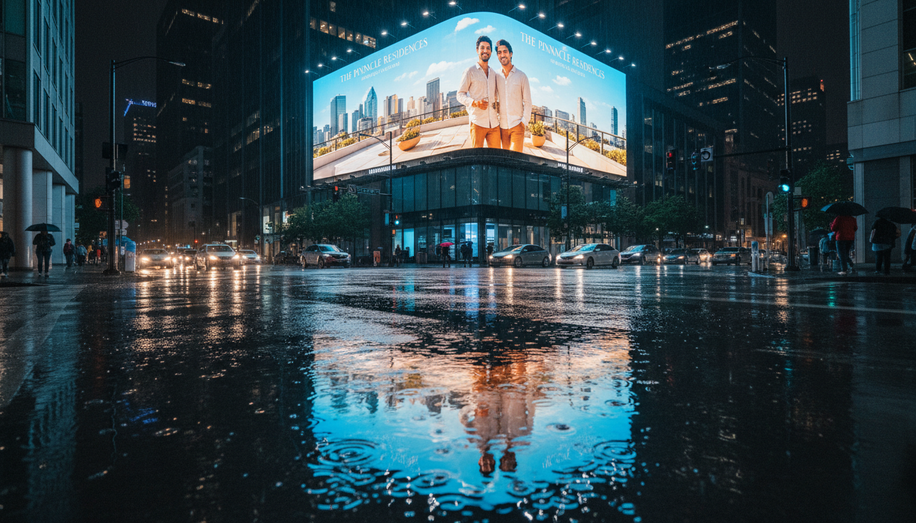

In the competitive world of real estate, where first impressions can seal multimillion-dollar deals, out-of-home (OOH) advertising stands as a timeless powerhouse. Billboards towering over highways, site hoardings wrapping construction zones, and transit ads flashing before commuters’ eyes cut through digital noise to capture attention in the physical spaces where buyers live, work, and dream of their next home. Real estate agents, developers, and brokers have long harnessed these formats not just for visibility, but to ignite urgency, build brand trust, and drive measurable sales, proving that location truly is everything—even in advertising.
Consider the raw economics: billboards alone deliver an average return on investment (ROI) of 497%, meaning every dollar spent yields nearly five in return, according to the Out of Home Advertising Association of America (OAAA). This dwarfs many digital channels, with OOH boasting the lowest cost per thousand impressions—ranging from $2 to $7—while reaching massive audiences daily. For real estate professionals, this translates to hyper-local targeting: a billboard along a bustling urban corridor can spotlight luxury condos to affluent commuters, while site hoardings at a development site tease upcoming amenities to passersby already primed by proximity. Developers in Miami, for instance, erected a highway billboard for a new retail plaza, featuring sleek visuals and a bold call-to-action; within three months, 75% of spaces were leased, a direct lift from the ad’s high-visibility punch.
Site hoardings take this intimacy further, transforming construction barriers into sales tools. These wraps, often emblazoned with renderings of gleaming facades, floor plans, and QR codes linking to virtual tours, turn idle sites into interactive billboards. In Vancouver, a mixed-use development campaign positioned near a transit hub used such hoardings to evoke excitement with artist impressions and taglines promising vibrant community living. The result? Full occupancy ahead of schedule, as commuters and locals alike scanned codes or called in, blending emotional pull with immediate action. Brokers report that these on-site ads not only generate foot traffic—up 30% in one Los Angeles warehouse campaign—but also elevate perceived value, positioning properties as premium destinations worth premium prices.
Transit advertising amplifies this reach inside vehicles and stations, where captive audiences have nowhere to swipe away. Subway wraps, bus shelters, and airport dioramas immerse potential buyers in property visions during downtime. Nielsen research underscores the trust factor: 56% of consumers trust OOH more than other media, and 58% take action after exposure, from website visits to inquiries. Real estate agents in Hudson County, New Jersey, tested this with a simple billboard touting listings in Hoboken and Jersey City. The outcome was staggering: over 217,000 views in the first month, thousands of social engagements, multiple listing appointments, and a surge in local brand recognition—all tied back to drivers glancing up from the wheel. When layered with digital, the synergy soars; pairing OOH with mobile ads can boost ROI by 316%, priming online conversions from real-world sparks.
Beyond leads, OOH reshapes property economics. Studies in Tampa reveal parcels with billboards command 47% higher values overall, and 80% more for commercial sites, defying myths of blight while fueling local economies. This halo effect boosts developers’ leverage in negotiations, as high-profile campaigns signal desirability. A New York brokerage advertising a Manhattan boutique building across multiple billboards justified premium leases, with tenants perceiving it as elite simply from the buzz. For agents, it’s brand-building gold: 83% of viewers find OOH informative, and 82% search online after repeated exposures, creating a feedback loop of awareness to action.
Critics might dismiss OOH as old-school in a TikTok era, but data tells otherwise. With 71% of drivers actively noticing messages, and millennials—key homebuyers—responding most avidly, billboards outperform digital for local targeting. Edmonton developers stirred community hype with “New Shops Coming Soon!” on billboards, drawing local businesses into a frenzy of inquiries. The key? Strategic placement in high-dwell zones, compelling creatives that stir aspiration, and clear calls-to-action like “Call Now” or scannable codes.
Real estate’s power lies in place, and OOH owns those places. Agents and developers who master billboards, hoardings, and transit ads don’t just advertise—they inhabit the landscape, turning everyday commutes into sales pipelines. In a market where visibility equals velocity, these formats remain indispensable, delivering not just impressions, but closings. As urban landscapes evolve, so does OOH, blending with AR experiences and data-driven placements to keep real estate moving—literally and figuratively.