
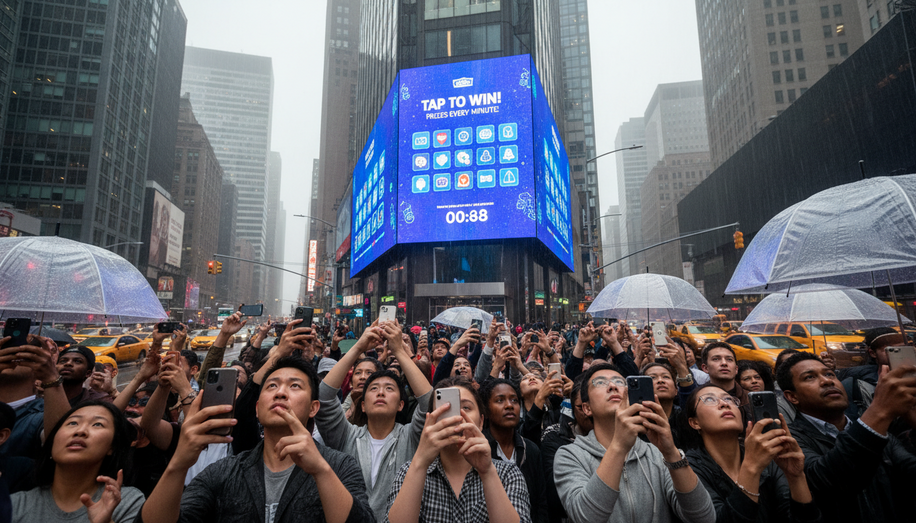

In the bustling streets of modern cities, where pedestrians rush past towering billboards and digital screens, a quiet revolution is underway. Gamified out-of-home (OOH) advertising is transforming passive observers into active participants, blending gaming mechanics with real-world environments to forge deeper connections between brands and audiences. By incorporating interactive challenges, contests, and instant rewards, these campaigns turn everyday commutes into playful adventures, capturing attention in ways static ads never could.
At its core, gamified OOH leverages technologies like augmented reality (AR), QR codes, touchscreens, and mobile apps to invite engagement. A digital billboard might display a live leaderboard for a citywide competition, or an AR-enabled poster could overlay virtual elements onto the physical world, challenging passersby to “catch” digital prizes with their smartphones. Rewards—discounts, exclusive content, or entry into larger contests—provide immediate gratification, encouraging repeat interactions. This fusion of digital out-of-home (DOOH) infrastructure with gaming elements not only boosts visibility but also drives measurable actions, such as store visits or app downloads.
Real-world examples illustrate the potency of this approach. Shake Shack’s “White Truffle Hunt” in New York turned LinkNYC screens into virtual treasure troves. Participants scanned QR codes on strategically placed displays to “dig” for prizes, sparking buzz around a new product launch and drawing crowds to explore the city. Similarly, in London, Mondelēz International’s Oreo campaign at bus shelters prompted commuters to download a mobile app and play minigames for chances at holidays or daily rewards, fostering brand loyalty through seamless interactivity. These executions highlight how gamification bridges online and offline realms, turning a momentary glance into sustained engagement.
Physical creativity amplifies the impact. Lithuanian chocolate brand Pergalė challenged passersby to form human pyramids to press a button atop an OOH installation, earning free samples in a display of spontaneous teamwork that went viral. In Australia, The Star Casino celebrated Lunar New Year with touchscreen games at Sydney’s Chinatown, where completing tasks unlocked dinner vouchers, blending cultural relevance with incentivized play. Even non-commercial efforts shine: Surf Life Saving Australia’s “Be a Lifesaver” campaign required donations before players “rescued” drowning figures on interactive screens, turning altruism into a competitive game and emphasizing rewards beyond material prizes.
The benefits extend far beyond fleeting fun. Interactive ads excel in brand recall, as participants actively invest time and effort, embedding the message in memory. They generate social proof through shares—imagine posting a leaderboard victory or AR selfie—which extends reach organically across platforms. Data from these campaigns allows precise tracking: ALDI Danmark’s “Spot the Difference” game, promoted via newsletters and social media, drew nearly 15,000 players in 10 days, yielding a 74.2% conversion rate as users lingered for over a minute per session. Virgin Red’s quiz for Virgin Voyages amassed five million views without a marketing budget, slashing cost-per-acquisition and boosting ticket sales.
Phygital innovations—merging physical and digital—further elevate the medium. Interactive bus shelters with touchscreens turn wait times into opportunities; RCBC in the Philippines installed loan calculators and financial puzzles on BGC Bus Shed displays, alleviating boredom while spreading literacy. Tesco’s gamified billboard trusted audiences to engage honestly, proving that bold interactivity builds trust and authenticity in crowded media landscapes. As DOOH networks expand in transit hubs, malls, and urban furniture, brands gain scalable canvases for these experiences, often integrating with apps like Nike+ for social competitions or Starbucks Rewards for loyalty loops.
Challenges remain, from technical glitches in variable weather to ensuring accessibility for all demographics. Yet, advancing tech like 5G and AI promises smoother, more immersive play. Grand Visual predicts gamified OOH as the future, especially with DOOH’s rise, positioning it to dominate high-traffic zones. Brands ignoring this risk fading into the background, while pioneers like Red Bull, who blended OOH with mobile leaderboards, reap amplified results.
Ultimately, gamified OOH redefines advertising as participation. It invites passersby to play, compete, and win, creating emotional ties that transcend transactions. In an era of ad fatigue, this playful pivot doesn’t just capture eyes—it wins hearts, proving that the most effective campaigns are the ones people can’t resist joining.