
In the fleeting seconds a driver glances at a billboard or a pedestrian pauses at a transit ad, the brain makes snap judgments shaped by color, font, and layout. These elements form the visual language of out-of-home (OOH) advertising, harnessing psychology to cut through urban clutter and lodge brands in memory. Far from mere aesthetics, deliberate choices in palettes, typography, and composition trigger subconscious responses that drive perception, emotion, and recall.
Color sets the emotional tone before words are even read. Red evokes urgency and excitement, spurring impulses like a fast-food craving or a sale impulse, while blue conveys trust and calm, ideal for banks or healthcare brands seeking reliability. Yellow injects optimism and energy, grabbing attention in high-traffic zones, but overuse risks overwhelming viewers. These associations stem from evolutionary wiring—warm tones signal action, cool ones safety—amplified by cultural conditioning. High-contrast pairings, such as black text on yellow or white on navy, ensure readability from afar, exploiting the brain’s preference for bold visuals that process in as little as 13 milliseconds. Pearl Media emphasizes visual hierarchy through color psychology: strategic contrasts guide the eye, making key messages pop amid distractions. Yet context matters; a vibrant palette on a sunny highway demands different saturation than a dim urban tunnel, where muted tones might fade into the background.
Typography carries equal weight, as fonts dictate cognitive load—the mental effort required to decode a message. Sans-serif fonts like Helvetica or Arial dominate OOH for their clarity, minimizing processing friction in split-second exposures. Cursive or ornate scripts, while artistic, force the brain to labor, leading to dismissal. Large sizes, often spanning feet rather than inches, align with cognitive fluency: simple, familiar forms encode faster and foster positive associations. The Rule of 7±2 from psychologist George Miller underscores this—viewers retain about five to nine elements in working memory, so headlines limited to seven words in bold, uppercase sans-serif maximize impact. Repetition reinforces typography’s power; consistent fonts across a campaign leverage the mere exposure effect, where familiarity breeds liking without conscious effort. A commuter seeing the same clean logotype daily on billboards builds unconscious trust, turning passive glances into brand preference.
Layout orchestrates it all, creating composition that mimics how the brain scans: from bold visuals to hierarchy to call-to-action. Simplicity reigns, as cognitive load spikes with clutter, eroding memory. Strategic whitespace acts as a visual breath, directing focus via the orienting response—an involuntary neural shift toward novel, high-contrast elements that dilates brain blood vessels and slows heart rate. Imagery dominates: the human brain processes pictures 60,000 times faster than text, so a striking photo or metaphor—like a sad puppy evoking empathy—locks emotion into long-term recall. Emotional appeals amplify this; humor, nostalgia, or aspiration stir decisions before logic kicks in, as people justify feelings rationally later. Composition funnels the gaze: a focal image at the top, punchy headline mid-frame, and subtle logo or URL below, all bound by the rule of thirds for natural flow.
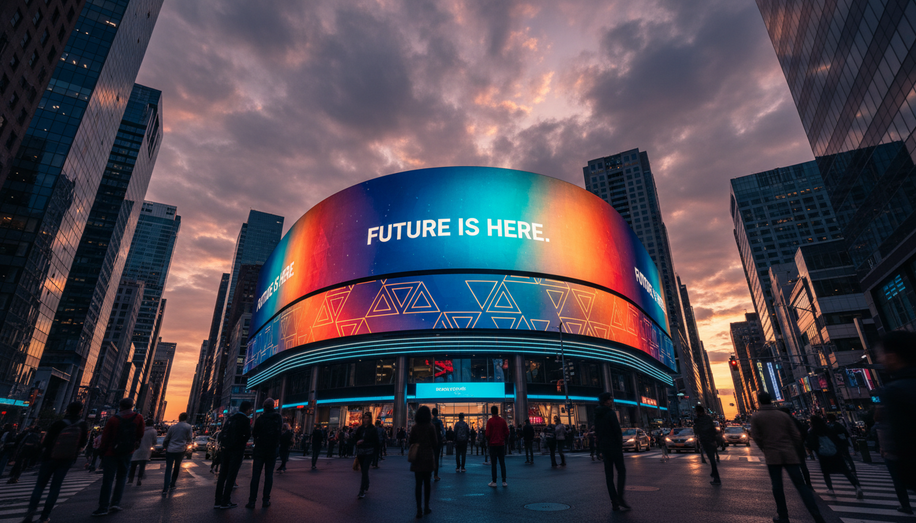
These principles converge in real-world efficacy. Billboards exploit context-dependent memory, linking brands to geography—seeing Coca-Cola repeated at the same highway exit anchors it spatially, outperforming digital ads that lack physical embedding. The spacing effect boosts this: spaced repetitions during commutes enhance recall over one-off blasts. Digital OOH adds motion, drawing eyes via dynamic elements that mimic environmental change, triggering automatic attention. Yet success demands audience insight; a youthful palette of neons and playful fonts resonates with Gen Z commuters, while corporate blues and serifs suit professionals.
Challenges persist in an oversaturated landscape. Overly complex layouts invite tuning out, as the brain prioritizes survival over ads amid traffic. Cultural variances complicate color—white signals purity in the West but mourning in Asia—necessitating localization. Metrics validate the approach: campaigns prioritizing psychological alignment see lift in unaided recall and purchase intent, proving subconscious influence trumps overt persuasion.
Ultimately, masterful OOH design speaks the brain’s native tongue. By wielding color for emotion, fonts for fluency, and layouts for instinctive flow, advertisers transform passive passersby into engaged advocates. In a world of distractions, this visual psychology ensures brands don’t just appear—they imprint.