
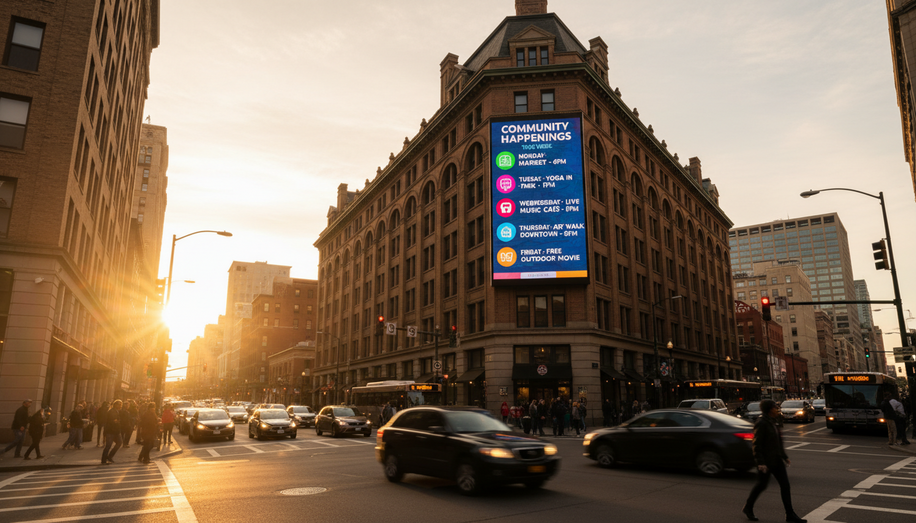

In the bustling heart of urban neighborhoods, out-of-home (OOH) advertising is evolving from broad-spectrum blasts to hyper-local precision strikes, tailoring messages to the unique rhythms and identities of specific communities. This shift leverages geographic granularity—think street-level bus shelters in a family-oriented suburb or digital kiosks near a trendy artists’ district—to deliver maximum relevance, turning passersby into engaged locals rather than fleeting spectators. As 2026 unfolds, brands harnessing this micro-targeting approach report heightened recall and foot traffic lifts of up to 37 percent, proving that proximity breeds persuasion.
The foundation of hyper-local OOH lies in meticulous audience and location analysis. Marketers begin by dissecting demographics and psychographics: age groups, commuting habits, shopping patterns, and even cultural affinities within a single zip code. Heatmaps derived from mobility data reveal high-dwell zones, such as retail corridors where shoppers linger or transit hubs pulsing with daily commuters. For instance, a coffee chain might map parental routes to elementary schools, placing dynamic screens on nearby benches that flash family deals during morning drop-off hours. This isn’t guesswork; real-time analytics from sensors and GPS refine placements, ensuring ads align with foot traffic peaks and minimize wasted impressions.
Street furniture exemplifies this granularity at its most intimate. Bus shelters, kiosks, and benches position ads at eye level in hyper-specific locales, capturing residents in moments of pause. In a densely packed neighborhood like a revitalized warehouse district, these formats allow for community-specific messaging—promoting pop-up markets or live music series that resonate with young creatives. Guerrilla tactics amplify the effect: experiential pop-ups or AR overlays on shelters surprise locals, sparking organic shares and 30 percent boosts in brand recall. One campaign transformed a quiet residential block into an interactive art installation, drawing crowds and embedding the brand in neighborhood lore.
Digital out-of-home (DOOH) takes precision further with dynamic content adaptation. Powered by AI and machine learning, smart billboards swap visuals based on time, weather, or events, serving hyper-tailored ads to micro-audiences. Imagine a digital display in a sports-mad suburb switching to team-themed promotions during game days, or rain-triggered umbrella offers in a pedestrian-heavy downtown enclave. Programmatic buying enables this seamlessness, using geo-fencing to measure exposure and track store visits post-exposure. Exverus Media Director Georgia Schreiner notes that pairing OOH with foot traffic attribution reveals tangible lifts, as geofenced tracking shows who passes by and converts.
Community-specific messaging elevates relevance, forging emotional connections through localization. Brands incorporate dialects, cultural symbols, or neighborhood references—think ads in a Hispanic enclave featuring bilingual family recipes tied to a grocery promotion. Sponsoring hyper-local events like high school games or block festivals extends reach, blending OOH with experiential activations for immersive impact. Netflix has mastered this with area-specific billboards riffing on local memes or landmarks, making global content feel intimately personal. Such tactics minimize ad fatigue; when messaging mirrors community identity, engagement soars.
Integration with mobile and social platforms closes the loop, transforming static OOH into omnichannel powerhouses. QR codes on hyper-local displays drive app downloads or exclusive offers, while beacons retarget nearby phones with personalized follow-ups. Geo-fencing around a neighborhood kiosk captures data on passersby, fueling AI-driven creative variants via dynamic creative optimization (DCO). This phygital synergy—physical ads bridging to digital experiences—tracks full-funnel results, from impressions to purchases. In one case, AR-enabled shelters prompted selfies that flooded social feeds, amplifying a local retailer’s reach exponentially.
Challenges persist, from navigating local regulations to ensuring data privacy in granular targeting. Yet, the street-level advantage of OOH remains unmatched for hyper-local dominance: it’s unskippable, contextual, and rooted in real-world movement. Forward-thinking brands prioritize partnerships with platforms offering real-time analytics and AI personas, building campaigns that evolve with neighborhoods. As urbanization densifies and consumers crave authenticity, hyper-local OOH isn’t just effective—it’s essential. By zeroing in on the block-by-block pulse of communities, advertisers craft relevance that sticks, driving loyalty in an era of fleeting attention.