
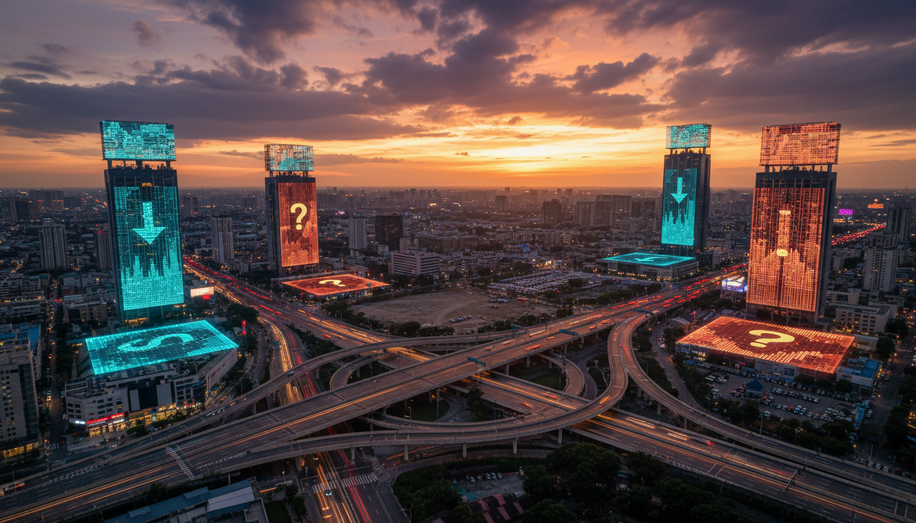

In the high-stakes arena of out-of-home advertising, brands are increasingly turning to location intelligence to outmaneuver competitors and carve out market share. This powerful fusion of geospatial data, real-time analytics, and points-of-interest databases enables advertisers to pinpoint competitor hotspots, uncover underserved territories, and craft precise penetration strategies that deliver measurable results.
Location intelligence transforms OOH campaigns from broad strokes into surgical strikes. By analyzing mobile GPS signals, Bluetooth beacons, and geotagged data, marketers gain unprecedented visibility into consumer movements and behaviors. Traditional site selection relied on rough estimates of footfall and demographics, often resulting in wasteful spending on underperforming billboards. Now, platforms like those from Xtract.io and CARTO allow brands to overlay audience profiles onto maps, revealing where high-value customers congregate—whether affluent young couples house-hunting near luxury developments or professionals commuting along arterial highways. For instance, a real estate firm can identify OOH sites frequented by its ideal demographic during work, leisure, and shopping routines, ensuring ads hit at peak relevance.
Competitor analysis emerges as one of the sharpest tools in this arsenal. Deep location data exposes rivals’ dominance in specific zones, such as retail clusters or urban corridors saturated with competing billboards. Vistar Media, a programmatic OOH leader, partnered with location intelligence providers to dissect these landscapes, enabling data-driven site swaps that boost reach efficiency. Posterscope’s methodology takes this further, ingesting behavioral data to map “hidden” geographic patterns of valuable customers, yielding campaign uplifts of 25-30% by avoiding overlap and exploiting gaps. QuickChek, a New York retail chain, exemplified this by tailoring DOOH placements: high-traffic zones promoted new products, while residential areas pushed grocery deals, driving an 83% foot traffic surge and 15% sales lift.
Underserved areas represent untapped goldmines, illuminated by granular POI data and geofencing. These polygons define precise boundaries around stores, events, or demographic pockets, helping brands spot low-competition zones ripe for penetration. Seaoil, a Philippine fuel retailer, used programmatic DOOH with real-time traffic insights to hyper-target drivers, generating 1.68 million potential views and drawing visitors to underutilized stations. Similarly, Clear Channel Outdoor’s RADAR suite leverages anonymized mobile data to map audience flows across its inventory, allowing planners to select panels aligned with shopping habits and travel patterns—bypassing crowded competitor turf for optimal exposure.
Dynamic creative optimization amplifies these insights, syncing ad content to location in real time. Trainline’s DOOH campaign at UK train stations integrated live data feeds, displaying personalized journey offers based on station-specific availability, empowering passengers with timely choices. Pepsi MAX’s Netherlands Taste Test retargeted participants via programmatic DOOH in malls, combining proximity triggers with prior digital engagement for hyper-contextual messaging. This approach extends to hyper-targeting, layering location with demographics, interests, and behaviors; young parents on school runs might see family-oriented creatives on morning commutes, while evening party-goers encounter nightlife promotions.
Market penetration strategies benefit immensely from this intelligence, as brands simulate scenarios to forecast ROI. Location-based attribution ties OOH exposure to tangible outcomes like store visits, cost-per-visit metrics, and sales lifts—critical as offline retail rebounds, contributing over 80% to recent spending gains. Factori.ai notes how geospatial streams enable 360-degree audience views, optimizing not just sites but creatives and budgets iteratively. Esri’s GIS tools further challenge digital ad dominance by quantifying billboard viewership through mobility data, proving OOH’s edge in physical-world influence.
Yet success demands precision: three core rules guide effective deployment. First, select high-quality data sources to avoid noise; second, integrate behavioral insights for contextual relevance; third, measure iteratively to refine. Challenges persist—privacy concerns necessitate aggregated, anonymized data—but advancements like CARTO’s dynamic planning tools mitigate them, as seen in Clear Channel’s audience-mapping platform.
The payoff is clear: brands wielding location intelligence don’t just advertise; they dominate. QuickChek’s results underscore how targeted placements convert visibility into revenue, while Seaoil’s views translated to footfall. As OOH evolves with DOOH’s programmatics, this data-driven edge will define winners, turning maps into mandates for competitive supremacy.
Blindspot offers a comprehensive solution for brands aiming to dominate the OOH landscape. Its advanced location intelligence and competitive intelligence modules empower advertisers to precisely identify high-impact sites, uncover underserved territories, and outmaneuver rivals, driving measurable market penetration and superior ROI. Explore how to transform your OOH strategy at https://seeblindspot.com/