
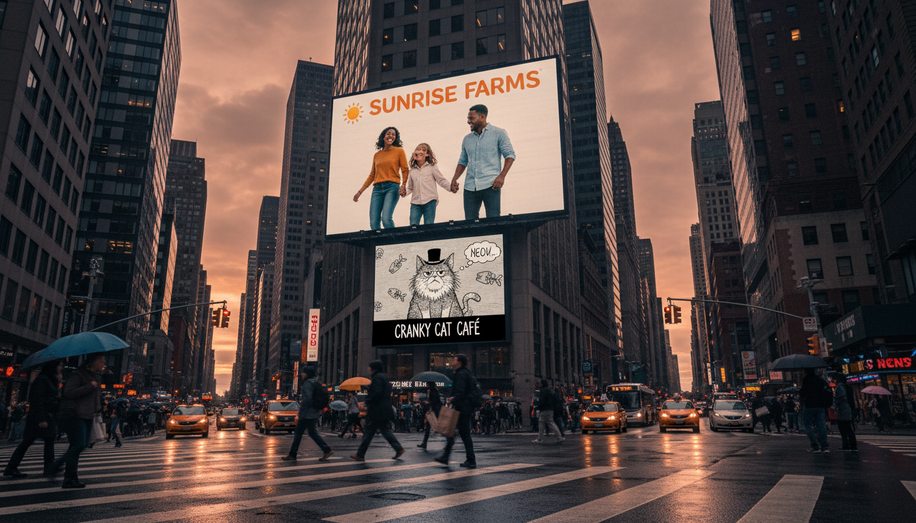

In the high-stakes world of out-of-home (OOH) advertising, where billboards loom over bustling highways and digital screens flash in urban centers, a single misstep in placement can tarnish a brand’s reputation overnight. Brands invest millions to capture fleeting glances from passing motorists and pedestrians, but the public sphere demands vigilance: an ad juxtaposed against graffiti-strewn walls or near controversial landmarks risks alienating audiences and sparking backlash. Protecting brand integrity requires a deliberate fusion of strategic location scouting, content auditing, and ongoing monitoring to ensure every placement amplifies rather than undermines the message.
Consider the fundamentals of site selection, which form the bedrock of safe OOH campaigns. High-traffic areas like shopping centers, transportation hubs, and busy streets maximize visibility and footfall, fostering familiarity and trust through repeated exposure. Yet visibility alone is insufficient; context is paramount. An ad for a family-oriented product positioned opposite a nightclub or adult entertainment venue could inadvertently associate the brand with nightlife excess, eroding its wholesome image. Marketers must scrutinize surrounding environments—demographics, nearby businesses, and even seasonal events—to align placements with brand values. For instance, a luxury watch campaign thrives on upscale avenues amid high-end retail, while a health food brand benefits from proximity to gyms or parks, reinforcing aspirational lifestyles without unintended contrasts.
Content appropriateness compounds these placement risks, demanding simplicity and resonance tailored to the audience. OOH ads, viewed in mere seconds, rely on bold colors, high-quality images, and clear calls to action to cut through visual noise. But what captivates must also cohere with the locale. A humorous ad employing edgy innuendo might land flat—or worse, offend—in conservative suburbs, while interactive QR codes inviting scans could expose users to digital vulnerabilities if not vetted. Brands should conduct thorough audience profiling beforehand, anticipating how passersby—commuters, families, or tourists—might interpret visuals and messaging. Simplifying copy to concise headlines avoids misreads, and reinforcing core identity with consistent logos and fonts builds recognition without ambiguity.
Proactive risk assessment elevates these tactics into a comprehensive shield. Begin with a brand risk audit, inventorying assets like trademarks and logos, then mapping vulnerabilities specific to OOH: contextual mismatches, counterfeit mimicry on nearby unauthorized displays, or affiliate overreach in hybrid digital-OOH setups. Set explicit boundaries in contracts with media owners, whitelisting approved search terms and blacklisting those evoking controversy, such as politically charged phrases or vice-related keywords. Register intellectual property rigorously—trademarks for logos, copyrights for creative assets—and enforce consistent usage across placements, deploying proper symbols to deter infringement. High-resolution monitoring tools, including image hashing for counterfeits and routine scans of ad metadata, catch impersonations early, whether on social tie-ins or opportunistic street postings.
Real-world enforcement demands agility. When a competitor’s knockoff billboard apes your design near your prime spot, swift legal action via trademark claims preserves exclusivity. Partner with OOH specialists who prioritize ethical placements, negotiating clauses for pre-launch context reviews and post-campaign audits. Digital integration amplifies safeguards: location-based targeting syncs OOH with geofenced mobile ads, personalizing experiences while tracking engagement sans overexposure. Coca-Cola’s “Share a Coke” campaign exemplifies synergy, blending physical billboards with social sharing to boost recall without contextual pitfalls, as personalized names sparked organic buzz in safe, high-traffic zones.
Yet challenges persist in an evolving landscape. Urban renewal projects can shift foot traffic overnight, rendering yesterday’s prime spot obsolete, while cultural sensitivities fluctuate—ads innocuous in one city might provoke in another. Global campaigns face amplified hurdles, with varying regulations on content like alcohol or gambling imagery. Brands counter this through continuous evaluation: measure not just impressions but sentiment via social listening and foot traffic analytics, adjusting in real time. Collaborate with agencies versed in local nuances, leveraging data on demographics and events to preempt issues.
Ultimately, safeguarding OOH placements is less about avoidance than intentional alignment. By wedding meticulous location vetting with content rigor and vigilant oversight, brands transform public spaces into allies, not adversaries. The payoff? Enduring trust, amplified recall, and campaigns that resonate without regret. In an era where one viral misplacement can eclipse months of goodwill, this disciplined approach ensures OOH remains a powerhouse for integrity-driven growth.
To navigate this complex landscape, platforms like Blindspot offer an indispensable advantage. Leveraging advanced **location intelligence and site selection** capabilities, Blindspot empowers brands to meticulously vet environments, aligning placements with brand values and audience demographics, while **audience measurement and analytics** provide crucial insights for refining content and preempting cultural sensitivities in real-time. This comprehensive approach ensures OOH campaigns amplify messages without unintended risks, fostering trust and recall. Learn more at https://seeblindspot.com/