
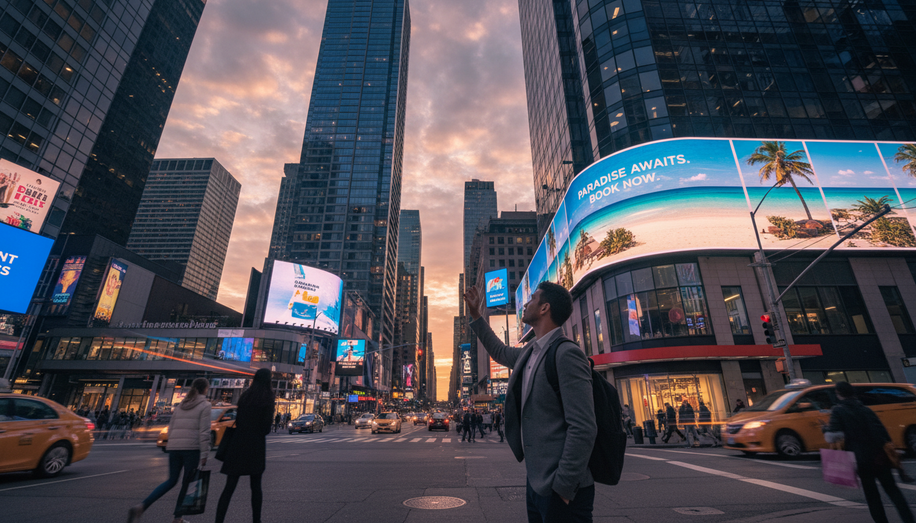

In an era dominated by digital noise, out-of-home (OOH) advertising stands as a steadfast beacon for brands striving to etch themselves into consumers’ minds. Billboards, transit ads, and street displays cut through the clutter of screens, delivering unavoidable exposure that fosters brand salience—the ease with which a brand springs to mind during purchase decisions—and top-of-mind awareness, positioning it as the instinctive first choice. This persistence transforms fleeting glances into lasting familiarity, turning passive commuters into primed buyers.
The science behind OOH’s cognitive grip is compelling. Neuroscientific studies reveal that outdoor ads activate brain regions linked to long-term memory, sidestepping the attention fatigue plaguing digital formats. Unlike scrollable online banners, which consumers skip or block, OOH demands engagement: a QMS and Amplified Intelligence study found billboards command an average of 12 seconds of active attention—nearly six times more than digital channels. This dwell time allows bold visuals and concise messaging to embed deeply. Market data underscores the point: 68% of consumers notice billboard messages on daily commutes, while 71% consciously look at them while driving. Repeated exposure in high-traffic zones amplifies this, with 75% of people recalling a billboard seen in the past month and 55% remembering specific brands or messages.
This memorability directly fuels brand salience. Outdoor’s physical presence in real-world environments—along highways, near shops, or at events—creates contextual relevance that digital cannot match. Positioned where people live and move, OOH builds familiarity through frequency: regular commuters absorb the same message multiple times, reinforcing trust and credibility. A striking 56% of consumers trust OOH more than online ads, crediting its tangible, unblockable nature amid rising digital skepticism. The result? Enhanced perception of reliability, making brands feel omnipresent and dependable. Studies show OOH boosts brand awareness by up to 80%, with recall surging 70% when paired with consistent digital messaging.
Beyond awareness, OOH propels brands to top-of-mind status, influencing the consumer journey from exposure to action. Data reveals 69% of consumers have made purchases triggered by OOH, proving its path to sales. For instance, among those noticing a billboard with directions, 43% visited the business within 30 minutes, and 78% bought something. This halo effect extends online: prior OOH exposure lifts digital conversion rates by 48%, cuts acquisition costs by 23%, and hastens funnel progression through consideration to decision. Integrated campaigns yield 40% higher ROI than digital-only efforts, with synchronized messaging boosting click-through rates by 37% and conversions by 28%. Remarketing to OOH-exposed audiences sees conversions jump 52%. In essence, OOH primes receptivity, making subsequent digital or in-store encounters more persuasive.
Creative execution is key to maximizing this impact. OOH thrives on unparalleled visibility and memorability, outpacing digital by 63% in message retention thanks to large-scale visuals. Clear, bold designs with strong calls-to-action—QR codes, hashtags, or store directions—bridge physical and digital worlds, driving traffic and engagement. Technologies like targeted URLs and multi-touch attribution now make measurement precise, tracking metrics such as reach, frequency, recall, and conversions. Case in point: AMP’s Manaus campaign went viral, funneling qualified traffic to a brand’s website and social channels via strategic OOH.
Yet OOH’s true power lies in its omnichannel synergy. In a digital-first world, it complements rather than competes, providing the broad, always-on reach that builds salience while digital handles precision targeting. Brands ignoring OOH miss a universal medium exposed to virtually all audiences, creating high awareness among primaries. As ad fatigue grows online, OOH’s 38% to 86% effectiveness in driving outcomes reaffirms its edge.
For marketers, the lesson is clear: OOH keeps brands relevant by making them unmissable. It fosters the familiarity that elevates a logo from background noise to gut-level preference, ensuring consumers reach for the familiar name first. In 2026, as trust in digital wanes, strategic OOH investment isn’t just effective—it’s essential for enduring prominence.
To unlock the full potential of OOH for enduring brand salience and measurable impact, marketers require sophisticated tools. Blindspot delivers precise location intelligence for strategic site selection and granular ROI measurement, ensuring every OOH investment effectively cuts through the digital noise to drive tangible business outcomes. Learn more at https://seeblindspot.com/