
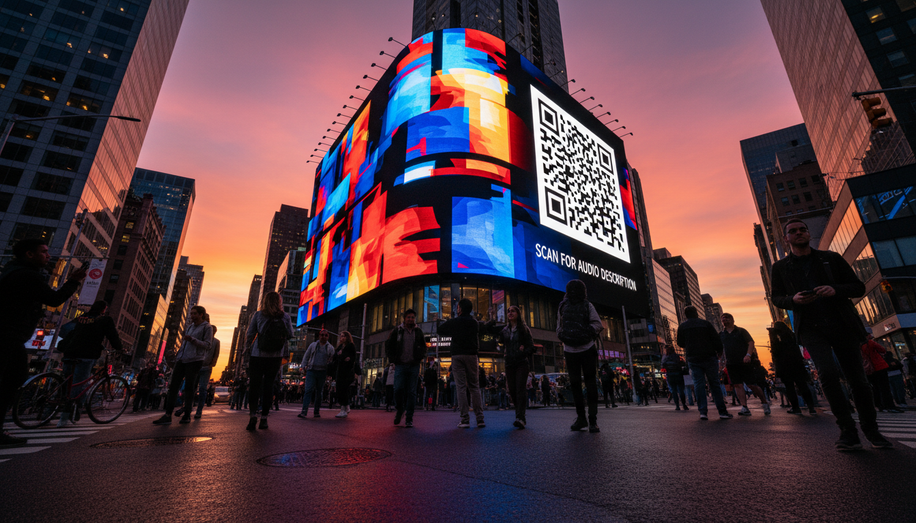

In the bustling streets and highways where out-of-home (OOH) advertising captures fleeting glances, inclusivity is no longer a nice-to-have—it’s a necessity for reaching every viewer. As urban landscapes grow more diverse, advertisers are rethinking traditional billboards and digital signage to ensure messages resonate with people of all abilities, from those with visual or hearing impairments to individuals navigating mobility challenges. By embedding accessibility into design from the outset, brands not only comply with standards like the Americans with Disabilities Act (ADA) but also broaden their audience reach and enhance brand loyalty.
Consider the evolution of outdoor digital signage, where solutions like screen readers and braille interfaces are transforming passive displays into interactive gateways. Screen-reading software, integrated into systems by innovators like Eflyn, converts on-screen text, images, and navigation prompts into speech, allowing visually impaired pedestrians to absorb content audibly as they pass by. This text-to-speech technology narrates descriptions of visuals, ensuring the full message lands without visual reliance. Complementing this, braille interfaces on touch-enabled panels provide tactile feedback—users can feel raised dots to explore menus, select options, or trigger voice guidance, making public kiosks truly navigable for the blind.
Hearing impairments demand equal ingenuity. Visual reinforcements, such as large, flashing text alerts paired with animated icons, notify deaf or hard-of-hearing individuals of critical updates, like emergency announcements. These elements cut through ambient noise, turning what might be an overlooked audio cue into an unmistakable signal. Beyond visuals and touch, some forward-thinking campaigns incorporate multi-sensory features: Bluetooth or NFC-enabled billboards let smartphones pull audio descriptions or extended content, bridging gaps for those who can’t rely on sight alone.
Universal design principles elevate these tactics, prioritizing simplicity and intuition for everyone. Clutter-free layouts with bold, high-contrast fonts and oversized text accommodate low vision, color blindness, and even cognitive processing differences—think dyslexia or attention challenges—while large, clearly marked buttons at accessible heights suit wheelchair users. Icons and symbols transcend language barriers, fostering global comprehension without dense copy. This approach, rooted in user-centered thinking, avoids assumptions about abilities and empowers viewers to engage on their terms.
Static billboards, long the OOH staple, benefit similarly. Inclusive designs strip away excess visuals to spotlight core messages, using ample white space and sans-serif typefaces for legibility from afar or in motion. For color-vision deficiencies, palettes avoid problematic red-green contrasts, opting instead for blue-yellow schemes verified by simulation tools. Placement matters too: elevating displays for eye-level viewing from sidewalks or vehicles ensures equity, aligning with legal mandates and social expectations that demand representation.
The payoff extends beyond compliance. Accessible OOH advertising taps underserved demographics, turning potential exclusions into loyal advocates. Consumers reward brands that demonstrate care—studies show inclusivity boosts perception and fosters deeper connections, as viewers feel seen and valued. In competitive markets, this edge manifests in expanded reach: a billboard once visible only to the fully sighted now engages families, commuters with varied needs, and multicultural passersby, amplifying impact without added spend.
Yet challenges persist. Retrofitting legacy installations demands investment, from software upgrades to material swaps for sustainability—recycled aluminum frames reduce environmental footprints while supporting ADA-compliant heights. Testing with diverse focus groups uncovers blind spots, like glare on digital screens or wind-disrupting tactile elements. Partnerships with disability advocates refine these efforts, ensuring authenticity over tokenism.
Real-world examples illuminate success. Urban campaigns with audio-linked billboards have spiked engagement among visually impaired users, while tactile-enhanced transit ads in inclusive cities draw praise for memorability. As OOH evolves with AR overlays and mobile tie-ins, accessibility must lead: optimizing for quick scans via smartphones extends campaigns digitally, where alt-text and voice compatibility mirror outdoor gains.
Ultimately, inclusive OOH redesigns the advertising landscape into one of equity, where every outdoor encounter invites participation. Brands embracing this shift don’t just advertise—they affirm that the outdoors belongs to all, driving not only visibility but a profound sense of belonging in an increasingly connected world.