

In the high-stakes world of out-of-home (OOH) advertising, clicks and impressions have long dominated measurement conversations, offering quantifiable glimpses into reach and visibility. Yet these metrics capture only the surface, leaving advertisers blind to the deeper ripples—brand awareness surges, perception shifts, and evolving consumer sentiment—that truly define campaign success. As OOH evolves with digital billboards and data-driven tools, marketers are turning to sophisticated methodologies like brand lift studies and qualitative surveys to quantify these intangible outcomes, proving that a billboard’s impact extends far beyond the passerby’s glance.
Brand lift studies stand at the forefront of this shift, providing a rigorous framework to isolate an OOH campaign’s influence. These studies typically divide respondents into exposed and control groups: one saturated by the campaign, the other untouched, often in comparable markets like New York versus Philadelphia. By surveying both, advertisers measure uplift across key metrics—awareness, ad recall, favorability, consideration, and purchase intent—revealing how exposure nudges perceptions. For instance, a snack brand might compare sales in OOH-heavy neighborhoods against non-exposed areas, attributing incremental growth directly to the ads. Dynata, a leader in this space, leverages opted-in panels for precise matching, ensuring 95% statistical confidence in results that track not just familiarity but emotional resonance, such as heightened brand trust.
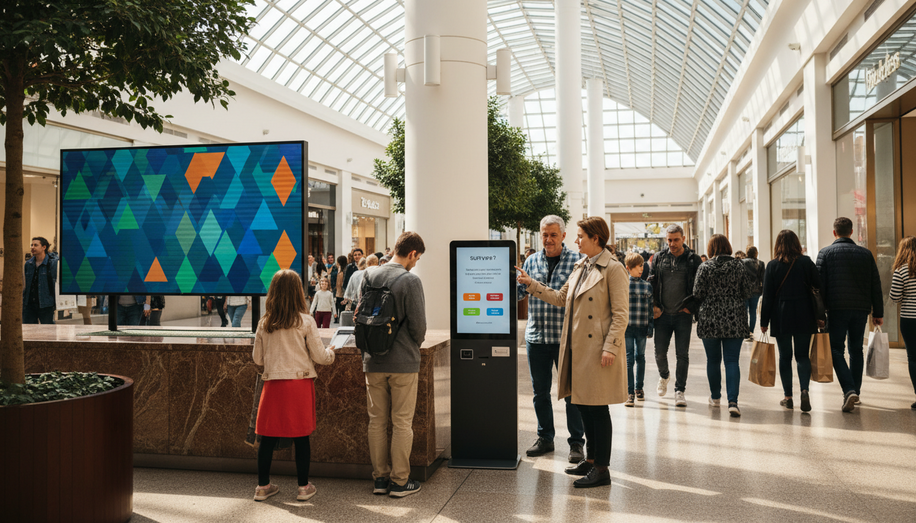
Surveys form the backbone of these efforts, tailored to probe sentiment with precision. Post-exposure questionnaires, delivered via proximity-based invites near digital OOH screens, assess ad clarity, message association, and intent shifts. OUTFRONT Media, for example, customizes these to gauge brand sentiment, uncovering whether a campaign fosters positivity or merely registers. Qualitative analysis elevates this further, diving into open-ended responses for nuanced insights—like why consumers associate a brand with innovation or reliability. Soofa Digital emphasizes post-campaign studies that blend quantitative lift with sentiment tracking, confirming if impressions translate to recognition or affinity.
Incrementality testing amplifies reliability, pitting test markets against controls to benchmark outcomes. A bus panel blitz in one city, held back in another, exposes disparities in foot traffic, store visits, or brand searches, directly linking OOH to perception changes. Blue Alpha notes this method’s power in lifting awareness, where “likelihood to see” metrics—factoring dwell time and angles—refine impression data into actionable proof. When paired with geo-fencing or device data, these tests bridge offline exposure to online echoes, such as spikes in branded searches or social mentions.
Qualitative depth addresses surveys’ limitations, capturing the “why” behind numbers. Social listening tools monitor hashtag surges or chatter post-campaign, revealing virality from striking creatives. Plugtalk Media highlights how humorous OOH sparks online discussions, quantifiable through mentions and shares, which signal sentiment evolution. Broadsign advocates inviting exposed audiences to online surveys measuring perception and intent, enabling real-time optimizations. This layered approach—surveys for lift, qualitative for context—transforms OOH from a “spray and pray” medium into a sentiment-shaping powerhouse.
Challenges persist: self-reported data risks bias, and control groups demand meticulous matching. Yet advancements in programmatic DOOH and AI-driven attribution mitigate these, feeding OOH data into multi-channel models like marketing mix modeling (MMM) for holistic views. Billups underscores how this rethinking connects impressions to impact, from awareness to loyalty.
Forward-thinking brands like those using Blip Billboards harness DOOH platforms for resonant designs that amplify lift—vivid imagery touching pain points, QR codes bridging to digital sentiment tracking. The result? Campaigns not just seen, but felt. As OOH measurement matures, prioritizing brand lift and sentiment equips marketers to justify budgets with evidence of enduring influence, proving that true value lies in minds changed, not eyes caught.
Ultimately, proving OOH’s enduring influence demands platforms capable of bridging offline exposure with quantifiable brand impact. Blindspot addresses this by integrating audience measurement, location intelligence, and programmatic DOOH management to facilitate rigorous brand lift studies and incrementality testing, translating impressions into demonstrable shifts in awareness and sentiment. Such advanced ROI measurement and attribution capabilities empower marketers to justify budgets with data-backed evidence of true value—minds changed, not just eyes caught. Discover more at https://seeblindspot.com/