
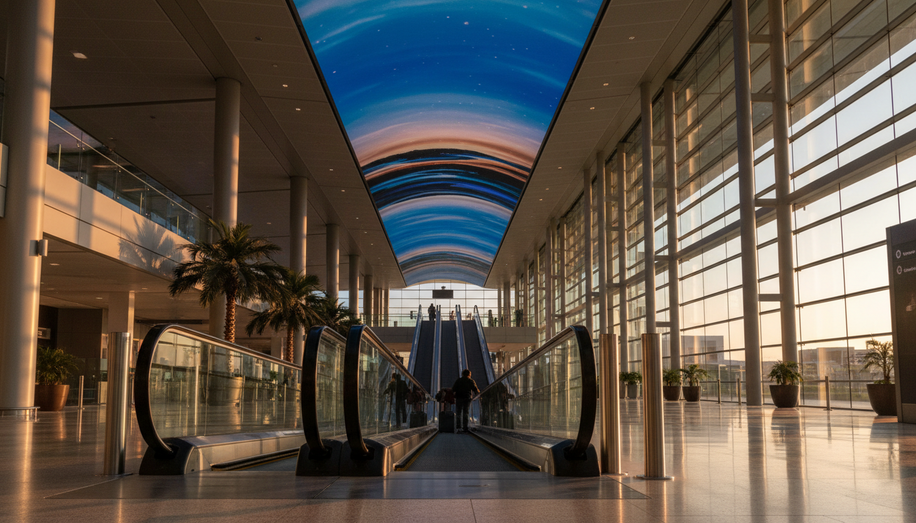

In the bustling arteries of major airports, out-of-home (OOH) advertising transforms transient spaces into prime canvases for brands seeking to captivate high-value audiences. Travelers—business executives, affluent tourists, and decision-makers—linger in these hubs, their minds open to messaging amid the rhythm of gates, lounges, and baggage carousels, creating unparalleled opportunities for impact.
Airports stand apart from other OOH environments due to their captive audiences and premium demographics. Passengers often spend extended dwell times waiting for flights, connections, or luggage, fostering receptivity that static billboards or urban displays rarely match. In the United States, hubs like those in New York, Los Angeles, and Atlanta draw international business travelers and luxury seekers, skewing toward higher-income brackets ideal for premium brand positioning. This ecosystem amplifies OOH’s potency: screens blend seamlessly with flight information displays, priming eyes already scanning for updates, while diverse foot traffic ensures broad yet targeted reach.
Strategic placements within the airport “hub” maximize this potential, turning navigation into engagement. Concourses, the throbbing heart of any terminal, host massive footfall at key intersections linking domestic and international gates. Here, large-scale digital networks deliver dynamic content to connecting business travelers, who pause amid the rush. Brands leverage dayparting—tailoring messages by time of day—or programmatic digital OOH (DOOH), using flight data for precision targeting, ensuring relevance that static ads can’t rival.
Baggage claim areas emerge as goldmines, particularly for international and long-haul arrivals. Fatigued passengers huddle for minutes, even hours, eyes drifting to strategically placed digital screens or elegant static displays amid a luxury-aligned setting. This post-flight vulnerability heightens recall, as travelers decompress and absorb branding that resonates with their journey’s end. Nearby, arrivals zones for meeter-greeters offer first-impression real estate. International passengers, jet-lagged yet impressionable, encounter high-visibility messaging that imprints on their U.S. entry, ideal for tourism boards or global luxury campaigns.
Premium lounges and airline clubs elevate targeting further. Exclusive digital screen networks within these sanctuaries reach elite frequent flyers—think C-suite professionals charging devices or sipping cocktails. Subtle, contextual placements at charging stations and business centers blend utility with persuasion, capturing undivided attention from those most likely to influence markets. Food courts and gate areas extend this reach, where signage in common zones competes less with clutter and more with hunger or boredom, drawing eyes naturally.
The shift to digital and interactive formats revolutionizes airport OOH, outpacing traditional banners. Dynamic screens enable real-time updates, geofencing ties mobile pushes to physical locations—like a coffee shop discount near Gate A—and contextual wayfinding turns ads into guides. At Orlando International Airport, Aunt Anne’s pretzels mastered this with directional cues (“Turn right, we’re by Gates 90-99”), boosting foot traffic by simplifying choices in a vendor-saturated space. Nielsen data underscores the payoff: 20% of directional OOH viewers visit the advertised spot soon after.
Yet, standing out demands cunning in these high-demand arenas. Message density can drown campaigns, so prioritize less-cluttered, high-dwell zones like lounges or premium checkpoints over saturated walkways. Differentiate with bold creatives—interactive polls, augmented reality overlays, or value-driven content like travel tips—that surprise rather than shout. Programmatic DOOH’s data-led precision further refines this, segmenting by demographics or behaviors for ROI that rivals digital channels.
For brands, airport OOH isn’t mere visibility; it’s a gateway to influence. High exposure meets premium demographics in a receptive setting, yielding brand lift and impulse action. As U.S. hubs evolve with sophisticated infrastructure—from full video walls to integrated signage—marketers who navigate these spaces strategically soar above competitors, turning layovers into lasting connections. In an era of fragmented media, airports remain unmatched hubs where journeys intersect with opportunity.