
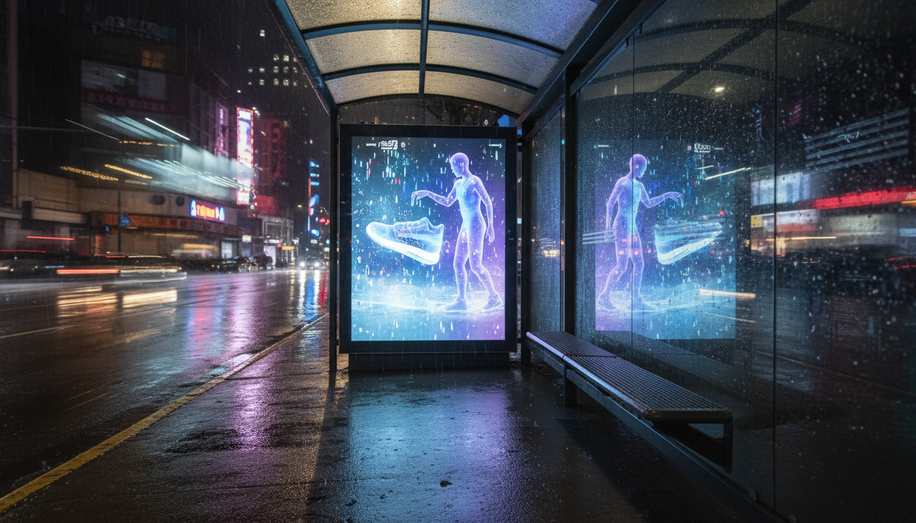

In the bustling digital expanse of the metaverse, where avatars roam virtual cityscapes and economies thrive on blockchain-backed transactions, out-of-home (OOH) advertising is finding a bold new frontier. Programmatic digital out-of-home (DOOH) technology, already proven in physical spaces, is powering screens within these immersive realms, allowing brands to target avatar shoppers with the same precision as real-world passersby. This convergence is not mere speculation; it’s a tangible shift, with partnerships like that between Admix and Ocean Outdoor launching NFT billboards that replicate premium UK DOOH sites—think tri-screen roadside spectacles and curved full-motion displays—directly into virtual worlds.
The appeal lies in the blurring lines between physical and digital existence. Consumers now divide their time equally between meatspace and cyberspace, creating a “phygital” playground for advertisers. Ocean Outdoor’s initiative drops digital twins of Manchester’s Loop network and Birmingham’s giant screens as non-fungible tokens, enabling brands to claim virtual real estate that mirrors high-impact physical assets. This isn’t just replication; it’s amplification. A physical billboard glimpsed on a commute can extend into the metaverse, where users interact with it via augmented reality (AR) overlays or avatar-triggered experiences. Early research confirms that the ad request-response protocols fueling DOOH monetization translate seamlessly to metaverse retail environments, opening doors for dynamic, context-aware campaigns.
Augmented reality stands as a pivotal bridge. AR transforms static OOH into interactive portals, scanning a real-world poster to unlock virtual try-ons or metaverse entry points. Successful implementations prioritize strategic goals over tech dazzle, integrating with broader marketing ecosystems and robust measurement from day one. For instance, brands leveraging AR in OOH report heightened engagement, as digital natives—now the core audience—expect seamless transitions from sidewalk to screen. This evolution positions OOH leaders to thrive in an attention economy where immersion trumps interruption.
Yet the metaverse demands more than virtual billboards. Brands are crafting branded virtual goods, immersive events, and product placements within gaming universes and social VR hubs. The metaverse advertising platform market, projected to unlock $6-8 billion in OOH-metaverse synergies, thrives on VR/AR proliferation, 3D content tools, and blockchain for verifiable ad delivery. Here, physical OOH acts as the on-ramp: a DOOH screen in Times Square might tease a metaverse concert, retargeting mobile users into a virtual venue packed with sponsor activations. Integrated campaigns blending DOOH with CTV and mobile have boosted store visits by up to 127%, proving the potency of sequential, cross-reality messaging.
Real-world examples illuminate the path. Admix and Ocean Outdoor’s collaboration signals a “new dawn,” blending DOOH’s $50 billion projected market with virtual frontiers through coupled activities that maximize eyeballs across realities. Virtually generated OOH, like Maybelline’s faux ads, has captured headlines, while “tecoration”—metaverse-enhanced urban media—reimagines smart cities as hybrid ad spaces. Brands shifting budgets from flat digital to these 3D realms gain unparalleled personalization: avatars donning virtual sneakers mirrored from a physical OOH campaign, or blockchain-tracked interactions ensuring transparency.
Challenges persist, but they are surmountable. Authenticity reigns supreme—campaigns must feel organic, respecting privacy and cultural nuances to avoid gimmickry. Measurement frameworks, evolved from performance data, are essential, as is blending virtual stores with real-world e-commerce crossovers. OOH’s data-driven heritage, supercharged by AI, equips it perfectly: programmatic buying targets metaverse demographics with physical precision, while adjacent innovations like decentralized content creation draw fresh investment.
For OOH brands, the metaverse isn’t a distant horizon; it’s an extension of core strengths. By mapping physical touchpoints to virtual experiences—NFT drops from iconic screens, AR gateways to branded worlds—advertisers create cohesive narratives that follow consumers across realities. This isn’t disruption; it’s destiny. As digital transformation accelerates, those who master the bridge will command attention in worlds both seen and unseen, turning billboards into portals and avatars into advocates. The result? A unified advertising ecosystem where physical OOH ignites virtual firestorms, redefining engagement for a phygital age.