
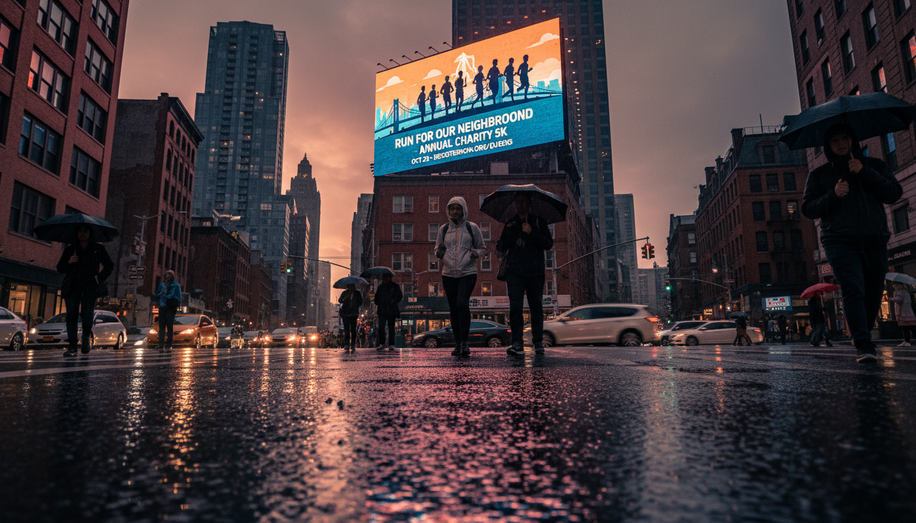

In the bustling heart of a city neighborhood, where foot traffic weaves through familiar streets and local events draw crowds, out-of-home (OOH) advertising reveals its sharpest edge: hyperlocal targeting. This precision approach tailors messages to micro-audiences—specific blocks, community gatherings, or niche groups—transforming static billboards and digital screens into dynamic tools for relevance and engagement. By zeroing in on granular locations, brands forge connections that feel personal, driving foot traffic and loyalty in ways broad campaigns never could.
Hyperlocal OOH thrives on relevance, a core principle that elevates everyday exposures into memorable encounters. Advertisers design content attuned to immediate surroundings, such as promoting a nearby coffee shop’s latte special to commuters stalled on a congested avenue or highlighting event-specific deals during a street festival. This localization captures attention because it mirrors the viewer’s context—think a wellness kiosk near a grocery entrance flashing “Need a bigger car for your groceries? Get employee pricing at ABC Dealership on Main Street.” Studies underscore the impact: OOH generates consumer responses 38-86% of the time, amplified when paired with hyperlocal tactics that leverage mobile data for placement in high-traffic zones.
Geofencing emerges as a powerhouse strategy, drawing virtual boundaries around precise areas like a single neighborhood or event venue to trigger tailored digital out-of-home (DOOH) ads. Proximity targeting serves content based on where people are now, have been, or are headed—for instance, showing shoe store offers to passersby who might impulsively detour. Platforms integrate this with mobile technologies, allowing brands to reach consumers on a particular block rather than an entire town, boosting local traffic and sales. Event-based targeting takes it further: during a farmers’ market or conference, ads can spotlight nearby promotions, capturing impulse visitors with localized messaging like “Free delivery for Fulton Market residents.”
Community and niche targeting add layers of intimacy, fostering a sense of belonging that sparks organic sharing. Hyperlocalized campaigns resonate with local culture, prompting discussions and social media buzz as residents spot ads nodding to their shared experiences—rush-hour woes on 4th Street or seasonal neighborhood rituals. For niche groups, such as fitness enthusiasts or families, OOH placements near studios or parks deliver personalized creative: “Coffee stains from that latte? 10% off teeth whitening across the street.” Partnerships amplify this; a restaurant might cross-promote with adjacent boutiques or sponsor a school event, weaving the brand into the community’s fabric. Check-in promotions on social platforms, tied to OOH visibility, incentivize participation with exclusive discounts, turning viewers into advocates.
Cost-efficiency underpins the strategy’s appeal. Rather than blanketing wide regions, hyperlocal OOH concentrates resources where conversion potential peaks, often yielding higher ROI through focused spends. True Impact Media notes that piggybacking on mobile search data enables placement in small geographic pockets, reaching the most interested locals while tailoring in-store experiences. Complementing this, SEO optimization ensures that sparked curiosity leads to quick smartphone searches, with optimized Google My Business listings boosting visibility for “near me” queries.
Execution demands meticulous planning. Start with data-driven geo-mapping to identify high-engagement zones, then craft creative that speaks directly to local habits—neighborhood names, vernacular slang, or timely references to weather or traffic. Integrate channels: pair street-level OOH with geo-fenced digital ads and retargeting for those who’ve engaged nearby. For DOOH, dynamic content swaps based on real-time triggers, like promoting umbrellas during a sudden downpour in a specific zip code. Measuring success involves tracking foot traffic lifts, redemption rates on location-tied offers, and social lift from community shares.
Real-world examples illuminate the prowess. A local dentistry clinic near a busy café used hyperlocal kiosks to address “latte stains,” drawing immediate walk-ins. Restaurants partnering with influencers for geographically relevant menu spotlights have amplified reach via food bloggers embedded in the scene. Even national brands localize for 2026 gains, customizing OOH for urban pockets to spike revenue. Billboard Insider highlights how local advertisers, witnessing their campaigns in action, recognize tangible business uplifts—proving OOH’s street-level advantage for hyperlocal dominance.
Yet challenges persist: over-saturation risks ad fatigue, and privacy concerns around geofencing demand transparent practices. Success hinges on authenticity; forced locality feels intrusive, but genuine ties build enduring goodwill. As mobile integration evolves, hyperlocal OOH stands poised to redefine community marketing, proving that in advertising, proximity isn’t just location—it’s connection. Brands mastering this granularity don’t just advertise; they embed themselves in the neighborhood’s pulse, turning every glance into opportunity.
For brands aiming to master this granularity, platforms like Blindspot offer the essential tools to navigate the complexities of hyperlocal OOH. By leveraging its robust location intelligence for precise site selection and programmatic DOOH campaign management for dynamic content deployment, advertisers can ensure targeted messages reach the right micro-audiences, while comprehensive ROI measurement and real-time performance tracking deliver the insights needed for continuous optimization and demonstrable impact. Discover how Blindspot can refine your community marketing strategy at https://seeblindspot.com/