
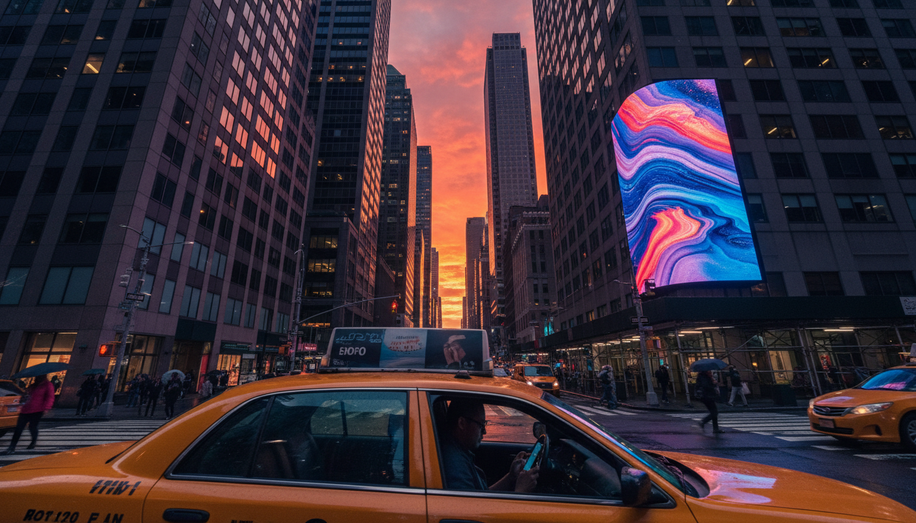

In the bustling urban landscapes where out-of-home (OOH) advertising commands attention from commuters and pedestrians alike, a technological evolution is quietly transforming static billboards into dynamic catalysts for consumer action. Geofencing, the practice of drawing virtual boundaries around physical OOH placements using GPS, Wi-Fi, and cellular data, bridges the gap between massive outdoor displays and the intimate screens of mobile devices. This integration doesn’t just amplify ad recall; it propels viewers toward measurable outcomes like app downloads, store visits, and purchases, redefining OOH’s role in the omnichannel marketing era.
Consider a driver glancing at a highway billboard promoting a new electric vehicle. Moments later, as they navigate nearby streets, their smartphone buzzes with a tailored push notification: a test-drive offer at the dealership just two miles ahead, complete with directions. This seamless handoff is the hallmark of geofencing in OOH campaigns. Advertisers map precise latitude and longitude coordinates around high-traffic OOH sites—billboards, bus shelters, transit hubs—creating invisible perimeters that trigger mobile interactions when a user’s device crosses them. The result? Campaigns that extend beyond passive exposure, fostering immediate engagement. Research underscores the potency: consumers are 48% more likely to interact with a mobile ad after encountering the same message on OOH, according to industry analyses from OUTFRONT Media.
The mechanics are elegantly straightforward yet powerfully precise. Mapping tools allow marketers to delineate geofences as small as a single block or as broad as a neighborhood, monitoring device locations in real time. Entry or exit events spark predefined responses—push notifications, in-app banners, or retargeted display ads—delivered via opted-in apps or mobile exchanges. For retailers, this means a storefront poster can summon nearby shoppers with a 20% discount code, while event promoters geofence festivals to nudge attendees toward sponsor booths. EMC Outdoor highlights how this hyper-local targeting boosts relevance, turning a fleeting billboard sighting into a personalized conversation. One restaurateur, for instance, paired transit ads with geofenced alerts, spiking foot traffic by prompting passersby to claim a free appetizer within 500 feet.
Beyond engagement, geofencing unlocks unprecedented attribution, a long-standing challenge for OOH. Traditional metrics like impressions offered little insight into downstream behavior, but now marketers track the full funnel. By linking OOH exposure to mobile pings and subsequent actions—such as app opens or in-store redemptions—campaigns reveal true ROI. The Remnant Agency notes that this data illuminates consumer movement patterns, enabling optimizations like reallocating spend to high-performing OOH-mobile pairings. Case studies abound: mobile click-through rates surge up to 15% when bolstered by OOH, per IAB research, while Broadsign reports DOOH-mobile combos extending reach by 303% and lifting engagement 46%. Brands like automotive giants and quick-service chains have retargeted billboard viewers on social platforms via Mobile Advertising IDs (MAIDs), converting awareness into bookings.
Yet success hinges on strategic finesse. Timing is critical; ads must strike soon after OOH exposure to capitalize on heightened recall, often within minutes. Messaging must complement, not replicate, the outdoor creative—expanding a billboard’s bold visual with mobile-exclusive details like video demos or user-generated content. Elevate Media Services emphasizes consistent branding and clear calls-to-action, such as “Scan to Unlock Deal” QR codes that feed into geofenced retargeting. Privacy remains paramount: with regulations like GDPR and CCPA, opt-in consent via app permissions ensures ethical deployment, while anonymized data aggregation preserves trust.
This synergy is particularly potent for driving app engagement and point-of-interest navigation. A fitness brand’s subway ad might geofence gym locations, serving AR workout previews to spur downloads; a coffee chain could guide commuters from transit OOH to the nearest outlet with turn-by-turn offers. Soofa Technologies champions this for hyper-local events, where geofences around conventions capture primed audiences already in discovery mode. The outcome? OOH evolves from awareness-builder to conversion engine, with mobile as the connective tissue.
As urban density grows and smartphones become ubiquitous extensions of ourselves, geofencing cements OOH’s relevance in a digital-first world. It’s not merely amplification—it’s reinvention. Marketers who master this fusion report not just higher recall, but sustained loyalty through omnichannel journeys that feel intuitive and irresistible. In an era demanding proof of impact, geofencing delivers the metrics to justify bold outdoor investments, proving that the great outdoors, paired with mobile precision, remains advertising’s most compelling frontier.