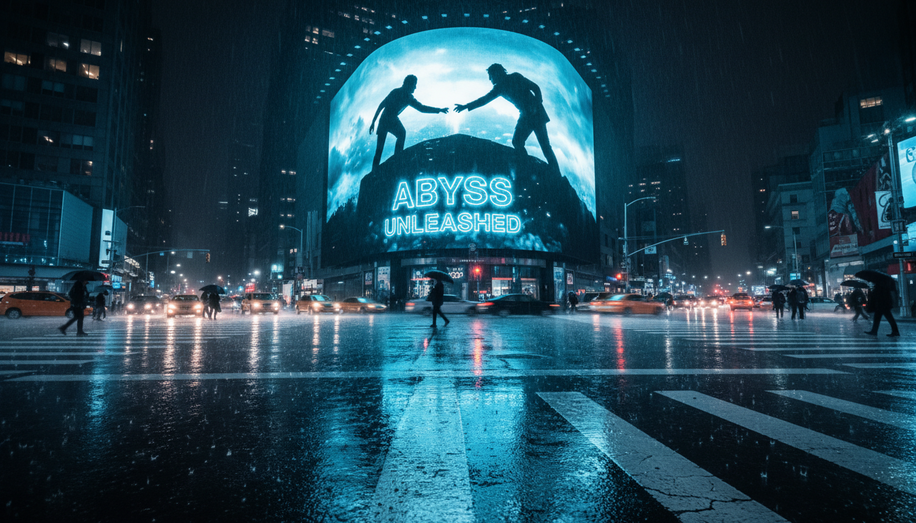

In the hyper-competitive arena of streaming entertainment, where thousands of series and films vie for eyeballs each month, out-of-home (OOH) advertising has emerged as an indispensable weapon for giants like Netflix, Hulu, Disney+, and Amazon Prime. Far from the static billboards of yesteryear, today’s OOH campaigns are dynamic spectacles—towering installations, immersive street art, and digital screens that hijack urban landscapes to build insatiable buzz. These “binge-watching billboards” don’t just advertise; they tease plot twists, unveil cryptic spoilers, and propel viewers straight to their couches, proving OOH’s prowess in a market saturated with digital noise.
Netflix has long mastered this art, turning city streets into extensions of its narrative universes. For “Stranger Things,” the streamer blanketed Times Square with flickering LED recreations of the Upside Down, complete with eerie synth soundscapes synced to pedestrian traffic lights. Passersby couldn’t scroll past these unskippable encounters; instead, they snapped photos, sparking viral social media frenzies that amplified reach exponentially. Similarly, the launch of “13 Reasons Why” featured bus shelters transformed into shadowy lockers spilling cassette tapes, each emblazoned with episode drop dates. These tactile teases didn’t spoil major plots but dripped just enough intrigue to hook casual observers, driving a reported surge in subscriptions. As one industry insider notes, OOH’s physicality creates “offline watercooler moments” that digital ads struggle to replicate, fostering word-of-mouth in an era of ad fatigue.
Disney+ has leaned into experiential OOH to launch franchises like “The Mandalorian,” erecting life-sized Baby Yoda holograms in London’s Piccadilly Circus and Los Angeles’ Hollywood Boulevard. These weren’t mere posters; interactive QR codes invited scans for exclusive trailers, bridging the real world to app downloads. The result? A 382% uplift in online engagement compared to TV spots alone, per Out of Home Advertising Association of America (OAAA) data. Hulu, not to be outdone, promoted “The Handmaid’s Tale” Season 5 with dystopian street murals in major cities—women in red cloaks peering from building facades, their eyes tracking commuters via motion sensors. Subtle spoilers, like fragmented quotes from upcoming episodes, enticed fans while intriguing newcomers, leading to measurable spikes in tune-ins during premiere windows.
This strategic deployment thrives on OOH’s core strengths: massive reach, unblockable visibility, and cost efficiency. In dense urban hubs, billboards and transit ads deliver repeated exposures to demographics primed for streaming—millennials and Gen Z, who spend hours daily outside yet crave escapism. Research from OAAA and Harris Poll underscores the medium’s impact: 76% of consumers act after seeing digital OOH (DOOH), with 74% pulling out their phones on the spot. For every dollar invested, OOH generates $5.97 in consumer spending, outpacing TV. Streaming platforms exploit this during narrow launch windows, pairing OOH with TV and social for omnichannel dominance. Amazon Prime’s “The Boys” campaign synchronized DOOH screens nationwide to flip messages in real-time based on local events, like superheroes “crashing” sports games, which boosted platform sign-ups by intertwining hype with cultural moments.
Yet OOH’s real edge lies in its spoiler-savvy storytelling. In a spoiler-phobic culture, campaigns dole out controlled reveals—silhouetted characters, taglines hinting at twists, or anagrammed episode titles—that spark speculation without ruining climaxes. HBO Max’s “House of the Dragon” rollout featured dragon-scale wraps on skyscrapers, with glowing eyes activating at dusk to whisper premiere dates. This gamified anticipation turned cities into scavenger hunts, with fans decoding clues online. Programmatic DOOH takes it further, enabling geo-targeted tweaks: a billboard near a college might flash youth-oriented series like “Euphoria,” while airport screens push travel-themed films. Such precision ensures relevance, combating the “crowded entertainment market” where 500+ scripted series launched in 2025 alone.
Critics might argue digital platforms suffice, but OOH’s tangibility cuts through. Viewers can’t fast-forward a 50-foot “Squid Game” statue emerging from Seoul-inspired subway ads, nor ignore the 86% ad recall rate DOOH commands—the highest among media. As streaming wars intensify, with Netflix’s ad-tier subscribers hitting 40% of its base, OOH fortifies launches against churn. Projections from MAGNA forecast OOH spend reaching $9.15 billion in 2023, with growth accelerating into 2026 amid DOOH innovations like AI-driven personalization.
Ultimately, binge-watching billboards remind us that in an always-on digital deluge, nothing commandeers attention like the physical world. Streaming behemoths aren’t just buying ad space; they’re staging public theater that blurs promotion with event, ensuring their next big drop isn’t watched—it’s anticipated, dissected, and devoured. As one Netflix executive put it, “OOH doesn’t compete with streaming; it streams us into living rooms.” In this blockbuster battle, the great outdoors remains the ultimate plot twist.
To truly master this blockbuster battle and ensure OOH campaigns aren’t just spectacles but strategic wins, streaming giants require robust data and precise control to cut through the digital noise. Blindspot offers programmatic DOOH campaign management, location intelligence for optimal site selection, and real-time performance tracking with ROI attribution, enabling platforms to measure and maximize every “offline watercooler moment” against churn and competition. Explore how at https://seeblindspot.com/