
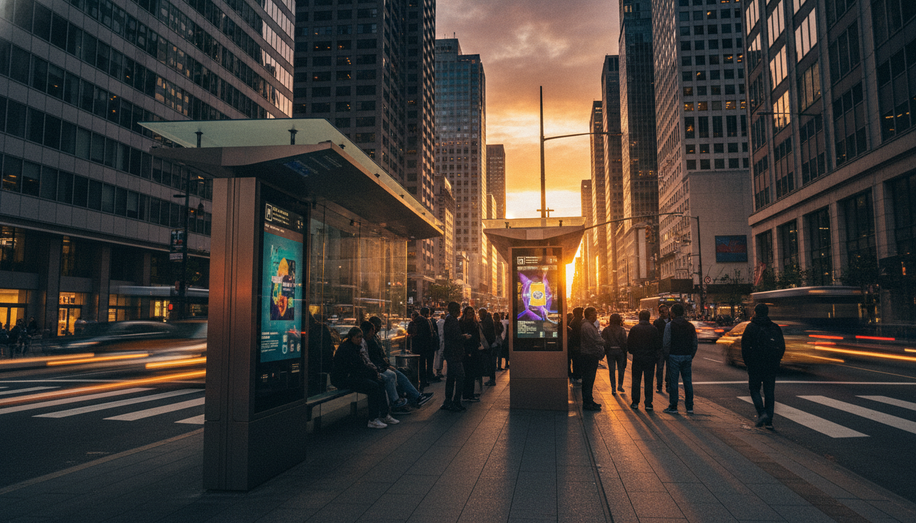

In the heart of bustling metropolises, where skyscrapers pierce the sky and sidewalks teem with hurried pedestrians, out-of-home (OOH) advertising is evolving far beyond the towering billboards that once dominated the skyline. Street furniture—those ubiquitous bus shelters, benches, and kiosks—and interactive kiosks are emerging as the new power players, offering brands an intimate, eye-level connection with urban dwellers. This shift is particularly potent in densely populated areas, where foot traffic surges through commercial hubs, transit nodes, and pedestrian corridors, turning everyday pauses into prime advertising moments.
Street furniture advertising, often called street-level urban media, places messages precisely where people linger: waiting for the next bus, resting on a bench, or scanning their surroundings in high-traffic zones. Unlike billboards that flash by at highway speeds, these formats demand attention at a human scale. Bus shelters, for instance, capture commuters during their daily rituals, exposing them to branding for minutes at a time rather than fleeting seconds. Benches in parks, plazas, and transportation hubs extend this reach, blending seamlessly into the urban fabric while delivering high-frequency impressions to both walkers and drivers. In cities like New York, London, and Tokyo, where pedestrian volumes can exceed 50,000 per hour in key districts, this proximity translates to unmatched visibility. Data from OOH analytics firms shows dwell times on street furniture ads averaging 15-30 seconds—three to five times longer than traditional billboards—fostering deeper brand recall.
The strategic edge lies in hyperlocal targeting. Brands can dominate neighborhoods by saturating specific zones: a cluster of bus shelters around a university for youth-oriented campaigns, or benches near shopping malls for retail promotions. This granularity allows advertisers to align with consumer mindsets—shoppers in buying mode, commuters planning their day—maximizing relevance. Cost-effectiveness seals the deal; street furniture often runs 30-50% cheaper per thousand impressions than digital billboards, with production costs kept low through standardized formats. For local businesses, it’s a game-changer: a small chain of coffee shops can blanket a downtown core for the price of a single prime billboard slot, building neighborhood loyalty without the national-scale budget.
Enter interactive kiosks, the digital dynamos elevating street furniture into the interactive era. These touch-enabled displays, affixed to transit stations, ATM enclosures, or standalone pedestals, transform passive viewing into engagement. In pedestrian-heavy urban cores, where smartphones compete for attention, kiosks cut through with gamified ads, QR codes, and augmented reality experiences. Imagine a cosmetics brand at a busy subway kiosk offering virtual try-ons, or a food delivery service prompting instant orders with location-based discounts. Platforms like The Neuron and OneScreen enable programmatic buying, where advertisers upload creatives and set parameters for time, weather, or demographics, ensuring ads appear when audiences are most receptive—rainy afternoons at shelters, lunch rushes at mall panels.
This interactivity boosts metrics dramatically. Studies from Outfront Media and Billups report engagement rates up to 40% higher on digital kiosks versus static formats, with click-throughs rivaling social media. In dense urban settings, where 70% of residents rely on public transit or walking, kiosks capture “micro-moments” of decision-making. A pedestrian pausing at a newsstand kiosk might scan a promo for nearby events, instantly bridging OOH’s reach with measurable actions. Moreover, sustainability is a growing draw; solar-powered kiosks and recyclable bench panels appeal to eco-conscious brands, aligning with urban initiatives for greener public spaces.
Yet, the true rise stems from integration with broader ecosystems. Street furniture and kiosks feed into omnichannel strategies, syncing with mobile data for retargeting—see a shelter ad for sneakers, get a personalized push notification later. In post-pandemic cities, where hybrid work has intensified pedestrian flows in mixed-use districts, these formats thrive on reclaimed street life. Challenges persist: regulatory hurdles in historic areas or vandalism risks demand robust partnerships with municipal operators. Still, innovations like AI-driven content optimization are smoothing these edges, predicting peak footfall via real-time sensors.
As urban populations swell—projected to hit 68% globally by 2050—street furniture and kiosks aren’t just alternatives to billboards; they’re the future of OOH. They turn concrete jungles into canvases for conversation, placing brands at the pulse of city life. For advertisers eyeing maximum presence in pedestrian-heavy zones, the message is clear: look down, not up. The street is where the action is.