
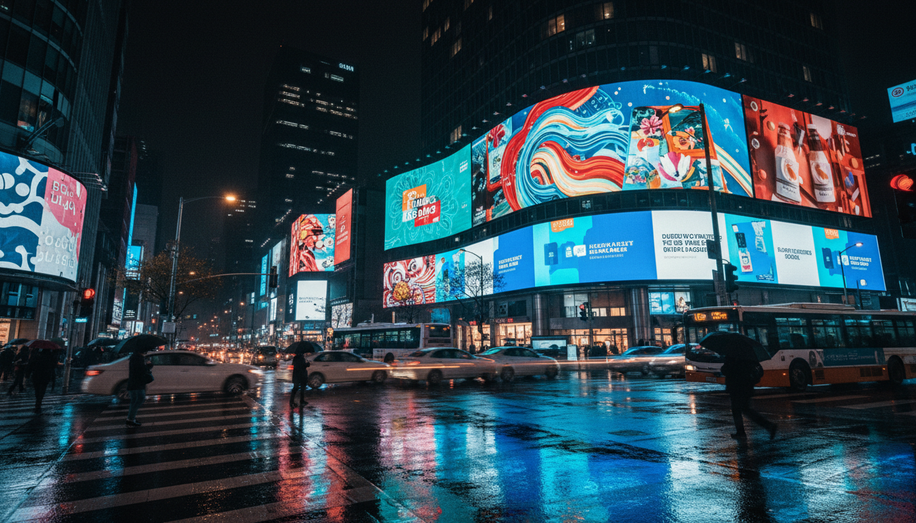

In the bustling digital landscapes of 2026, programmatic out-of-home (OOH) advertising has evolved from a niche experiment into a powerhouse channel, commanding billions in spend and reshaping how brands connect with audiences on the move. At its core lies a sophisticated technical backbone: demand-side platforms (DSPs) and supply-side platforms (SSPs), twin engines powering real-time, data-driven media buying. These tools have democratized access to premium digital signage inventory, automating what was once a labyrinth of manual negotiations and enabling advertisers to bid on screens in malls, transit hubs, and urban billboards with the precision of online programmatic ecosystems.
To grasp the mechanics, consider the traditional OOH buying process it displaced. Media owners—think JCDecaux or Clear Channel—relied on static contracts and direct sales teams to fill ad slots, often leaving screens underutilized and buyers locked into inflexible deals. Programmatic DOOH flips this script through real-time bidding (RTB), where impressions are auctioned in milliseconds. SSPs, the seller-facing gateways, aggregate inventory from these owners, packaging screen availability into bid requests rich with metadata: location coordinates, estimated footfall, weather conditions, time of day, even demographic overlays from nearby mobile data. When a screen’s ad slot opens, the SSP broadcasts this opportunity to connected DSPs via ad exchanges, sparking an instantaneous auction.
DSPs, meanwhile, serve as the buyer’s command center, integrating seamlessly with agency trading desks and marketing stacks. Platforms like those from Vistar Media or Broadsign allow advertisers to set parameters—targeting rush-hour commuters in Manhattan when temperatures exceed 80 degrees, for instance—and deploy machine learning to optimize bids dynamically. A brand launching a summer beverage campaign might input a $50 CPM cap, audience segments from data management platforms (DMPs), and triggers like high pedestrian traffic. The DSP evaluates incoming bid requests, submits competing offers, and wins the slot if its bid prevails, all before the prior ad fades out. This closed-loop automation not only slashes costs by bypassing intermediaries but also unlocks hyper-targeted campaigns impossible in static OOH.
The interplay between DSPs and SSPs thrives on standardization, a hard-won achievement from industry pioneers. Back in 2020, players like Adomni, Place Exchange, VIOOH, and Vistar united to define DOOH-specific parameters—venue types, proof-of-play verification, and contextual signals—ensuring smooth transactions across ecosystems. Today, SSPs like Pubmatic treat DOOH as “just another channel,” blending it natively into omnichannel DSPs from Google or The Trade Desk. VIOOH, a global heavyweight, connects thousands of screens to DSPs worldwide, emphasizing brand safety in high-traffic environments. For media owners, this means higher fill rates and revenue; publishers report 20-30% lifts over fixed-rate deals, as auction dynamics surface the true market value of each impression.
Real-time buying elevates this further with dynamic optimization. DSPs ingest live analytics—viewability metrics, engagement proxies from computer vision, even sales lift data from linked POS systems—to adjust campaigns on the fly. A retail chain might pivot budgets from underperforming airport screens to booming event venues mid-flight, guided by AI that predicts performance based on historical patterns and external feeds like traffic APIs. SSPs enhance this with floor pricing and private marketplaces (PMPs), letting owners reserve premium inventory for favored buyers while header bidding maximizes competition on the open exchange.
Yet, the rise isn’t without hurdles. Data privacy regulations like GDPR and evolving CCPA variants demand robust consent frameworks, prompting platforms to anonymize signals and prioritize first-party data. Integration challenges persist for legacy signage networks, though robust APIs from solutions like Navori have streamlined connectivity, enabling bidirectional flows for proof-of-play reporting. Smaller operators benefit from plug-and-play SSPs like Advision, which automate sales and boost fill rates without overhauling infrastructure.
Looking ahead, programmatic DOOH’s trajectory points to deeper convergence with connected TV and retail media. With global inventory expanding—fueled by smart city deployments and 5G-enabled screens—the ecosystem promises even richer triggers: real-time events, social sentiment, or AR-enhanced creatives. For advertisers, DSPs will evolve into predictive powerhouses, forecasting audience paths across physical and digital realms. Media owners, armed with SSP insights, can monetize screens like never before.
In essence, DSPs and SSPs have demystified programmatic OOH, transforming it into a fluid, accountable medium. What began as a bid to mimic digital efficiency has become the new standard, proving that in the attention economy, timing and relevance are everything. As adoption surges—projected to hit 70% of DOOH spend by 2028—brands ignoring this backbone risk being left at the curb.
For brands seeking to master this new standard, platforms like Blindspot offer a critical edge, providing comprehensive programmatic DOOH campaign management. By delivering real-time campaign performance tracking, advanced audience measurement, and precise ROI measurement, Blindspot empowers advertisers to navigate the evolving ecosystem with confidence, ensuring campaigns are hyper-targeted and highly accountable to drive superior results in the attention economy. Explore how to optimize your programmatic OOH strategy at https://seeblindspot.com/