
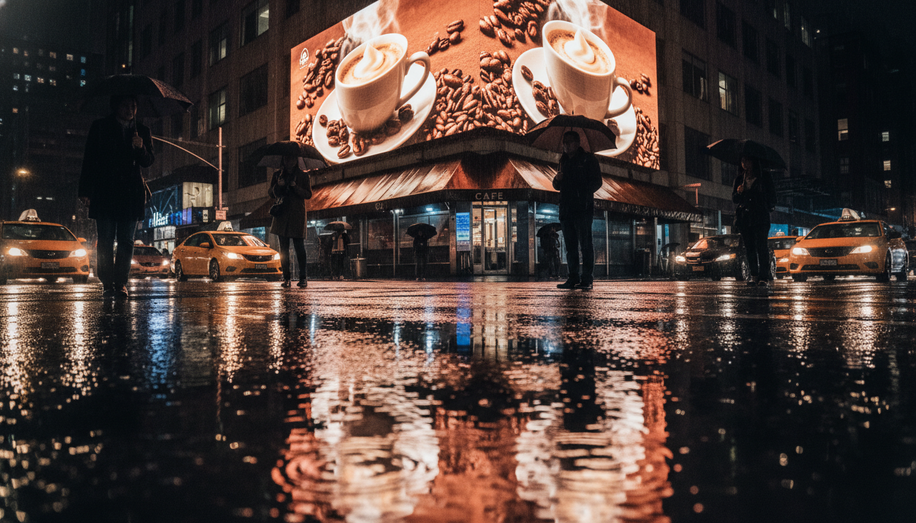

Geo-conquesting has quietly become one of the more sophisticated tactics in out-of-home advertising, especially for brands looking to turn competitor proximity into a measurable advantage. At its core, the strategy uses location intelligence to place OOH ads near rival venues, intercepting consumers at the moment they are making or reconsidering a purchase decision. Rather than chasing broad awareness alone, geo-conquesting is designed to influence behavior in a highly specific context: near a competitor’s storefront, along a commute route, or in a district where category demand is already active.
What makes the approach compelling is its timing. Traditional OOH has always benefited from high visibility and repetition, but geo-conquesting adds a layer of intent. When someone is already in the vicinity of a competing brand, they are often closer to action than a typical passersby audience. They may be comparing options, waiting for a queue, or simply open to a better offer. An OOH placement that speaks directly to convenience, value, or differentiation can tip that decision. In this sense, the medium is not just building awareness; it is capturing demand in motion.
The best geo-conquesting campaigns rely on more than geographic luck. They are built around careful mapping of competitor locations, traffic patterns, and audience behavior. A brand may identify where rival stores attract the most footfall, then select nearby billboards, street furniture, transit placements, or digital screens to reinforce its message. The goal is not merely to be close, but to be relevant at the right time and in the right format. A commuter exposed to an ad while approaching a competitor may respond differently than a shopper seeing the same message after leaving a mall or transit hub. Context shapes effectiveness.
Creative execution matters just as much as placement. The strongest geo-conquesting OOH campaigns often lean on proximity-based messaging, with copy that emphasizes how close the brand is, how easy it is to switch, or what immediate benefit is on offer. Directional cues can be especially effective. A sign that points toward a store “just two blocks away” or highlights a faster service option can convert passive awareness into actual movement. In markets where convenience is a major purchase driver, simple language can outperform heavily branded messaging because it answers the practical question consumers are already asking: why go elsewhere?
Digital out-of-home has expanded the possibilities considerably. With programmatic tools and dynamic creative, brands can adjust messaging based on time of day, traffic volume, weather, or known event activity. A lunch crowd near a quick-service competitor may see an offer tailored to speed and affordability, while evening placements can shift to family dining, convenience, or indulgence. This flexibility allows advertisers to match message to moment, making geo-conquesting feel less like interruption and more like a useful nudge.
Measurement is another reason the tactic is gaining traction. OOH has often been viewed as difficult to attribute, but geo-conquesting campaigns can be evaluated through footfall analysis, store visit lift, branded search activity, or sales performance in specific trade areas. When combined with mobile location data or other privacy-compliant audience insights, advertisers can estimate how well competitor-adjacent placements are translating into store visits. That data is critical, because the objective is not simply to generate impressions, but to redirect traffic and win incremental visits.
There is also a strategic benefit in how geo-conquesting shapes brand perception. By appearing near a competitor, a brand can position itself as a credible alternative, often at the exact moment when a consumer is weighing options. That can be particularly effective in categories where offerings are similar and the choice is driven by convenience, price, or small differentiators. In those cases, the brand that shows up nearby, with a clear reason to switch, may earn not just one transaction but longer-term preference.
Still, success depends on restraint and precision. Overly aggressive messaging can feel intrusive, and poor placement can waste budget. The most effective campaigns treat geo-conquesting as a surgical tool, not a blanket tactic. Brands that understand their audience, respect the local environment, and align creative with consumer intent are more likely to turn competitor traffic into their own footfall.
As OOH continues to evolve into a more data-informed channel, geo-conquesting stands out as one of its sharpest applications. It combines the physical presence of outdoor media with the intelligence of location-based marketing, giving brands a way to compete not just for attention, but for the final decision. In crowded markets, that moment of choice is often the most valuable one available.
This is where platforms like Blindspot become indispensable. By leveraging advanced location intelligence and competitive insights, Blindspot empowers brands to precisely identify optimal conquesting sites and deploy dynamic, context-aware messaging via programmatic DOOH. This, combined with robust ROI measurement and attribution capabilities, transforms geo-conquesting into a provably effective strategy for redirecting competitor traffic and capturing market share where it matters most. https://seeblindspot.com/