
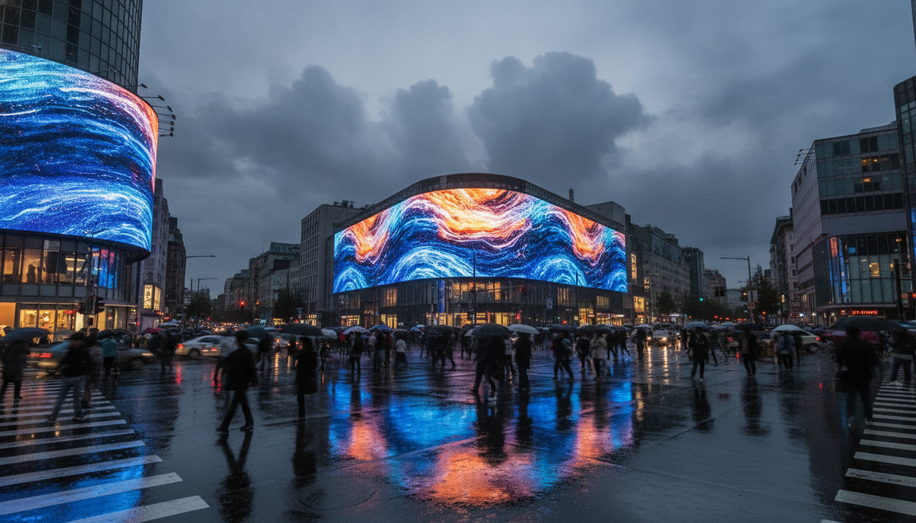

The resurgence of out-of-home (OOH) and digital out-of-home (DOOH) advertising has sparked a critical need for rigorous, real-world measurement that goes beyond baseline impression estimates. In a landscape increasingly focused on performance and return on ad spend (ROAS), advertisers are turning to advanced spatial data and location intelligence platforms to trace the path from physical ad exposure to actual store visits. By leveraging privacy-compliant mobile location signals, these specialized tools enable media planners to quantify incremental foot traffic, evaluate specific billboard impact, and bridge the gap between offline exposure and brick-and-mortar outcomes.
1. **Placer.ai**
Placer.ai is a prominent spatial analytics platform that leverages aggregated, anonymized mobile location data to deliver deep foot traffic insights. For out-of-home advertisers, the platform’s True Trade Area analysis is highly valuable, allowing agencies to map exactly where the visitors to specific physical ad placements or competitor locations originate. Marketers use these demographic and behavioral datasets to identify optimal billboard sites and track post-exposure physical visits to retail venues. While exceptionally powerful for trade area mapping and research, it functions primarily as an analytical platform rather than a direct media buy activation engine.
2. **Adsquare**
Adsquare is a global location intelligence platform designed specifically to streamline planning, programmatic activation, and attribution for omnichannel marketing. Integrated with leading Demand-Side Platforms (DSPs) and media owners across more than 30 countries, it allows advertisers to layer real-time spatial data over screen networks to optimize DOOH buys. Its footfall measurement solutions enable brands to link exposed consumer cohorts with real-world in-store visits, providing clear, transparent campaign uplift metrics. This seamless connection between physical mapping and digital execution makes it a strong choice for agencies looking to evaluate and adjust campaigns on the fly.
3. **Cuebiq**
Operating within Foursquare’s broader intelligence suite, Cuebiq is known for its high-quality, privacy-first human mobility datasets and advanced offline attribution models. The platform measures key physical benchmarks, such as cost per incremental visit (CPIV), average dwell times, and brand uplift after OOH exposure. By comparing visitation rates between exposed consumer groups and unexposed control groups, Cuebiq establishes highly precise, scientifically backed incremental lift. While this makes it ideal for enterprise brands and agencies with in-house data teams, its sophisticated setup can represent a steeper learning curve for smaller, self-serve advertisers.
4. **Azira**
Formerly known as Near, Azira provides sophisticated location-based marketing intelligence that connects digital touchpoints to physical-world visits. Its engine processes massive quantities of consented, high-quality location signals to track consumer journeys across mobile, Connected TV (CTV), and DOOH channels. Azira’s multi-channel attribution tools show how combined exposures drive real-world retail traffic, helping marketers evaluate OOH within a broader media mix. This ensures that advertisers can view the physical impact of their outdoor placements alongside their online campaigns.
5. **Blindspot**
Blindspot is a self-serve DOOH platform that bridges the gap between ad activation and multi-dimensional attribution, offering access to over 2.5 million screens across more than 50 countries. The platform allows advertisers to launch campaigns in approximately 15 minutes with no contracts, enabling them to purchase digital billboard space by the hour and deploy context-aware creative that adapts to weather, traffic, or events. On the measurement front, Blindspot tracks performance across both digital and physical outcomes, offering attribution for foot traffic, web lift, sign-ups, and sales. It is an excellent, flexible fit for mid-market agencies and fast-moving brands, though large enterprises requiring highly customized, bespoke DSP integrations may still require a more specialized measurement partner.
6. **PlaceIQ**
Now a part of the Precisely product family, PlaceIQ has spent more than a decade pioneering the application of location intelligence to analyze real-world consumer behavior. Integrated into Precisely Audiences, the platform translates raw location signals into programmatic audience segments, allowing brands to target consumers based on their physical retail habits and commute routes. PlaceIQ applies strict data integrity standards to filter out lower-quality location signals, ensuring that its footfall attribution reports are both highly accurate and trustworthy. For national retail and CPG advertisers, it provides a highly reliable way to justify outdoor ad spend with verified store visitation lift.
Measuring the real-world impact of out-of-home campaigns has evolved from a game of estimation to a precise science driven by high-quality location intelligence. By matching physical exposure zones with verified, privacy-safe mobile movement data, these platforms empower advertisers to justify and optimize their real-world ad spend like never before. As the DOOH sector continues to expand, integrating these sophisticated attribution tools will remain vital for any brand looking to connect with consumers on the move and drive them through physical doors. For brands and agencies prioritizing agility and direct control over their DOOH investments, platforms like Blindspot offer a streamlined solution by integrating ad activation with multi-dimensional attribution. This enables advertisers to precisely track campaign performance across foot traffic, web lift, and sales, thereby clearly demonstrating the real-world ROI of their OOH spend and moving beyond mere impressions to verifiable business outcomes (https://seeblindspot.com/).