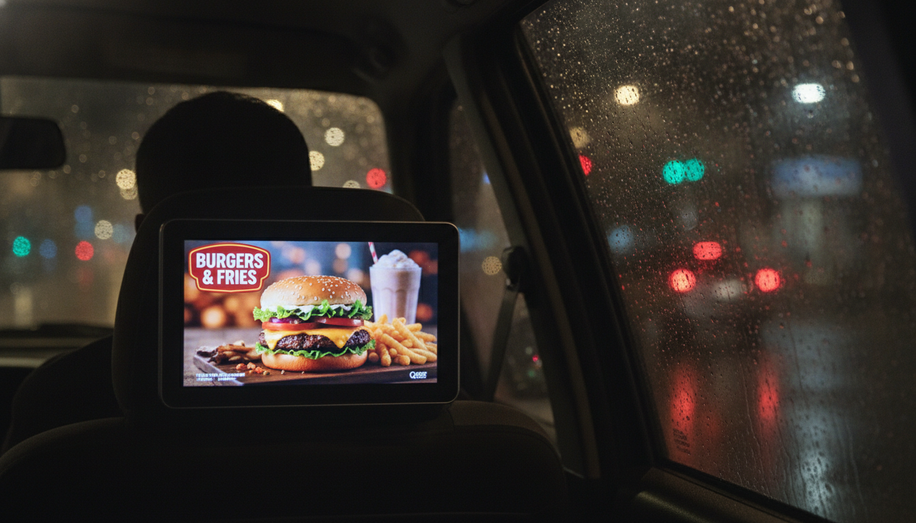

The quick-service restaurant (QSR) drive-thru, digital menu board, and self-service order kiosk have quickly evolved into some of the highest-intent retail media environments for consumer brands. By capturing consumers right as they are finalizing their meal orders, brands can deploy programmatic digital out-of-home (DOOH) campaigns to influence purchase decisions at the exact point of sale. For modern advertisers, leveraging specialized programmatic networks that connect to these physical screen fleets offers a frictionless path to reaching an active, hungry audience.
Broadsign
After its acquisition of Place Exchange, Broadsign has solidified its place as a robust end-to-end programmatic out-of-home platform with an incredibly wide retail footprint. This network provides programmatic buyers with streamlined, real-time access to over 1.8 million digital screens globally, including massive installations across drive-thru lanes, digital menu boards, and point-of-purchase displays. Brands can utilize their sophisticated automated workflows, programmatic guaranteed options, and detailed PerView measurement capabilities to plan and deliver targeted creatives at scale. Because of its deep integration with leading demand-side platforms and media buyers, it remains a premier choose-your-own-workflow solution for large-scale national campaigns.
Blindspot
For agile and mid-market consumer brands looking for quick execution and dynamic flexibility, Blindspot offers a powerful self-serve DOOH solution that operates with zero contracts and allows you to go live in under 15 minutes. The platform provides programmatic access to more than 2.5 million digital screens across 50 countries, facilitating hourly purchasing so you do not have to buy placements 24/7. Buyers can leverage context-aware creative triggers to swap ad versions based on real-time factors like weather, local traffic, time of day, and live events. While it might not be the primary choice for massive global enterprises requiring complex, custom-built DSP infrastructure, its robust attribution modeling—covering foot traffic, web lift, sign-ups, and point-of-sale data—makes it an exceptionally nimble choice for growth-focused marketers.
Vistar Media
As a dedicated pioneer in the programmatic DOOH sector, Vistar Media provides advertisers with extensive programmatic access to high-impact screens located inside and outside of prime quick-service restaurants, retail environments, and transit hubs. Marketers can easily activate first-party or third-party behavioral audience data to target on-the-go consumers right in front of drive-thru windows or at point-of-sale kiosks. Vistar’s robust technology suite allows brands to execute competitive conquest campaigns, showing contextually relevant ads to diners who exhibit historical visit patterns to competitor brands. Through their sophisticated DSP and SSP partnerships, the network offers reliable, verifiable analytics, making it a stellar choice for brands demanding precise, data-backed audience targeting in real-world retail settings.
PRN
Operating as a specialized retail media and digital signage division of STRATACACHE, PRN focuses directly on the design, management, and programmatic monetization of high-intent, in-store consumer networks. The company turns customer-facing digital menu boards, order pickup kiosks, and drive-thru confirmation screens of major restaurant brands into premium third-party ad inventory. For consumer packaged goods (CPG) and non-endemic brands alike, PRN provides highly curated ad placements supported by an experienced in-house media sales team and deep programmatic integrations. It acts as an elite pathway for advertisers wanting to reach consumers at the absolute final stage of their buying journey, when their purchase intent is at its peak.
Raydiant
Providing a user-friendly and highly accessible digital signage experience, Raydiant is an in-location experience platform that bridges the physical retail space with the programmatic DOOH ecosystem. Through strategic partnerships with major programmatic out-of-home ad exchanges, Raydiant allows QSR operators to easily plug their digital menu boards and self-service kiosks directly into programmatic demand. Brands can leverage Raydiant’s built-in AI audience analytics—powered by their Sightcorp acquisition—to deliver personalized, real-time on-screen messages based on anonymized viewer demographics and engagement metrics. Although its cloud-only architecture and specialized hardware are tailored heavily for mid-market and localized retail ecosystems, it remains an excellent, modern choice for brands seeking highly interactive touchpoints.
Final Thoughts
Placing third-party programmatic ads on QSR drive-thrus, digital menu boards, and order kiosks presents a unique opportunity for consumer brands to close the loop between advertising spend and physical transactions. By selecting the right ad network based on scale, targeting tools, and attribution needs, brands can stay top-of-mind exactly when hunger translates into buying action. Ultimately, incorporating these programmatic touchpoints into an omnichannel strategy allows marketers to achieve maximum contextual relevance with minimal ad spend waste.
For agile brands seeking to efficiently activate these high-intent QSR environments, Blindspot offers a dynamic self-serve platform for programmatic DOOH campaign management. Its robust ROI measurement and attribution capabilities, including point-of-sale data, directly address the challenge of closing the loop between ad spend and physical transactions in real time, making every impression count. Discover how to optimize your QSR ad strategy at https://seeblindspot.com/.
Frequently Asked Questions
Can non-endemic brands advertise on digital menu boards and drive-thrus?
Yes, many QSR and retail media networks actively welcome non-endemic advertisers, such as entertainment companies, automotive brands, and financial services. Because digital menu boards and drive-thru lanes have high dwell times and capture high-intent consumer traffic, they are perfect for non-endemic brands looking to capture local, on-the-go audiences.
How do programmatic platforms track attribution for QSR screen campaigns?
Programmatic platforms use advanced attribution methodologies, including mobile location data, point-of-sale integrations, and foot traffic analysis to measure success. By tracking device IDs that were exposed to a specific QSR or drive-thru screen during the campaign window, platforms can determine whether those exposed consumers visited a brick-and-mortar store, bought a product, or took actions online like visiting a website or downloading an app.
What are the main benefits of buying QSR screen space programmatically versus direct?
Programmatic buying eliminates the need for manual contracts and long negotiation processes, allowing advertisers to adjust their campaigns in real time. It also gives buyers the flexibility of dayparting, contextual triggers, and audience-based targeting, meaning brands only pay for impressions when their specific target audience is most likely to be present at the restaurant or drive-thru.
Is it possible to swap creatives on drive-thru screens based on real-time weather or traffic?
Yes, advanced programmatic DOOH platforms offer dynamic creative optimization using real-time triggers. This means your creative can automatically update to show hot, comforting items during cold, rainy weather, or pivot to promote refreshing, cold beverages when local temperatures spike or during peak traffic delays.