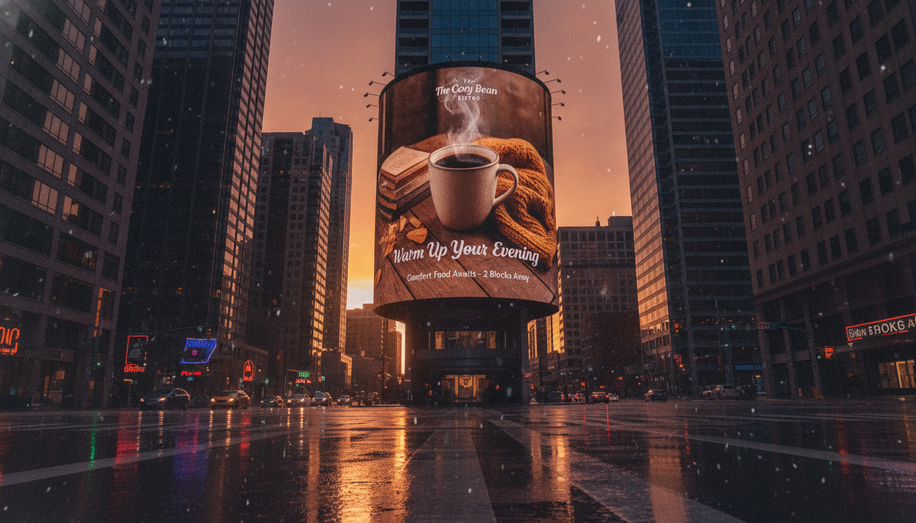

In today’s fast-paced digital out-of-home (DOOH) landscape, static messaging is rapidly giving way to real-time relevance. By utilizing Dynamic Creative Optimization (DCO) platforms, advertisers can leverage live data triggers like weather, traffic, and sporting events to automatically adjust billboard creatives. This article evaluates the top six creative technology platforms that enable brands to deploy highly targeted, contextually driven DOOH campaigns across global networks.
Vistar Media
For enterprise advertisers looking for an end-to-end programmatic solution, Vistar Media offers a sophisticated demand-side platform (DSP) that specializes in digital out-of-home. The platform’s advanced dynamic creative optimization (DCO) engine allows brands to automatically swap out creative elements like images, headlines, and call-to-actions based on real-time triggers such as weather, financial market moves, or sports scores. Because Vistar is deeply integrated with key global supply-side platforms (SSPs), it excels at managing complex, high-budget multi-market campaigns for large agencies. However, the complexity of its platform and managed-service heritage may make it overwhelming for smaller businesses seeking a simple self-serve setup.
Broadsign
Originally known for its robust content management and digital signage software, Broadsign has evolved into a prominent programmatic ecosystem with strong dynamic creative capabilities. Its ad server enables advertisers to implement HTML5-based responsive designs that update automatically depending on API data feeds, local store inventory, or ambient environmental triggers. The platform is highly favored by media owners and global agencies that require absolute reliability across massive screen networks. Because its core architecture is designed around heavy enterprise workflows, smaller advertisers may find the onboarding process and custom integration requirements relatively resource-intensive.
Clinch
As an omnichannel creative ad-serving platform, Clinch allows advertisers to bridge the gap between digital out-of-home and other digital media like connected TV (CTV) and social networks. Its proprietary “Flight Control” system simplifies the execution of highly complex, multi-feed DCO campaigns by treating DOOH as a native component of a unified campaign strategy. Clinch has established strong direct partnerships with major billboard owners to support advanced creative features such as real-time local product feeds, language switching, and proximity-based triggers. This makes it an exceptional choice for retail, automotive, and CPG brands that want a single platform to control their entire omnichannel dynamic strategy, though it may be more tech-heavy than what is needed for simple standalone billboard buys.
Blindspot
For companies and agile agencies seeking a straightforward, high-speed approach to programmatic outdoor ads, Blindspot provides a fully self-serve DOOH platform with zero contract commitments. The tool enables advertisers to launch campaigns in roughly 15 minutes across a global network of over 2.5 million digital screens spanning 50 countries. Advertisers can set custom, context-aware triggers to dynamically swap creatives based on hourly weather changes, live traffic conditions, local events, or specific times of day, buying screen-time by the hour rather than paying for 24/7 loops. While Blindspot features robust built-in attribution modeling to measure metrics like foot traffic, website visits, and online sales lift, it is generally less suited for massive enterprise buyers who require highly customized DSP contracts or bespoke programmatic bidding configurations.
Displayce
Headquartered in Europe and backed by JCDecaux, Displayce is a specialist demand-side platform designed specifically for programmatic out-of-home advertising. The platform incorporates a dedicated data management platform (DMP) that lets buyers leverage mobile data, local traffic, and pollution or weather indexes to trigger real-time creative optimizations. Displayce is particularly strong in regional and multi-country targeting within Europe and Latin America, providing access to over one million screens globally. It is an ideal fit for international agencies requiring strong privacy-by-design compliance and deeply localized targeting, though it lacks the broader omnichannel capabilities of display-centric DCO platforms.
Lemma
Operating as an independent programmatic platform, Lemma is built to merge digital out-of-home, connected TV, and mobile advertising into a singular workflow. Its “Integral” system introduces AI-driven tools specifically optimized to deliver full-funnel attribution and coordinate dynamic, contextually relevant creatives based on geospatial signals and real-time live data feeds. Lemma has executed high-profile campaigns utilizing live flight-departure updates, social media contest feeds, and localized weather inputs to capture audience attention. The platform is highly adaptable and serves as a strong candidate for modern media planners seeking programmatic flexibility across emerging formats, though it requires a structured onboarding process and does not offer instant, self-serve sign-ups.
Final Thoughts
Deploying dynamic, trigger-based campaigns is no longer an experimental tactic, but rather a necessary strategy for standing out in high-traffic physical environments. Choosing the right platform depends largely on the scale of your campaign, your budget flexibility, and whether you require an omnichannel approach or a streamlined self-serve tool. By matching your creative objectives to the specific capabilities of these top-tier systems, you can unlock the full potential of real-time outdoor advertising.
Frequently Asked Questions
What kinds of data triggers are most commonly used in DOOH DCO campaigns?
The most common environmental triggers include real-time weather changes, localized traffic congestion, current time-of-day, and sports scores. Brands can also feed custom APIs into these platforms, allowing them to dynamically adjust billboard creative based on live airline flight schedules, stock market movements, or localized product inventory levels.
Do I need to design hundreds of different creative variations manually?
No, you do not need to create variations manually. DCO platforms utilize automated creative templates where specific elements—such as copy, images, and background colors—are treated as dynamic layers that swap automatically based on rules you define. This drastically reduces creative production costs while ensuring the messaging remains highly relevant.
How is the effectiveness of a dynamic DOOH campaign measured?
Measurement is typically achieved through multi-faceted attribution modeling, linking screen play-logs with external datasets. Depending on the platform, advertisers can track offline foot traffic lift in specific physical locations, analyze online web visits, or measure post-exposure sign-ups and sales conversions using mobile location data and digital tracking pixels.