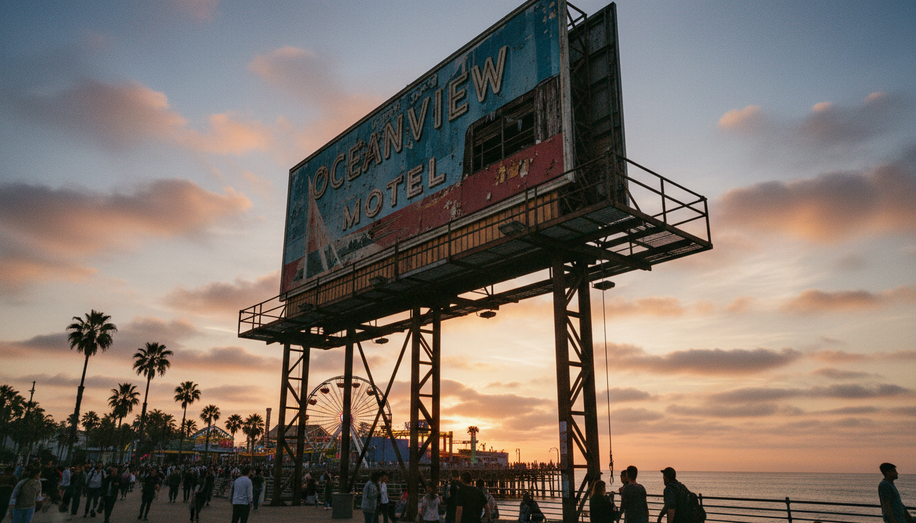

Static billboards remain a cornerstone of out-of-home advertising strategy in 2026, defying predictions that digital screens would render them obsolete. Despite the growing prevalence of dynamic digital displays, traditional static billboards continue to deliver measurable value, particularly through their cost-efficiency, consistent brand presence, and proven ability to complement integrated marketing campaigns.
The resurgence of static billboards reflects a broader industry recognition that not all advertising channels require constant innovation to remain effective. While digital out-of-home formats are expanding—projected to account for 45.2 percent of total OOH ad spending by 2028—static billboards still command substantial market share and advertiser confidence. The global place-based advertising market, valued at $3.1 billion in 2025, is expanding at a compound annual growth rate of 7.2 percent through 2033, with both traditional and digital formats contributing to this growth. This expansion suggests that rather than replacing static billboards, the industry is embracing a complementary approach where both formats coexist and reinforce each other.
One of the primary advantages of static billboards is their cost-effectiveness. Out-of-home advertising delivers the lowest cost per thousand impressions among major media channels, ranging between $2 and $7, according to industry data. For advertisers seeking long-term brand exposure without recurring expenses, static billboards offer a compelling alternative to digital advertising models built on cost-per-click or cost-per-impression metrics. A single placement generates thousands of daily impressions, translating to an estimated $6 return for every dollar spent on billboard campaigns, with traditional formats achieving approximately 40 percent return on investment. This financial efficiency particularly benefits small and local businesses seeking stable brand presence without continuous spending obligations.
The strength of static billboards also lies in their ability to command attention naturally through physical presence and strategic placement. Positioned along highways, in city centers, and near high-traffic intersections, static billboards deliver 24/7 visibility to audiences already in motion. The Tim Hortons example demonstrates this principle in practice: static billboards near highway exits consistently prompt morning commuters to stop for coffee by reaching a captive audience at precisely the right moment. This passive engagement model differs fundamentally from digital advertising, which often requires active user participation or screen time.
However, the modern static billboard strategy cannot ignore the competitive advantages of digital formats. Digital billboards capture 30 percent more attention than static billboards and increase viewer engagement by approximately 20 percent. This performance differential has prompted the industry to embrace hybrid approaches that leverage the strengths of both formats. According to recent market data, 44 percent of marketers now want a balanced mix of digital and traditional advertising, recognizing that billboards and online ads function more effectively in combination than in isolation. The synergy between formats addresses a critical gap: while social media and search advertising excel at targeted engagement, static billboards fill the awareness-building role in ways digital-only strategies cannot replicate.
The integration of measurement tools further strengthens the case for static billboards in contemporary campaigns. Mobile location tracking, QR code engagement, and foot traffic analytics now enable marketers to assess static billboard performance with digital precision, moving beyond outdated assumptions about immeasurable impressions. These measurement capabilities, combined with the medium’s inherent cost efficiency, position static billboards as data-informed assets rather than legacy placements.
Looking ahead, the resilience of static billboards reflects a maturation in advertising strategy. Rather than viewing traditional and digital formats as competing technologies, sophisticated marketers now recognize them as complementary tools serving distinct functions within integrated campaigns. Static billboards excel at building consistent brand presence and reaching broad audiences cost-effectively, while digital formats provide flexibility and measurable engagement metrics. As 16 percent of marketers plan to increase their out-of-home budgets by more than 50 percent in coming years, the message is clear: static billboards are not fading relics but essential components of a balanced media mix.