
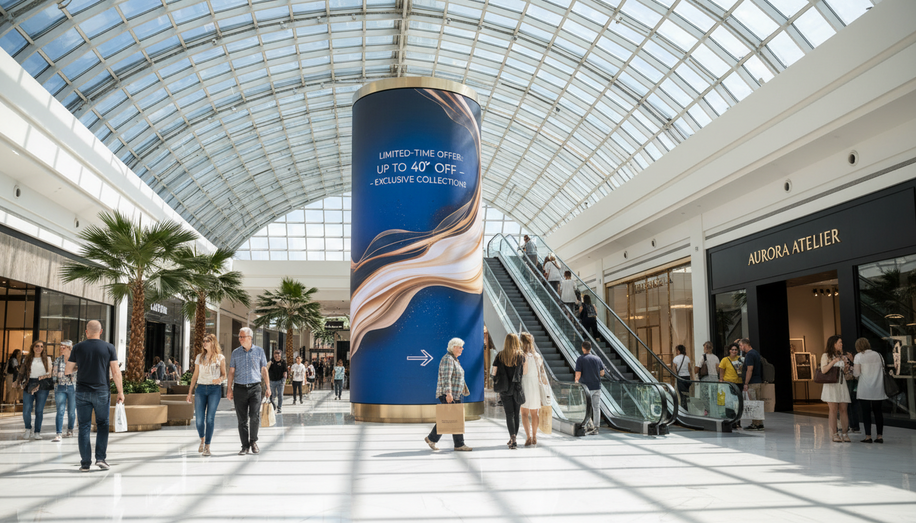

Retail media networks are revolutionizing out-of-home advertising by bridging the gap between broad environmental reach and hyper-targeted shopper influence, directly funneling consumers from digital screens to store shelves. Once confined to online realms like sponsored search and display ads on retailer websites, these networks—powered by first-party customer data—are now extending into physical spaces through digital out-of-home (DOOH) integrations, creating seamless pathways to drive foot traffic and sales. This convergence marks a strategic evolution, where retailers monetize high-traffic locations not just digitally but in real-world environments like malls, storefronts, and transit-adjacent zones, blending advertising precision with the immediacy of point-of-purchase decisions.
At its core, a retail media network transcends traditional digital signage by incorporating content strategy, ad management, analytics, and engagement tools into a unified platform. Retailers such as Walmart and Target have pioneered this model, deploying in-store TV screens, self-checkout displays, and even audio placements to capture shoppers at critical moments. Target’s Roundel network, for instance, leverages shopper data to push targeted ads across third-party sites and social platforms, but increasingly funnels that intelligence back into physical activations that guide consumers toward stores. The payoff is tangible: Circana research indicates purchase-driven targeting via these networks can yield up to six times the return on investment compared to conventional demographic or location-based methods, thanks to access to rich purchase histories and real-time optimization.
This integration with OOH amplifies the model exponentially. In-store retail media networks are emerging as the next frontier of DOOH, transforming malls and retail centers into dynamic ad ecosystems. Consider Urban Edge’s Bergen Town Center, where Gable Company installed a 33-foot curved LED screen alongside elevator-wrapped immersive displays. The project, developed with architectural firm Cooper Carry, not only elevated the shopper experience but projected a sixfold revenue increase with payback in under 18 months—proof that strategic DOOH within retail spaces can monetize endemic and non-endemic ads without clashing with tenant priorities. Similarly, global brand PUMA standardized in-store storytelling across varied locations using modular hardware and flexible content management systems, adapting to inconsistent ceiling heights and layouts while maintaining national consistency. These examples illustrate how RMNs layer data-driven personalization atop OOH’s scale, turning passive visibility into active sales drivers.
The mechanics are straightforward yet powerful. Retailers sell ad inventory across owned channels—onsite digital screens, in-store radio, apps, and websites—while extending off-platform to DOOH assets like billboards near retail hubs and street furniture. Programmatic capabilities enable real-time bidding and targeting, drawing on shopper behavior to serve relevant video, display, or sponsored product ads at the point of influence. Near retail centers, strategically placed OOH units build brand familiarity just as purchasing intent peaks, a tactic Pearl Media highlights as essential for 2025 campaigns blending urban landscapes with multi-channel extensions via QR codes and NFC. Data analytics further refine this: brands track dwell time, engagement rates, and content playback, optimizing for outcomes like increased foot traffic and conversions.
Challenges persist, however. Balancing ad density with shopper experience is delicate; over-saturation risks alienating customers, while underutilization misses revenue potential. Hardware modularity and content governance become crucial, as seen in Gable’s emphasis on aligning developers, marketers, and tech teams around shared metrics. Privacy concerns around first-party data also loom, though retailers mitigate this by focusing on aggregated insights rather than individual tracking. Despite these hurdles, the growth trajectory is undeniable. Projections peg global retail media spend at over $176 billion by 2028, fueled by RMNs’ ability to connect marketing directly to sales.
For OOH practitioners, the opportunity lies in partnership. Agencies like DPAA are championing “Retail Media Month” initiatives to spotlight in-store networks as DOOH extensions, hosting webinars and resources that underscore their role in point-of-purchase dominance. Quad describes this as “the revolution 2.0,” where digital signage evolves into shopper marketing powerhouses blending video walls, end-cap displays, and interactive kiosks. Brands gain shoppable moments—ads that prompt immediate action—while retailers unlock new streams from underutilized spaces, from vacant storefronts reimagined as immersive OOH canvases to large-format wraps dominating retail facades.
Ultimately, this fusion empowers advertisers to influence the full shopper journey: from off-site DOOH priming awareness, to in-store RMN activations sparking desire, and checkout nudges sealing the deal. As urban environments digitize, retail media networks position OOH not as a standalone channel but as the connective tissue driving measurable business results—more foot traffic, higher sales, and sustained loyalty in an era where every screen is a potential transaction trigger.