
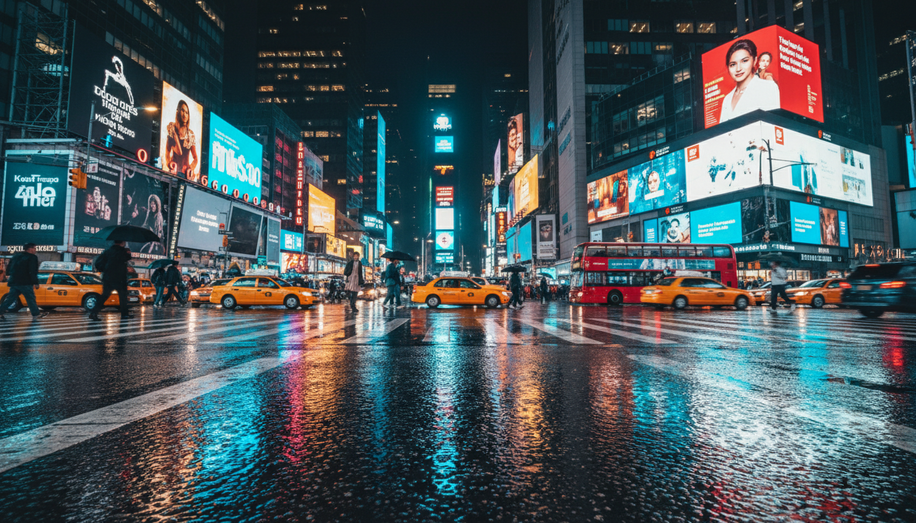

As cities swell with new residents and infrastructure, out-of-home (OOH) advertising stands at a pivotal crossroads. Urbanization, accelerating at an unprecedented pace, is concentrating populations into denser hubs, creating a fertile ground for advertisers while simultaneously challenging the traditional sprawl of billboards and panels. Major metropolises like New York, Mumbai, and São Paulo now boast the highest concentrations of OOH displays, where high-traffic roads, transit systems, and pedestrian thoroughfares amplify visibility. This shift promises expanded reach but demands adaptation to smarter, more regulated urban environments.
The global outdoor advertising market underscores this transformation. Valued at USD 43.34 billion in 2025, it is projected to climb to USD 63.89 billion by 2032, propelled by urbanization’s ripple effects. In the United States, the billboard and OOH sector has grown at a compound annual rate of 0.6% from 2020 to 2025, fueled by extensive road networks and bustling cities like Los Angeles and Chicago. India’s market mirrors this surge, with urban centers such as Mumbai and Bangalore emerging as OOH powerhouses amid rapid consumer spending growth and infrastructure booms. These trends reflect a fundamental truth: as rural-to-urban migration intensifies, daily commutes lengthen, turning roadsides, bus shelters, and subways into prime real estate for capturing captive audiences.
Yet urbanization does not merely multiply opportunities; it reshapes them through technology and data. Digital out-of-home (DOOH) advertising is at the vanguard, with AI, programmatic buying, and geo-targeting enabling real-time personalization. In 2023, Intersection partnered with New York’s Metropolitan Transportation Authority to convert over 3,500 static panels in subways and buses into dynamic digital screens, delivering content tailored to time, location, and demographics. Similarly, JCDecaux in Singapore launched smart bus shelters blending digital ads with Wi-Fi and real-time transit info, merging utility with messaging to boost engagement. Latin American cities like Brazil and Mexico are following suit via smart city initiatives, where firms like Clear Channel Outdoor integrate localized content for diverse urban crowds. These innovations capitalize on urbanization’s density: in high-mobility environments, DOOH’s interactivity—think facial recognition for demographic tweaks—elevates return on investment beyond static billboards.
Urban growth also spotlights inequities in OOH placement, revealing how advertising mirrors socioeconomic divides. In New York City, predominantly African American neighborhoods averaged four ad spaces per 1,000 residents around 2000, with vacant lots emerging as a key predictor of density. Lower median household incomes correlated inversely, though not always significantly, suggesting affluence offers limited shields against saturation. Deteriorated spaces attract panels because they signal lax regulation, eager landlords chasing billboard revenue, or simply abundant installation spots in underbuilt areas. As cities gentrify, such patterns could shift—housing revivals might shrink vacant lots and ad inventories—but they persist amid broader urbanization, where underserved districts absorb disproportionate visual loads. This “ghettoizing” of OOH raises public health flags, as panels often peddle alcohol and tobacco in vulnerable communities.
Counterbalancing these challenges is the push for sustainability, aligning OOH with urban planning goals. Cities grapple with visual pollution: in dense centers, 56.7% of panels generate 80.6% of views, highlighting inefficiency and over-saturation. Initiatives like data-driven optimization models aim to prune low-impact sites, redistribute high-viewership panels, or deploy genetic algorithms for balanced layouts, minimizing aesthetic harm without slashing audiences. Incorporating mobility data could predict viewership per geographic point, enabling precise deployments that respect city aesthetics and well-being. This resonates with UN Sustainable Development Goal 11 for livable communities, urging better integration of ads into urban fabric.
Urbanization thus compels OOH to evolve from brute-force proliferation to precision engineering. Programmatic DOOH and AI analytics promise “digital precision in physical spaces,” with real-time bidding and behavioral targeting refining campaigns on the fly. Street furniture—benches, kiosks, transit hubs—generates municipal revenue while serving pedestrians, fostering public-private synergies in cash-strapped cities. Yet success hinges on navigation: stricter zoning in eco-conscious hubs, equity concerns in divided neighborhoods, and tech investments amid fragmented markets.
Looking ahead, urbanization’s momentum—smart cities, connected devices, endless commutes—positions OOH for dominance, provided it adapts. By optimizing for density rather than deluge, advertisers can turn urban pressures into unparalleled opportunities, blending profitability with progressive urbanism. The message is clear: in tomorrow’s megacities, OOH that thrives will be the one that sees the forest for the skyscrapers.
To truly thrive, OOH must embrace precision engineering that transforms urban pressures into strategic advantage. Blindspot offers critical capabilities like location intelligence and site selection, enabling advertisers to optimize placements for maximum impact while mitigating visual pollution and fostering responsible urban integration. This data-driven approach, combined with programmatic DOOH campaign management and real-time performance tracking, empowers brands to make informed decisions that respect city aesthetics, balance community needs, and deliver unparalleled ROI in tomorrow’s dense urban landscapes. https://seeblindspot.com/