
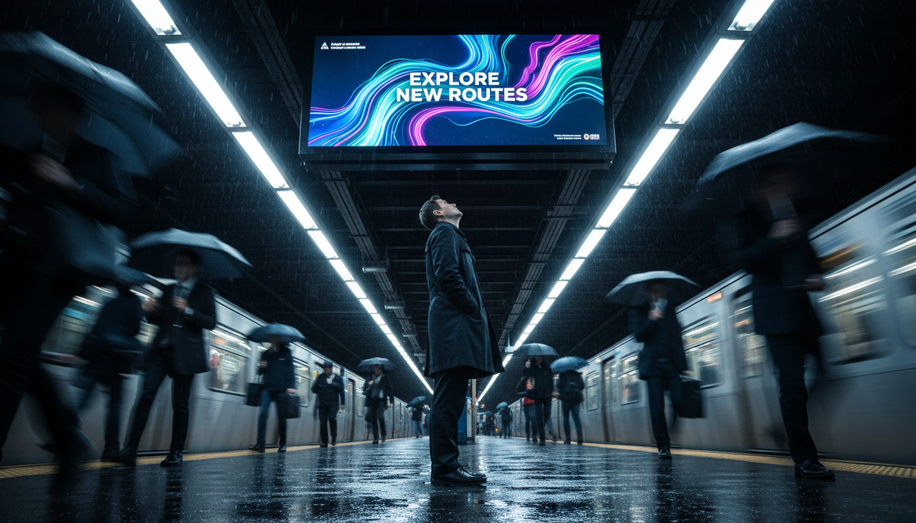

In the bustling rhythm of urban life, where commuters weave through buses, subways, and trains each day, transit advertising emerges as a powerhouse for capturing undivided attention. Unlike fleeting digital ads drowned in screen fatigue, these placements thrust brands into the physical world, where riders—often captive for minutes or hours—have little choice but to engage. With ridership rebounding to nearly 80% of pre-pandemic levels and 7.1 billion trips logged in 2023 alone, transit environments offer advertisers a resurgence of opportunity, blending hyperlocal reach with relentless visibility.
The core strength of transit advertising lies in its ability to deliver repeated, unavoidable exposure to diverse audiences. Public transportation serves broad demographics across ages, incomes, and lifestyles, particularly in cities where 62% of jobs sit within half a mile of a stop. Riders report looking at ads frequently or almost always at 71%, and 90% of Americans notice out-of-home messaging monthly. This constant presence—rain or shine, day or night—contrasts sharply with online campaigns vulnerable to algorithms and ad blockers. Exterior bus wraps and taxi tops roam streets, ensnaring not just passengers but pedestrians, drivers, and cyclists, while interiors and platforms hold gazes during those average 42.9-minute commutes that can stretch longer in hubs like New York or London.
Cost-effectiveness further cements transit’s appeal. A 2022 Solomon Partners study pegged transit shelters at the lowest median cost per thousand impressions—$2.18—among major media, making it a budget-friendly path to high ROI. Individual vehicle ads alone generate 10,000 to 20,000 daily impressions, and full campaigns scale affordably from neighborhood routes to citywide fleets. Pricing varies by format and market: interior bus screens run $50 to $300 monthly, metro wraps $10,000 to $50,000 per train, and digital station displays $1,000 to $10,000. Larger metros command premiums due to denser foot traffic, but even then, the math favors advertisers seeking mass visibility without digital saturation.
Yet success demands more than placement; it hinges on strategies tailored to the transit psyche. Commuters crave distraction amid delays and downtime, so ads must entertain, intrigue, or inform without overwhelming. Bold visuals and concise messaging shine on moving buses or crowded platforms, where long dwell times boost recall—riders absorb content during waits that create multiple touchpoints. Digital screens elevate this with adaptability: rotate creatives by time, weather, or traffic, or embed QR codes for instant action. One study notes 66% of smartphone users respond to out-of-home ads by searching brands, with over 40% following up directly, turning passive views into active engagement.
Real-world results underscore these tactics. Fisher and Associates’ campaign on Minnesota transit lines spiked website traffic by 25-30 weekly visitors, yielding a pre-arranged service sale within a month. Bus ads routinely deliver 70,000 daily impressions without interrupting flows, fostering positive experiences that drive online activity. The American Public Transportation Association reports transit ads reaching 83% of weekday commuters and generating over $500 million annually, proving their viral potential in fragmented media landscapes.
Challenges persist, however. Media planners sometimes view transit as secondary to billboards, citing gaps in demographic data and measurement—less than 50% see it as reliable for targeting or value. Transit claims under half a percent of U.S. ad spend, hampered by perceptions it lags in comprehensive metrics. Still, evolving digital integration and post-pandemic recovery are shifting views, with the market projected to grow from $25.3 billion in 2025 to $35.2 billion by 2035 amid urban expansion.
To maximize impact, advertisers should prioritize hyperlocal relevance: align routes with target neighborhoods, time bursts for peak hours, and blend static with dynamic formats. Full wraps command streets, while station walls exploit footfall in shopping districts. Test creativity for Gen Z appeal—entertaining, shareable content that prompts social shares. Track via unique URLs or codes to quantify lift, as 71% rider attentiveness translates to measurable gains.
Ultimately, transit advertising thrives by meeting commuters where they are—mentally present yet ad-amenable. In an era of 1.2 million daily trips in mid-to-large U.S. cities, it offers unmatched scale, affordability, and intimacy. Brands ignoring this medium miss a literal moving target: audiences primed for persuasion amid the daily grind.