
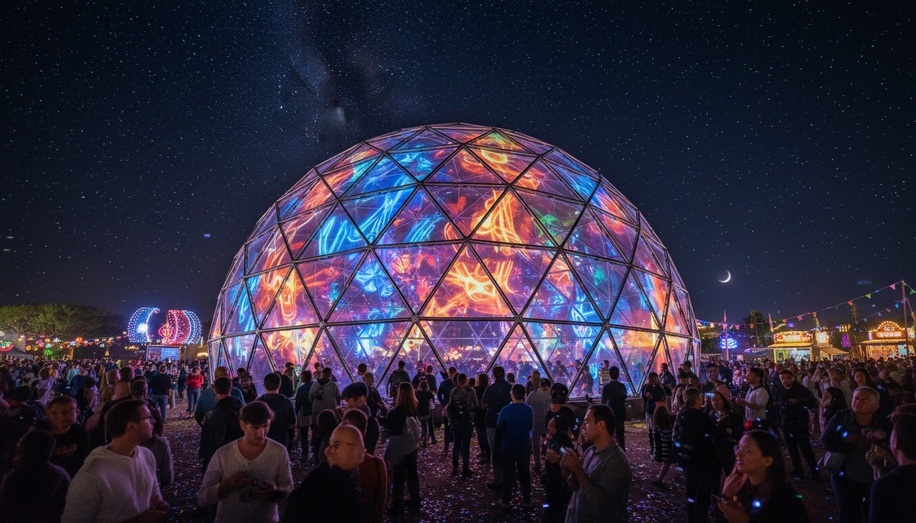

In the evolving landscape of out-of-home (OOH) advertising, brands are increasingly venturing beyond highways and bus stops into unconventional territories, transforming everyday environments into unexpected canvases for engagement. These non-traditional locations—think sidewalks, building facades, rainy streets, or even passing vehicles—demand creative adaptations that surprise, contextualize, and captivate audiences in ways static billboards never could. By blending guerrilla tactics, digital dynamism, and environmental integration, advertisers are redefining visibility in spaces where people least expect it.
Guerrilla marketing exemplifies this shift, injecting branding into public realms with the element of surprise. Sidewalks branded with temporary chalk art or street-level installations, for instance, seamlessly merge with urban flow, prompting pedestrians to pause, snap photos, and share on social media. This cost-effective approach amplifies reach through digital channels, turning one-off encounters into viral moments. A candy company might even gnaw a billboard’s edge into teeth marks, or marketers could project light animations onto nondescript walls at night, casting mesmerizing visuals that demand attention from late-night strollers. Such tactics thrive in overlooked spots like alleyways or underpasses, where the disruption heightens memorability and fosters organic buzz.
Transit hubs offer another fertile ground for innovation, but savvy campaigns push past standard wraps into hyper-contextual activations. McDonald’s 2021 “walk-thru” billboards in London neighborhoods doubled as food trucks, allowing instant McFlurry purchases through cleverly cut panels—a nod to social distancing that blended necessity with novelty. Similarly, Coca-Cola’s interactive bus shelters in Singapore let passersby pose with Coke filters to generate GIFs, unlocking QR-coded free drinks and sparking social media frenzy with high redemption rates. These setups extend to elevators, malls, or train platforms, where digital out-of-home (DOOH) screens deliver place-based messaging. Health products might flicker to life near spas, or point-of-purchase displays in store aisles nudge high-intent shoppers, leveraging proximity for impulse influence.
Weather-responsive and data-driven DOOH takes adaptation to environmental extremes. Rain-X mastered this by syncing digital billboards to activate only during downpours, their anti-fog message appearing precisely when drivers needed it most, boosting relevance and sales without wasteful exposure. Airports provide parallel precision: The Financial Times targeted transatlantic travelers at Heathrow Terminal 5 with dynamic screens pulling flight data via API, displaying city-specific content only to passengers bound for select U.S. destinations. This granular targeting ensures messages land with commuters who can’t scroll away, commanding undivided attention.
Street furniture, often dismissed as mundane, becomes a trojan horse for creativity in pedestrian-heavy zones. Benches that morph into branded loungers, kiosks with motion-sensor games, or shelters projecting 3D illusions draw eyes during idle waits. Guinness elevated this during rugby season, using London DOOH to alert fans to match kickoffs, calculate pub distances, and reroute crowds via sensors when venues overflowed—seamlessly guiding thirsty patrons while capturing footfall data. Vehicle wraps extend this mobility, turning food trucks or delivery vans into roving spectacles that infiltrate neighborhoods, festivals, or traffic jams, reaching diverse audiences far from fixed media.
Even natural elements inspire ingenuity. Billboards incorporating sunlight for shadow play or nocturnal luminescence fuse advertising with the environment, like those changing hues at dusk to mimic nature’s rhythm. Interactive puzzles on walls or AR-enabled projections invite participation, transforming ads into adventures that boost brand recall through shared experiences. O2 pushed boundaries further by geofencing digital radio ads to devices near OOH sites, tracking Bluetooth IDs to measure store visits and layering multichannel impact.
These adaptations succeed because they prioritize context over intrusion, using technology like QR codes, sensors, and real-time data to make messaging unavoidable yet welcome. Challenges persist—permitting hurdles in public spaces, execution timelines for guerrilla stunts, or data privacy in targeted DOOH—but the payoff is cultural resonance. Brands report heightened engagement, from social shares to redemptions, proving non-traditional spots outperform predictable ones in driving awareness and action.
As urban life accelerates, OOH’s future lies in these unexpected intersections: a rainy intersection billboard, a wrapped e-scooter fleet, or a projected mural on a construction fence. By daring to disrupt the ordinary, advertisers not only capture attention but embed their stories into the fabric of daily discovery, ensuring lasting impressions in an ad-saturated world.
Navigating these diverse, data-rich OOH landscapes demands advanced tools to identify optimal non-traditional locations and dynamically manage campaigns. Blindspot empowers brands with the location intelligence to pinpoint unique opportunities and programmatic DOOH capabilities to deliver hyper-contextual experiences, ensuring real-time campaign performance tracking and measurable ROI from these innovative activations. This allows advertisers to transform unexpected encounters into provable results, truly embedding their stories into the fabric of daily discovery. Learn more at https://seeblindspot.com/