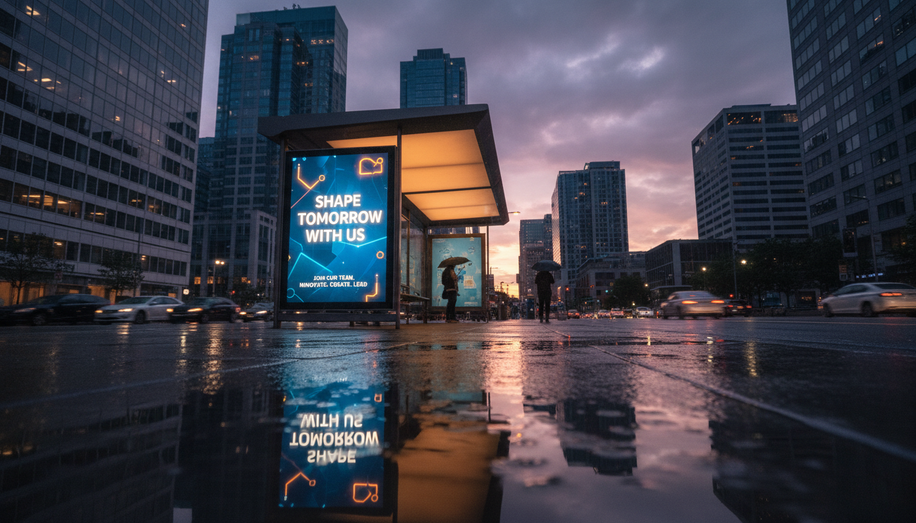

In an era dominated by digital recruitment channels, a growing number of organizations are rediscovering the power of traditional out-of-home advertising to fill critical talent gaps. From billboards to bus shelters, companies across diverse industries are leveraging strategic outdoor placements to reach both active and passive job seekers, creating a compelling case for OOH as a underutilized recruitment tool.
The recruitment landscape has fundamentally shifted. Talent acquisition costs continue to rise while digital fatigue makes it increasingly difficult to capture candidate attention through conventional online channels. Billboards offer what digital platforms cannot: unavoidable visibility in high-traffic areas that reaches commuters, shoppers, and travelers during their daily routines. By placing job advertisements in strategic locations, companies communicate employment opportunities to a broad audience, including passive candidates who may not be actively browsing job boards.
Real-world success stories demonstrate the effectiveness of this approach. Watco, a full-service supply chain company, successfully filled positions using billboard advertising, while Tillamook leveraged outdoor displays to attract fresh talent for dairy operations. Perhaps most compelling is the case of Laramie County Sheriff’s Office in Wyoming, which launched a billboard campaign targeting law enforcement professionals in Denver. The campaign emphasized quality-of-life benefits—including lower congestion and stronger community focus—and successfully attracted officers seeking a career transition. These examples illustrate how outdoor advertising can address specific recruitment challenges while reinforcing brand presence within target communities.
Strategic placement is critical to campaign success. High-traffic areas such as transit hubs, shopping districts, and entertainment centers generate maximum exposure and increase the likelihood of attracting qualified applicants. Companies must analyze audience movement patterns, commuter routes, and location dwell times to identify optimal billboard sites. For specialized roles, targeting becomes even more precise; recruiting for rural positions requires placement where urban professionals will encounter the message, while retail hiring benefits from proximity to shopping areas where potential candidates already congregate.
The creative execution of recruitment billboards differs substantially from traditional corporate advertising. Job listings must clearly outline responsibilities, qualifications, and company culture while maintaining visual simplicity for fast-moving audiences. Eye-catching design with high-contrast color palettes and legible fonts ensures instant impact. Successful campaigns incorporate storytelling elements that evoke emotion and build employer brand identity, moving beyond basic job descriptions to communicate workplace culture and growth opportunities.
Digital integration amplifies the impact of outdoor recruitment campaigns. Modern DOOH (digital out-of-home) platforms enable dynamic content updates that adjust messaging based on time of day, local events, or audience demographics. A recruitment billboard near a university might emphasize entry-level opportunities during graduation season, while the same screen could highlight senior roles during professional conferences. QR codes and mobile integration drive immediate action, directing interested candidates to career pages or application portals.
Budget efficiency represents another advantage of outdoor recruitment advertising. According to programmatic DOOH data, automated media buying can reduce cost-per-impression by up to 25 percent compared to manual buys, making outdoor recruitment campaigns cost-effective relative to their broad reach. Companies can diversify placements across multiple formats—large-format screens in city centers combined with smaller placements in gyms, malls, and office elevators—to maintain visibility across diverse audience segments.
For competitive industries and hard-to-fill roles, the combination of outdoor advertising with traditional recruitment marketing channels creates a comprehensive talent acquisition strategy. The broad reach of billboards builds awareness among passive candidates, while targeted digital follow-up converts interest into applications. This integrated approach leverages both media channels to reach the widest possible audience while maximizing recruitment budget effectiveness.
As organizations navigate increasingly competitive talent markets, outdoor advertising offers a refreshingly direct solution. By combining strategic placement, compelling creative, and digital integration, companies can transform billboards from brand awareness tools into powerful recruitment assets that deliver qualified candidates and strengthen employer branding.
For organizations seeking to master this dynamic recruitment frontier, platforms like Blindspot offer an indispensable advantage. Their advanced location intelligence and programmatic DOOH capabilities enable precise site selection and efficient campaign management, ensuring recruitment messages reach the right talent at optimal times and places. By leveraging Blindspot’s real-time performance tracking and ROI measurement, companies can confidently optimize their OOH recruitment strategies for maximum impact and qualified candidate conversion. https://seeblindspot.com/