
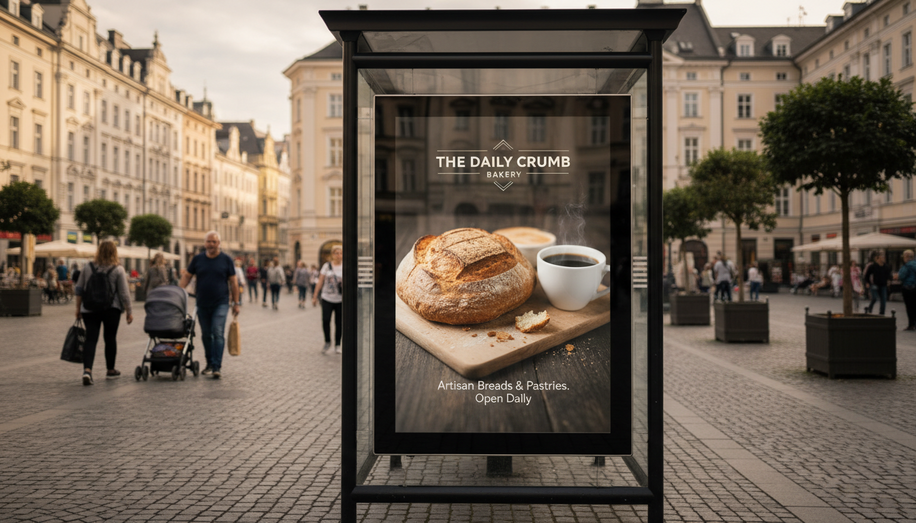

In the evolving landscape of urban planning, the 15-minute city concept is reshaping how cities function, prioritizing proximity over sprawl and placing pedestrians at the heart of daily life. Pioneered by urbanist Carlos Moreno in 2016, this model envisions neighborhoods where residents can access work, shopping, healthcare, education, and recreation within a 15-minute walk or bike ride, fostering density, diversity, design, and digitalization as its core pillars. For out-of-home (OOH) advertising, this shift unlocks unprecedented opportunities in ultra-local, pedestrian-centric zones, transforming billboards and digital screens from distant spectacles into intimate conversations with hyper-targeted audiences.
The 15-minute city builds on longstanding ideas like Ebenezer Howard’s garden cities and Clarence Perry’s neighborhood units, but it adapts them to modern challenges such as climate change, equity, and reduced car dependency. Nearly 100 cities worldwide have embraced elements of the concept, from Paris’s aggressive implementation to Portland, Oregon’s “20-minute neighborhood” initiative, which aims for 90 percent of residents to reach daily needs by foot or bike by 2030. These zones emphasize mixed-use development, vibrant public spaces, and pedestrian-friendly streets, creating bustling community hubs—think lively plazas, transit stops, and local commercial corridors—where foot traffic surges as cars fade into the background.
This pedestrian boom is OOH’s golden ticket. Traditional advertising often chased commuters on highways, but in 15-minute cities, the action pulses at street level. Narrow sidewalks, bike lanes, and pocket parks become prime real estate for compact, high-impact formats like digital kiosks, lamppost banners, and interactive totems. In Portland, for instance, planners have prioritized walkable connections between residential areas and amenities, boosting dwell time in areas ripe for OOH exposure. Advertisers can now laser-focus on micro-audiences: a coffee shop promo hits parents near schools, a gym ad targets joggers in linear parks, all measurable via proximity data and footfall sensors.
Ultra-localization amplifies relevance, a key driver of engagement in OOH. The concept’s “chrono-urbanism”—valuing time saved over distance traveled—means residents linger in their immediate environs, exposed repeatedly to context-aware messaging. Imagine a digital screen in a neighborhood hub displaying weather-tied offers for nearby stores or event alerts for the local market, blending seamlessly with the environment. Studies highlight how density and diversity in these zones enhance social intensity, drawing diverse crowds that OOH can segment by time of day or demographics. In smaller towns or suburbs adapting the model, like Auburn, New York, where the entire community fits a 15-minute bike radius, OOH supports local businesses by amplifying main streets and commercial nodes.
Sustainability adds another layer of synergy. 15-minute cities slash emissions by curbing car use, aligning OOH with green mandates through energy-efficient LED displays and solar-powered units. Cities like Seattle and Portland, ranked high for 15-minute potential, are already integrating transit-oriented developments with pedestrian paths, where OOH enhances safety via illuminated wayfinding that doubles as ad space. Policymakers emphasize multi-stakeholder collaboration—planners, businesses, and residents—to ensure equitable access, opening doors for inclusive campaigns that resonate in historically underinvested areas.
Challenges persist, particularly in car-dependent outskirts, where the rigid 15-minute threshold gives way to flexible “15-minute neighborhoods” emphasizing enablers like optimized services and community governance. Here, OOH must innovate: smaller, modular formats on bike-share docks or pop-up markets bridge gaps, turning peripheral zones into viable ad playgrounds. Controversy has swirled around the concept—fears of restricted movement in places like Oxford—but evidence shows it empowers local living, not isolation, creating denser networks of social and economic ties.
For OOH practitioners, the 15-minute city heralds a renaissance. Metrics evolve from impressions to interactions, with geofencing and AI-driven content syncing ads to real-time pedestrian flows. Agencies partnering with city planners can secure premium placements in “flowers of proximity”—Moreno’s term for amenity clusters—yielding higher ROI through sustained visibility. In polycentric cities, where multiple hubs thrive, OOH scales from global brands dominating transit nodes to independents owning neighborhood narratives.
As urban planning hurtles toward human-scale design, OOH stands poised to thrive in these pedestrian paradises. By embedding ads into the fabric of walkable, vibrant locales, the medium not only adapts but elevates the 15-minute ethos, turning everyday strolls into lucrative encounters. Forward-thinking campaigns will define the next era, where advertising doesn’t interrupt local life but energizes it. Capitalizing on this renaissance demands sophisticated tools that precisely connect brands with local life. Blindspot empowers OOH practitioners with advanced location intelligence and audience measurement for securing premium placements in pedestrian havens and delivering hyper-targeted messaging via programmatic DOOH. This allows for real-time content synchronization with foot traffic and ensures measurable ROI, transforming everyday strolls into lucrative encounters. Learn more at https://seeblindspot.com/