
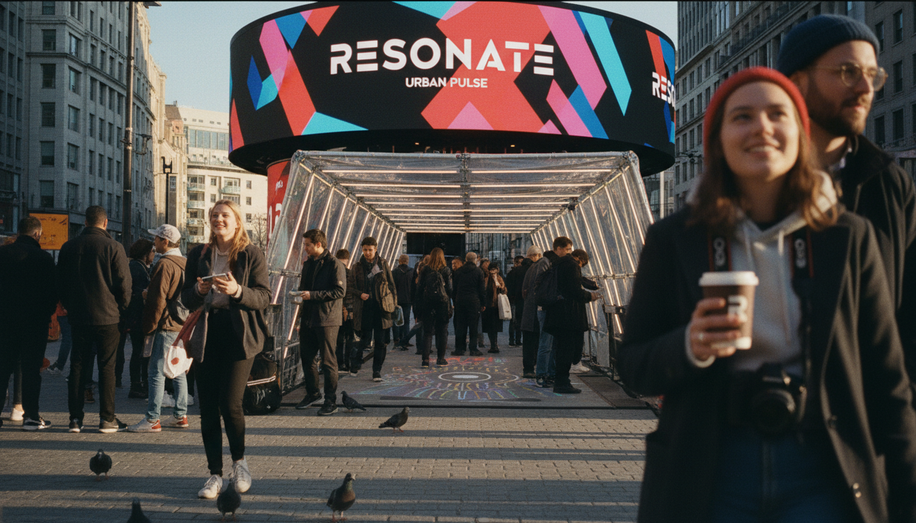

In the heart of bustling urban landscapes, where traditional billboards once silently shouted their messages, brands are now crafting temporary realms of wonder through experiential out-of-home (OOH) advertising. Pop-up installations and immersive activations transform public spaces into interactive playgrounds, drawing crowds into a brand’s narrative rather than merely observing it from afar. This evolution elevates OOH from static visuals to multisensory encounters, fostering deeper connections that linger long after the experience ends.
Consider Kiehl’s “Ski(n) Adventure” campaign in Austria’s Hochzillertal-Kaltenbach ski region during the 2024/25 season. The skincare brand combined extra-large billboards and ski-lift posters with a pop-up store offering complimentary skin analyses, personalized recommendations, and free samples. This setup directly targeted skiers battling cold winds and high altitudes, blending physical advertising with hands-on experiential marketing and influencer collaborations. The result? Heightened brand awareness as the go-to solution for adventure-loving consumers, proving that contextual relevance turns passersby into participants.
IKEA took a similar inventive tack in Stockholm, where unpredictable summer chills left outdoor furniture underused. The brand installed a pop-up shelter with heaters and lights at a public seating area, inviting people to linger and experience its products firsthand. This resourceful activation not only showcased furniture durability but also reinforced IKEA’s ethos of smart, everyday solutions, sparking positive buzz and plans for expansion. Such pop-ups solve real-world problems, embedding the brand into daily life and boosting loyalty through tangible utility.
Interactive elements amplify this captivation, turning passive encounters into active engagements. Coca-Cola’s “Happiness Machines”—vending units disguised as playful dispensers—rewarded hugs with free drinks, flowers, or even pizza, generating millions of social shares. Placed in high-traffic OOH spots, these installations invited spontaneous participation, blurring the line between ad and event. Nike echoed this with a 3D digital billboard in Tokyo for Air Max, featuring a shoebox that periodically opened to reveal new designs, building suspense and virality that transcended local reach.
Technology supercharges these experiences, particularly augmented reality (AR) and digital out-of-home (DOOH). AR overlays on subway posters or bus shelters unlock hidden digital universes via smartphone scans, creating instant feedback loops that forge emotional bonds. The NHS campaign, for instance, let users virtually donate blood through interactive billboards, visualizing the life-saving impact and leaving lasting positive impressions. Meanwhile, weather-triggered DOOH, like Aperol’s spritz ads activating only above 66°F near social hubs, ensures timeliness, associating the brand with perfect summer moments and maximizing relevance.
Gamified campaigns and touch-enabled kiosks further extend dwell time by 20 to 40 percent, according to industry data, as they encourage product demos and shareable moments. Sunsilk’s transit ads, for example, stopped commuters in their tracks with interactive storytelling, while street furniture like bus-stop charging docks becomes canvases for guerrilla activations or flash mobs that lodge brands in collective memory. These formats thrive in high-footfall zones—airports, transit hubs, cultural events—where aligned messaging capitalizes on captive audiences.
For brands eyeing 2026 trends, success hinges on strategic site selection and cultural synergy. Apple’s “Designed on iPad” leveraged Olympic foot traffic in host cities, amplifying reach through timely relevance. Paramount Pictures tapped nostalgia with “Mean Girls” transit wraps on buses and subways, ensuring repeated exposure that built hype among daily commuters. Even unconventional placements, like Britannia’s tree-obscured billboards emphasizing nature harmony, challenge norms for memorable impact.
Designing these activations demands precision: identify audience pain points or desires, integrate tech for seamlessness, and measure beyond impressions—track social lift, footfall spikes, and sales correlations. Pop-ups must be temporary to build urgency, yet scalable for buzz. As consumers crave personalization amid digital fatigue, experiential OOH delivers irreplaceable tactility— a hug from a machine, warmth on a chilly bench, or a virtual lifeline—that static screens can’t match.
Ultimately, these installations redefine OOH as a catalyst for brand loyalty. By inviting immersion, brands don’t just advertise; they co-create moments that audiences own and amplify, turning public spaces into enduring stories. In a crowded media landscape, the most captivating activations prove that the best advertising feels less like promotion and more like participation.
Achieving this level of impactful, data-driven engagement requires sophisticated tools for strategic site selection, audience understanding, and tangible ROI measurement. Blindspot empowers brands to precisely pinpoint optimal locations for these immersive experiences, analyze audience interactions in real-time, and attribute direct business outcomes, ensuring every activation maximizes its potential to convert passersby into loyal participants. Discover how to transform public spaces into powerful brand narratives at https://seeblindspot.com/