
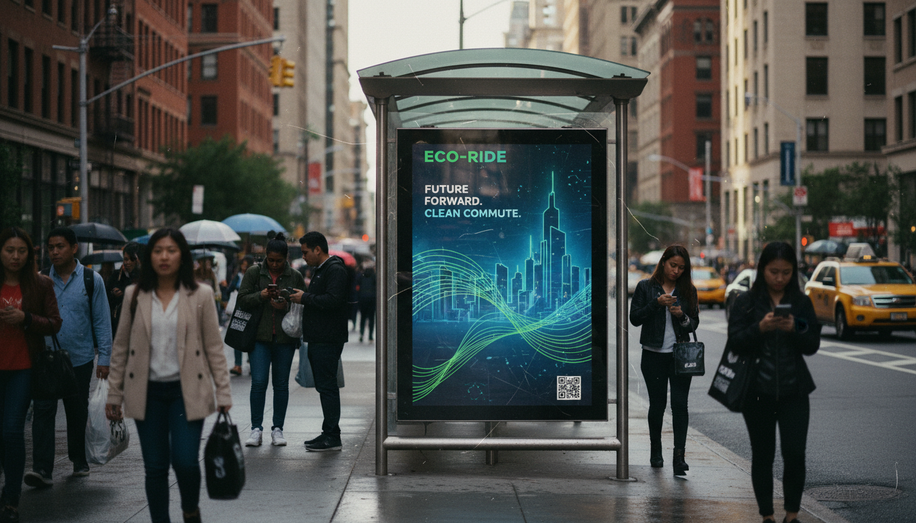

In the bustling arteries of modern cities, where pedestrians weave through high-traffic zones and commuters pause at transit hubs, street furniture advertising emerges as a canvas for ingenuity far beyond the static poster. Bus shelters, kiosks, benches, and even trash bins—once mere urban utilities—now pulse with creative energy, transforming everyday fixtures into dynamic portals for brand storytelling that capture attention at eye level and foster genuine engagement. This evolution elevates out-of-home (OOH) media from passive observation to immersive experiences, delivering high reach in pedestrian-heavy locales like Times Square or Chicago’s Loop, where ads blend seamlessly into the city’s rhythm.
Bus shelters stand as prime exemplars of this creative renaissance. No longer confined to flat panels, these enclosures have become mini billboards alive with vibrant visuals, QR codes linking to exclusive promotions, and directional cues guiding rush-hour crowds to nearby stores. A local bakery might drape a shelter in photorealistic images of steaming pastries, complete with a scannable code for a free coffee, turning waiting time into a temptation that commuters can’t ignore. Digital upgrades take it further: rotating videos of motivational gym workouts during evening commutes or seasonal animations that shift from summer refreshers to holiday cheer, ensuring content stays fresh and relevant without the hassle of physical swaps. Positioned at intersections for dual exposure to walkers and drivers, these shelters guarantee repeated views, with studies showing 69% of interactive encounters prompting immediate action.
Benches, those humble rest stops in parks and commercial strips, unlock playful interactivity when reimagined. Witty taglines etched into weatherproof wraps invite sitters to linger, while strategic placement near competitors siphons foot traffic with irresistible offers. Florists have mastered this by encircling benches with real blooms, crafting Instagram-worthy photo ops that spur user-generated content and viral shares. In eco-conscious neighborhoods, ads on bicycle racks align with active lifestyles, wrapping racks in branded panels that promote sustainable products to university crowds and downtown cyclists. This tactile integration not only boosts dwell time—key for message retention—but also sparks conversations, as people pause, snap selfies, and tag brands in their posts.
Kiosks and urban panels push boundaries into the interactive realm, evolving from information stands into engagement hubs. Touchscreens embedded in these fixtures allow quizzes, product catalogs, or gamified promotions with instant prizes, drawing crowds in high-profile spots like Boston’s Copley Square. Lighted panels on phone booths or ATMs deliver glowing calls-to-action during nighttime strolls, while social media hashtags etched alongside encourage real-time participation. A cleaning service might humorously brand a trash bin with “We clean more than just this bin,” turning a utilitarian eyesore into a memorable quip that sticks with passersby. These formats thrive on their proximity to daily routines—commuting, shopping, relaxing—offering hyper-local targeting that digital ads can’t match.
Even unconventional players like trash bins and metro lights contribute to the chorus. Wrapped in bold, humorous designs, bins in busy intersections gain constant exposure from foot and vehicle traffic, reinforcing brand recall through sheer persistence. Metro lights and urban panels, glowing at eye level, weave brands into the urban fabric, visible during every step of a consumer’s day without intrusion. Seasonal campaigns amplify this: festive wraps on shelters for holidays or event tie-ins, like a café sponsoring a marathon with motivational messaging along the route. Directions integrated via maps on kiosks prove potent, with 51% of viewers noticing and 65% acting by visiting the business on the spot.
The power of street furniture lies in its blend of affordability, sustained visibility, and audience intimacy. Unlike fleeting digital scrolls, these ads offer continuous exposure in densely populated zones, reaching diverse demographics from commuters to shoppers with pinpoint precision. Creative simplicity reigns—bold colors, concise messaging, one clear call-to-action—maximizing impact amid urban distractions. Agencies partnering with municipalities ensure seamless execution, from permissions to performance tracking via unique promo codes.
Yet, the true alchemy happens when creativity sparks joy. Photo-op benches, gamified kiosks, and humorous bins don’t just advertise; they invite participation, turning passive viewers into advocates. In an era of ad fatigue, this human-scale innovation proves street furniture isn’t just OOH—it’s the heartbeat of city life, pulsing with potential for brands bold enough to rethink the ordinary. As urban spaces densify, these fixtures will only grow in influence, heralding a future where every bench, shelter, and kiosk tells a story worth stopping for.