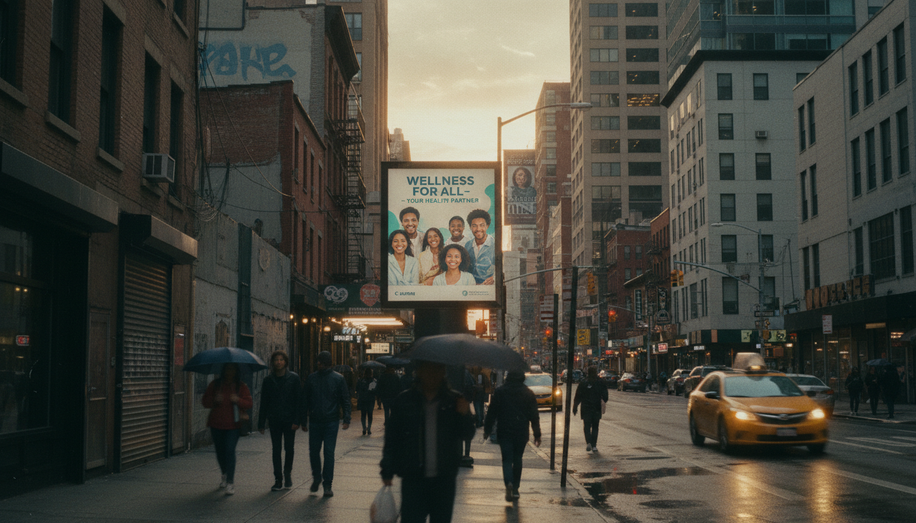

In the competitive landscape of healthcare, out-of-home (OOH) advertising is emerging as a powerful tool to cut through digital noise, delivering targeted messages to patients and professionals alike. While U.S. hospitals allocate less than 1% of their budgets to marketing—translating to $1.3 million to $5.1 million annually for networks—spending has risen steadily since 2013, particularly in hospital, medical, and pharmaceutical categories, driven by consolidation and regulatory challenges. Large systems like Ascension dedicate up to 75% of their ad budgets to traditional channels including OOH, signaling a shift toward visible, high-impact formats that build awareness amid workforce shortages and post-pandemic recovery.
OOH’s strength lies in its ability to reach audiences in real-world contexts, fostering trust and recall at critical moments. A study by the Out of Home Advertising Association of America (OAAA) and The Harris Poll found 58% of adults noticing healthcare service ads on OOH, a notable uptick from prior years, as consumers seek on-demand care at urgent centers and retail clinics. Billboards near these facilities deliver hyper-local messaging, spiking awareness: one 32-day campaign for urgent care in Shreveport and Bossier City saw 72.7% of visitors notice the ads, with 65.4% of new patients and 79.5% of returning ones exposed, leading to a 73.6% moderate-to-high increase in awareness. This proximity turns passive commuters into active seekers, filling consideration funnels for services from routine checkups to specialized procedures.
For patient demographics, OOH excels in precision targeting. Cosmetic and plastic surgery practices, where consumers spent over $8 billion in 2016 on high-stakes procedures, leverage OOH for reputation-building in competitive markets. Geo-targeted billboards near high-traffic areas like grocery stores, salons, or transit hubs embed health messages into daily routines, especially during insurance open enrollment when carriers compete for policyholders. Transit ads on buses and shelters amplify repetition, boosting retention among commuters and pedestrians. Integrating OOH with digital channels enhances credibility: 45% of respondents trust healthcare brands more when OOH pairs with social and online ads, countering misinformation in a fragmented media world.
Engaging healthcare professionals demands even sharper strategies. Cutting-edge OOH technologies, such as programmatic billboards geo-targeted near hospitals and conferences, schedule displays around shift changes and tailor creatives to specialties like cardiology or oncology. Dynamic QR codes and NFC tags link to Shopify stores for medical equipment demos, driving 20-35% growth in referral traffic and 15-25% more lead generation via augmented reality (AR) showcases of product features. Interactive kiosks with embedded surveys collect real-time feedback from professionals, yielding 10-20% conversion lifts through data-driven personalization while ensuring regulatory compliance. Clear Channel Outdoor’s campaigns for pharmaceuticals pair OOH with mobile data to optimize placements—highway billboards for broad reach, urban transit for density—proving smarter buying over volume yields measurable prescriptions and visits.
Ethical considerations are paramount in this regulated space. Government hurdles limit direct-to-consumer pharmaceutical ads, yet OOH’s brand-safe nature avoids the pitfalls of digital overload, prioritizing public health over hype. Messaging must emphasize evidence-based benefits, avoiding false promises that could erode trust, especially for vulnerable demographics like chronic illness patients or low-income groups. Private practices, which devote higher marketing percentages than hospitals, must balance promotion with transparency, using OOH to highlight initiatives like vaccination drives or mental health awareness without exploiting sensitivities. Compliance checklists—mapping professional hotspots, specialty-specific creatives, and analytics tied to HIPAA—safeguard against overreach.
As healthcare evolves, OOH complements rising channels like point-of-care (POC) marketing, which surged 171% to over $803 million by 2023, while HCP digital/print dipped 22%. Patients seeing both POC and digital ads convert 200 times more effectively, underscoring OOH’s role in multichannel synergy. Pharma’s 26% DTC spend increase signals openness to mass-reach formats for broad initiatives. Costs remain accessible—OOH can hit 1,000 impressions for as low as $20 daily—making it viable for smaller providers.
Ultimately, OOH’s unskippable presence transforms healthcare advertising from passive pitches to action triggers. By placing messages where patients commute and professionals congregate, it not only drives foot traffic—up to 30-50% near facilities—but builds enduring trust. In an industry grappling with competition and ethics, targeted OOH proves that visibility, when done right, heals more than it sells. To effectively leverage OOH’s potential amidst these complexities, sophisticated platforms are essential. By integrating real-time performance tracking with precise location intelligence and programmatic DOOH campaign management, solutions like Blindspot empower healthcare marketers to refine targeting, measure attribution, and optimize spend for maximum impact and compliance. This ensures every campaign not only captures attention but also drives demonstrable patient engagement and professional referrals, fostering trust and delivering measurable health outcomes. Learn more at https://seeblindspot.com/