
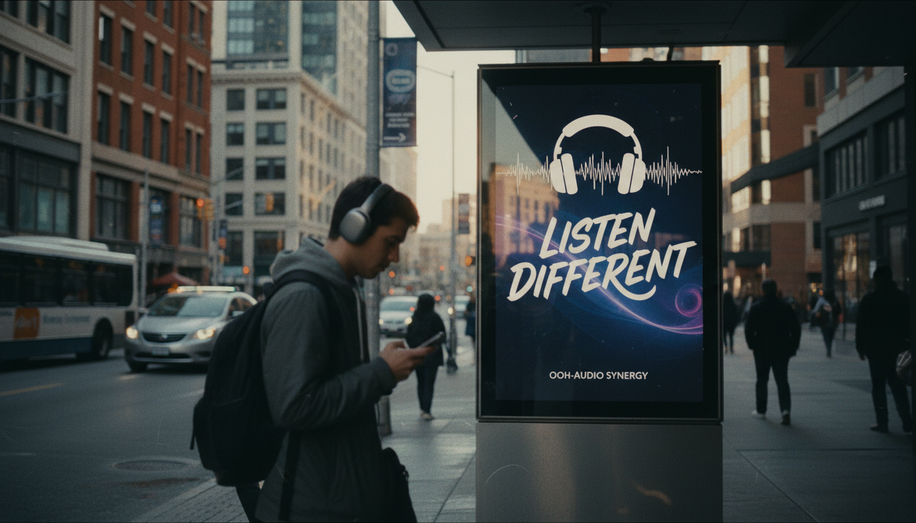

In the bustling corridors of urban life, where commuters navigate highways and pedestrians weave through city streets, out-of-home (OOH) advertising captures fleeting glances with bold visuals. Pairing these static or digital displays with audio content—such as podcast sponsorships, radio spots, or streaming services—unlocks a multisensory synergy that amplifies message retention and drives deeper engagement. This integration transforms isolated impressions into a cohesive narrative, leveraging sight for instant impact and sound for emotional depth, creating campaigns that resonate long after the initial encounter.
The foundational strength of this pairing lies in their natural complementarity. OOH excels at visual punch: striking images on billboards, transit wraps, or digital screens that plant a brand seed in seconds amid high-traffic zones. Audio channels, by contrast, expand that seed into a vivid story. Radio ads, often consumed during drives past those very billboards, deliver 15- to 30-second narratives rich with detail, emotion, and calls to action—elements impossible in OOH’s brevity. Research underscores the potency: integrated broadcast and OOH campaigns boost brand recall by up to 48% over single-channel efforts, thanks to frequency reinforcement, where repeated exposure across senses strengthens neural pathways.
Consider the daily commute, a prime intersection of these media. Listeners tuned to car radios encounter audio messages just as they pass strategically placed OOH displays. This timing exploits the “theater of the mind,” where sound cues—jingles, voiceovers referencing visual motifs—rebuild billboard imagery in the listener’s imagination, enhancing recognition and emotional connection. Podcasts and streaming audio extend this further, reaching audiences in private moments like workouts or errands, where sponsorship reads or targeted ads reinforce OOH visuals encountered earlier. A campaign for a retail chain, for instance, might feature enigmatic OOH posters teasing a product launch, followed by podcast episodes unpacking its benefits, fostering anticipation that culminates in purchase intent.
Strategic planning is essential to harness this potential. Begin with audience overlap analysis: map geographic corridors where radio listenership or podcast demographics align with OOH sightlines, such as motorways for commuters or urban hubs for streaming users. Messaging must cohere without redundancy—OOH as the visual anchor with minimal text and bold graphics, audio providing narrative expansion, testimonials, or urgency. For podcasts, opt for host-read sponsorships that echo OOH themes conversationally, building trust through authenticity. Timing coordination seals the deal: launch OOH slightly ahead to build awareness, syncing audio bursts for reinforcement, mindful of production variances—radio and streaming deploy swiftly, while OOH installations demand weeks.
Creative execution demands precision. Audio scripts should evoke OOH visuals through shared sonic elements, like a jingle mirroring a billboard’s color scheme or tagline. Brands targeting professionals might pair peak-morning radio spots with motorway billboards, transitioning to evening podcast ads for reflection. Streaming platforms enhance targeting, delivering ads to specific listener segments based on behavior, amplifying OOH’s geographic precision. Emerging innovations, such as voice-activated OOH displays, hint at future evolution, blending sight and sound interactively via AI responses or commerce prompts.
Measurement and optimization close the loop. Track cross-channel metrics like listen-through rates for audio, footfall lifts near OOH sites, and unified uplift in brand lift studies. Platforms now offer unified booking for inventory visibility, enabling cost comparisons and scenario modeling that sidestep traditional silos. Seasonal tweaks maximize efficiency: holiday radio surges pair with high-traffic OOH, while tourism campaigns sync audio popular with visitors to attraction-side displays.
Real-world success stories illuminate the approach. Automotive brands have long mastered radio-OOH fusion, with drive-time spots detailing features glimpsed on highway billboards, yielding measurable sales spikes. Beverage campaigns integrate podcast sponsorships with urban digital OOH, using shared slogans to dominate mindshare. In competitive landscapes, this tactic exploits gaps—while rivals chase digital noise, sight-sound pairings command undivided attention in physical spaces.
Challenges persist, from vendor coordination to fragmented buying processes, but modern tools mitigate them, fostering seamless integration. Ultimately, sound and sight in OOH-audio campaigns craft immersive experiences that feel omnipresent yet personal, turning passive exposure into active advocacy. As media fragments further, this synergistic strategy stands as a timeless lever for brands seeking ubiquity and impact in an attention-scarce world.