
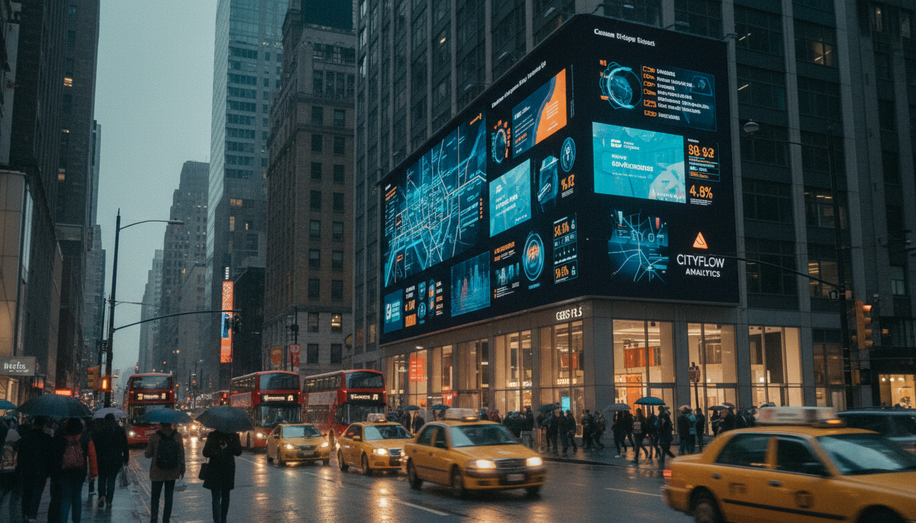

In the bustling arteries of modern cities, digital billboards are shedding their static skins, evolving into responsive canvases that pulse with the rhythm of real-time life. No longer confined to fixed messages, these displays harness artificial intelligence, 5G connectivity, and vast data streams to adapt content instantaneously—swapping promotions for sunscreen on sunny afternoons or traffic alerts during rush hour, all while capturing the fleeting attention of passersby. This shift marks a pivotal leap in out-of-home (OOH) advertising, where dynamic content doesn’t just inform but anticipates, turning billboards into active participants in the urban narrative.
At the heart of this transformation lies AI-driven optimization, which analyzes external triggers like weather patterns, local events, and social media buzz to tailor visuals and calls-to-action on the fly. Picture a billboard in a high-traffic district that detects heavy congestion via integrated traffic feeds and pivots from a restaurant ad to a delivery service pitch, complete with estimated wait times pulled from live apps. Such real-time adaptations boost relevance, with advertisers reporting heightened engagement as messages align precisely with audience needs—morning commuters see coffee deals, while evening crowds encounter nightlife promotions synced to nearby happenings. Powered by 5G’s lightning-fast data speeds, these updates occur seamlessly, enabling high-resolution videos and animations to refresh in seconds, far surpassing the limitations of traditional static displays.
Programmatic advertising amplifies this agility, automating the purchase and deployment of billboard inventory through data platforms that optimize based on performance metrics. In 2026, this technology democratizes access, allowing even mid-sized brands to launch, pause, or tweak campaigns in response to real-time ROI data, without rigid schedules. For instance, a retail chain might bid programmatically for slots near trending social media hotspots, displaying user-generated content or viral challenges that encourage shares and extend reach organically. This data-driven precision not only elevates effectiveness but also measures it more accurately, linking impressions to actions like app downloads or store visits.
Interactivity takes these capabilities further, blending digital billboards with augmented reality (AR) and gesture recognition to forge immersive encounters. Pedestrians waving at a screen might trigger an AR game or personalized discount code, viewable via smartphone, fostering a “wow” factor that sparks social media amplification. In high-traffic zones, 3D anamorphic effects create illusions of objects leaping from the display, drawing eyes and cameras alike, while touchless interfaces respond to crowd density or individual movements. These features, supported by modular LED panels with brightness up to 10,000 nits and auto-dimming sensors, ensure visibility in any condition—from glaring sun to nighttime glare—while integrating live feeds from news wires or weather APIs for hyper-local relevance.
Sustainability underpins this innovation, as energy-efficient LEDs, solar integrations, and recyclable materials align dynamic displays with eco-conscious mandates. High-brightness modules now achieve color fidelity over a decade without fading, and smart controls remotely adjust power usage based on ambient light, slashing operational costs and carbon footprints. Cities embracing these “green” billboards not only enhance aesthetics but also meet regulatory demands amid urban expansion, where projections forecast a 12% annual market growth fueled by such advancements.
Yet challenges persist. Regulatory hurdles in placement and content rotation demand careful planning, while ensuring equitable access across urban and rural divides remains key. Privacy concerns around audience analytics also loom, prompting ethical AI frameworks to anonymize data. Still, the trajectory is clear: digital billboards are outpacing static alternatives, with programmatic and real-time features driving superior recall and ROI.
As 2026 unfolds, these technologies promise a future where OOH advertising feels prescient, not prescriptive—adapting to traffic snarls with detour suggestions, news breaks with timely alerts, or Twitter trends with branded memes. Brands like global retailers and local startups alike are investing heavily, recognizing that in an era of fragmented attention, the billboard that knows you best wins. This dynamic evolution doesn’t just illuminate streets; it redefines connection, proving that the most compelling ads are those that move with the world.