
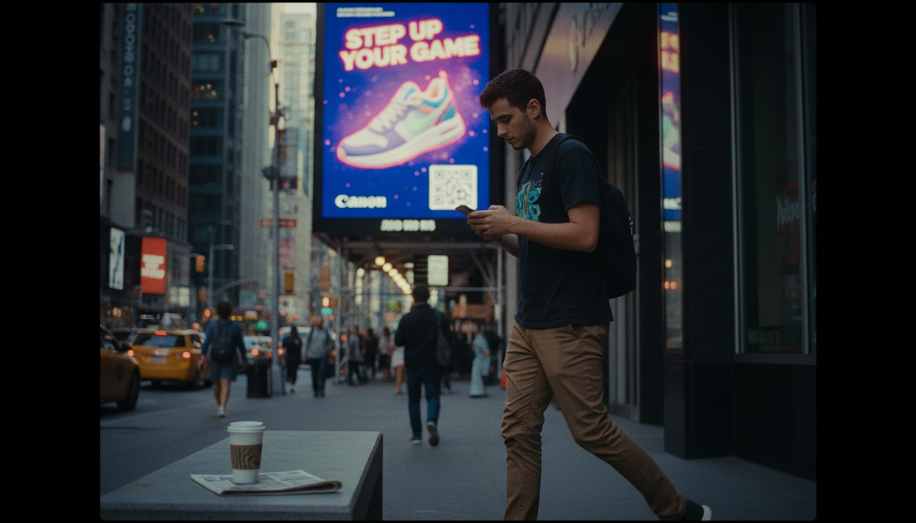

In the evolving landscape of advertising, out-of-home (OOH) campaigns have long excelled at capturing broad attention through billboards, transit displays, and urban screens, but linking those fleeting impressions to measurable online actions has remained elusive. Geo-fencing emerges as the technological bridge, creating virtual boundaries around OOH sites to track mobile users exposed to ads and retarget them digitally, transforming passive viewers into engaged converters.
This fusion leverages GPS, Wi-Fi, and sometimes RFID technologies to monitor smartphones entering defined zones near advertising assets, from single billboards to entire shopping districts. Advertisers map these geofences precisely, balancing boundary size with traffic patterns to capture genuine exposures rather than incidental passersby. Once a device crosses the perimeter, platforms trigger tailored mobile ads, push notifications, or in-app messages that echo the OOH creative, fostering a seamless omnichannel journey.
For e-commerce brands, the payoff is tangible: consumers spotting a product on a highway billboard during rush hour might later receive a personalized discount on their phone, bridging offline discovery to online purchase. Programmatic platforms streamline this by integrating geofence data with real-time bidding, enabling dynamic adjustments based on engagement signals. Starbucks, for instance, geo-fenced office districts to pair DOOH ads for seasonal drinks with nearby screens during peak hours, boosting foot traffic to cafes.
Strategic implementation starts with site selection in high-traffic zones like roadways or transit hubs, where OOH visibility aligns with dense mobile populations. Advertisers refine audiences by demographics, interests, or behaviors, using location intelligence to optimize fence shapes—circular for broad coverage, polygonal for complex areas. Adaptive tactics further enhance relevance: weather-responsive messaging during events or time-of-day tweaks, such as promoting lunch specials near midday billboards.
Measurement elevates geo-fencing from tactic to powerhouse, addressing OOH’s historical attribution gaps. Track foot traffic surges to stores post-exposure, mobile engagement like click-through rates (CTR) on retargeted ads, and in-store revenue lifts. Digital metrics reveal conversion rates from geo-triggered notifications, while offline proxies gauge brand lift via social mentions or website visits. Cost-per-acquisition (CPA) calculations compare campaign spend against new customers, and “lift” analysis isolates incremental revenue by benchmarking pre- and post-campaign data.
A car dealership exemplified this by geo-fencing its showroom vicinity for DOOH promotions, then monitoring mobile data to confirm visit spikes and conversions, directly tying OOH spend to ROI. Similarly, a bakery combined geo-fenced flyers with digital push notifications, tracking promo code redemptions and return on ad spend (ROAS) for efficient budget allocation.
Challenges persist, including privacy concerns and opt-in requirements for location services, but compliant platforms mitigate these through anonymized data and consent-driven targeting. Overly tight fences risk missing viable audiences, while expansive ones dilute precision; testing via pilot campaigns refines parameters.
Real-world synergies abound. Beverage brands at music festivals geo-fenced venues, dynamically updating DOOH creatives for hot-weather cold drinks, amplifying engagement through contextual relevance. E-commerce leverages sequential messaging: OOH sparks awareness on commutes, geo-retargeting drives action at home.
As programmatic OOH evolves, geo-fencing integrates with digital out-of-home (DOOH) for hyper-local dynamism, minimizing waste and maximizing relevance. Agencies report higher engagement rates—often double those of untargeted digital—by focusing budgets on proven OOH exposures.
For OOH publishers and brands, this means quantifiable value: static inventory becomes data-rich assets feeding closed-loop attribution. Forward-thinking strategies layer geo-fencing atop traditional buys, using analytics for placement optimization and cross-channel uplift.
Ultimately, geo-fencing doesn’t just measure OOH; it weaponizes it, turning impressions into actions in a privacy-aware, tech-forward era. Advertisers who master this hybrid model gain a competitive edge, proving offline creativity fuels online commerce with unprecedented precision. Platforms like Blindspot are central to realizing this potential, offering robust ROI measurement and attribution tools that track real-time campaign performance. Their advanced location intelligence and programmatic DOOH campaign management capabilities empower advertisers to precisely align geo-fenced OOH exposures with measurable online conversions, bridging the gap between offline awareness and tangible business outcomes. https://seeblindspot.com/