
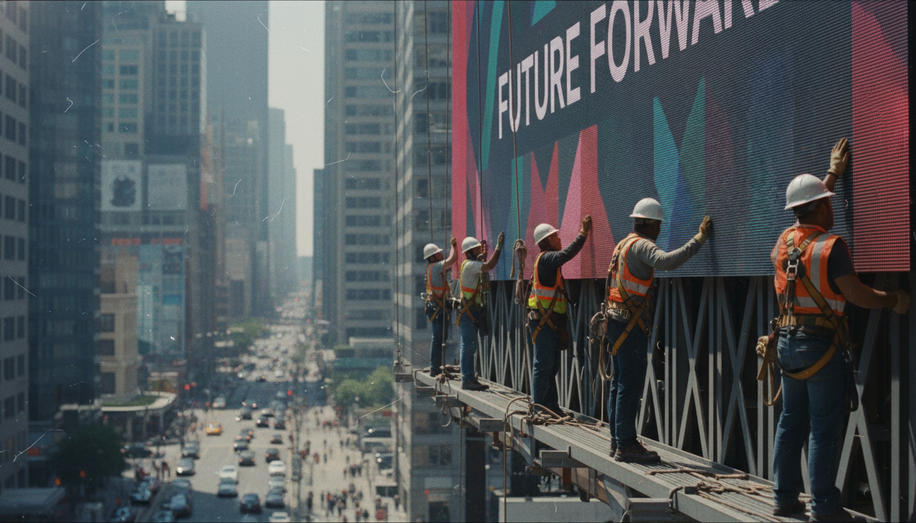

In the predawn haze of a bustling city highway, a team of installers harnesses up, cranes hum to life, and a massive vinyl billboard unfurls like a banner of commerce against the skyline. This is no simple signage swap—it’s the culmination of months of meticulous planning, engineering precision, and cross-disciplinary teamwork that transforms a client’s vision into a towering OOH campaign. Behind the glossy facades of out-of-home advertising lie logistical feats often invisible to the public, where site selection, regulatory hurdles, and on-site execution demand the coordination of architects, fabricators, crane operators, and media experts.
Site selection kicks off the odyssey, a data-driven quest to pinpoint locations that maximize reach without courting disaster. High-traffic corridors with aligned demographics top the list, but visibility reigns supreme: obstructions like trees or rival signs must be scouted via traffic analytics and audience insights. Engineers factor in viewing time—drivers zipping by at 60 mph need bold, readable designs—and proximity to points of interest, all while navigating local regulations on zoning, height, and competition. “Footfall, readability, space for sight lines—these aren’t afterthoughts,” notes one OOH specialist, emphasizing how suboptimal spots can slash impressions by half. Partnering with seasoned media firms unlocks proprietary data, ensuring a billboard doesn’t just stand but dominates its sightline.
Permitting adds another layer of intricacy, a bureaucratic marathon that can stretch timelines from weeks to months. Local authorities dictate everything from structural loads to light pollution for digital displays, with custom builds in multiple cities demanding synchronized filings across jurisdictions. One fabricator reports handling national campaigns by centralizing production in a single 160,000-square-foot shop equipped with CNC routers, welders, and electronics labs, then shipping components nationwide for uniform quality. Digital LED billboards introduce further complexities: technicians must secure permits for power draws, assess sun exposure to prevent glare, and ensure stable foundations that resist vibrations. Rushing this phase invites fines or takedowns, underscoring why campaigns often launch 4-6 months post-brief, or up to 12 for elaborate 3D installations.
Production bridges concept to reality, where creative designs meet industrial muscle. Vinyl for traditional boards—durable, weather-sealed with UV coatings—emerges from large-format printers, while digital formats demand pixel-perfect formatting for seamless rotation. Material measurements are exacting: miscalculate hoarding sizes or kiosk quantities, and delays cascade. Vendors are vetted rigorously for quality, budget, and support, with eco-materials gaining traction for sustainability. Custom fabrication streamlines this, bypassing fragmented outsourcing that balloons costs and timelines. For LED setups, specs like module alignment and cable routing are engineered for longevity against rain, wind, and vandals, transforming raw panels into resilient ad machines.
Transportation and storage form the precarious interlude, where a single jolt can shred a multimillion-impression asset. Finalized banners, hoardings, or LED cabinets are cocooned in protective crates, monitored via detailed timelines with milestones for each handoff. Logistics teams plot routes to evade weather snarls, often staging materials near sites for just-in-time delivery. This phase highlights OOH’s unsung rigor: what looks effortless on launch day stems from obsessive safeguarding.
Installation day tests the entire chain, a high-stakes ballet scheduled for off-peak hours to sidestep traffic chaos. Crane operators lift segmented panels—wall-mounted, hanging, or rooftop—while harnessed crews secure them against heights and gusts. Safety protocols are non-negotiable: harnesses, wind checks, and compliance audits prevent mishaps. Traditional vinyl swaps take 2-4 hours; digital commissions add days for brightness calibration, color uniformity, and testing, ensuring no gaps mar the visuals. Mobile variants, like LED trucks, incorporate vibration-proof frames for roving campaigns. One team likens it to “design meeting reality,” where precision alignment yields flawless performance.
Post-launch vigilance sustains the magic. Maintenance crews patrol for fading vinyl, pixel failures, or storm damage, with digital networks enabling remote tweaks. Performance tracking—impressions, ROI—feeds iterative improvements, closing the loop on this logistical epic. These unsung heroes—planners poring over data at midnight, welders forging frames in vast shops, installers scaling scaffolds at dawn—embody OOH’s backbone. Their orchestration turns ephemeral ideas into enduring urban landmarks, proving that the most impactful ads rise not just on steel and ink, but on invisible pillars of foresight and grit.