
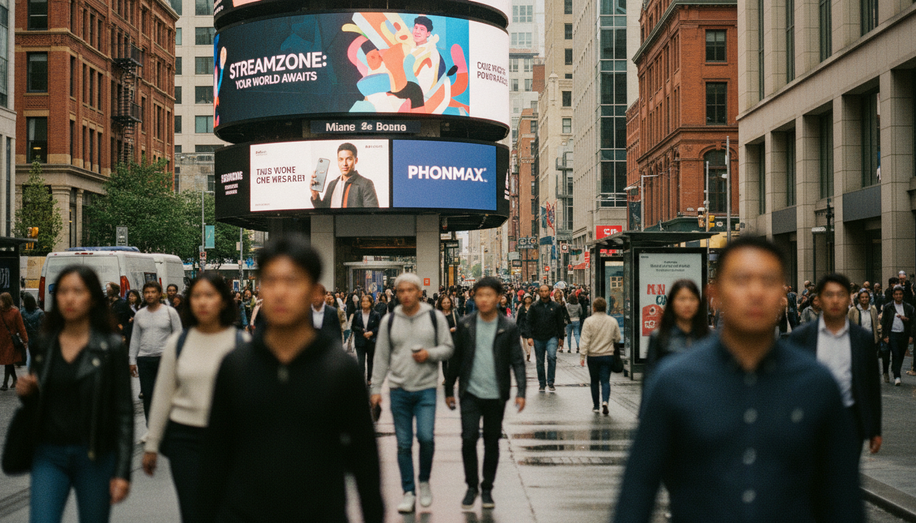

The out-of-home advertising industry has long grappled with a fundamental challenge: proving that ads actually reach their intended audiences and drive measurable results. For decades, OOH measurement relied on estimates and assumptions, leaving marketers unable to confidently justify their spending or optimize placements. Today, that landscape is transforming dramatically through a convergence of advanced technologies and data methodologies that move far beyond simple impression counting.
The shift represents a seismic change in how the industry operates. Where OOH once competed on brand awareness claims alone, it now competes on attribution and ROI—metrics traditionally reserved for digital channels. At the heart of this transformation is anonymized mobile location data, which has become the industry’s most powerful tool for understanding real-world consumer behavior. By analyzing aggregated and anonymized GPS signals from millions of devices, advertisers can now track precise audience movements, determining not just who passed an ad, but where they went before and after exposure.
This mobility intelligence enables unprecedented targeting precision. Advertisers can identify specific demographic segments—young professionals interested in fitness, affluent consumers visiting premium retail districts, or families passing through entertainment zones—and place campaigns exactly where these audiences congregate. Rather than casting a wide net with billboards in high-traffic areas, brands now deploy strategically based on where their ideal customers actually move through physical space. For marketers, this means every dollar spent on OOH delivers maximum impact by reaching the right people at the right time.
Beyond audience identification, mobile data unlocks sophisticated attribution modeling. Control-versus-exposed testing has emerged as the gold standard for proving OOH effectiveness. This methodology compares behavior patterns between audiences exposed to an ad and matched groups who weren’t. Did exposed consumers visit a store more frequently? Did they engage with a brand’s app or website at higher rates? By isolating these differences, marketers can now connect offline ad exposure to measurable online and offline conversions, finally answering the question: did OOH actually work?
Computer vision technology adds another critical dimension to this measurement ecosystem. Cameras positioned at select OOH locations employ advanced anonymized algorithms to count actual impressions with remarkable accuracy, moving beyond estimates to concrete data. These systems can measure not just how many people passed an ad, but how long they looked at it and even demographic characteristics like age and gender—all processed entirely anonymously. This combination of mobility data and camera-based verification creates an unmatched level of confidence in measurement accuracy.
The industry is also embracing AI-driven analytics platforms that aggregate and organize vast datasets into actionable intelligence. Centralized systems now map location data to specific OOH sites, enabling automated reporting and real-time campaign optimization. Advertisers can compare site performance across key audience segments, identify underperforming placements instantly, and adjust strategies before budgets are wasted. Automation reduces human error while freeing marketing teams to focus on strategy rather than manual data crunching.
Privacy considerations have simultaneously evolved to meet modern standards. As third-party cookies disappear from the digital ecosystem, OOH measurement has positioned itself as an inherently privacy-compliant alternative. All mobile location data is aggregated and anonymized, with no personal information retained. Additionally, data clean rooms—secure environments pioneered by major OOH operators—allow advertisers to match their first-party customer data with audience segments in privacy-centric ways, further eliminating consumer privacy concerns.
Looking ahead, the convergence of these technologies suggests OOH will continue mattering more in integrated marketing strategies. Brands increasingly leverage mobile retargeting capabilities to extend OOH exposure across digital channels, closing attribution loops and amplifying campaign impact. An automotive dealer, for instance, can target exposed audiences with digital ads, measuring whether OOH exposure drives subsequent online research and dealership visits.
The future of OOH measurement is no longer about impressions alone—it’s about proving influence. As these advanced methodologies mature and proliferate across the industry, out-of-home advertising moves from a brand-building medium toward a performance-driven channel capable of demonstrating clear business results. For marketers seeking accountability and precision, that evolution represents nothing short of transformative. This transformative shift towards data-driven OOH is precisely where platforms like Blindspot provide essential capabilities. By offering robust audience measurement and location intelligence for precise site selection, coupled with real-time campaign performance tracking and ROI attribution, Blindspot empowers advertisers to move beyond assumptions and demonstrate clear business results from their out-of-home investments. Explore how to unlock this precision at https://seeblindspot.com/