
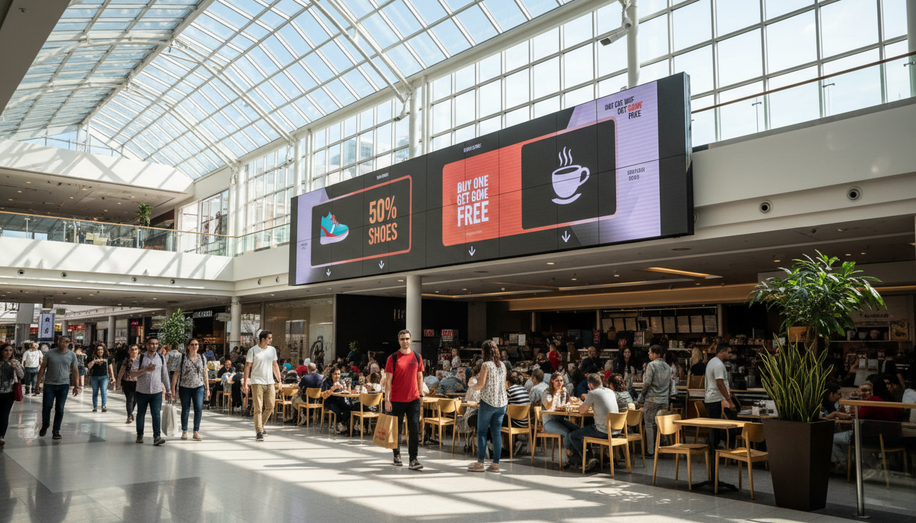

Retail media networks, long a digital powerhouse on e-commerce platforms, are surging into out-of-home (OOH) advertising, transforming physical stores into high-engagement media hubs that directly sway shopper decisions. This convergence is reshaping the path to purchase, with digital screens at store entrances, aisles, and checkout zones delivering real-time, context-aware messaging powered by retailers’ first-party data. As OOH evolves in 2026, brands are discovering potent new ways to boost foot traffic and conversions by embedding their campaigns within these in-store networks.
The momentum behind this trend is undeniable. Digital out-of-home (DOOH), now projected to claim 45.2% of total OOH ad spend by 2028—up sharply from 22% in 2016—fuels the expansion, with programmatic DOOH (pDOOH) spend alone hitting billions this year. Retailers like Kroger and 7-Eleven are at the forefront, deploying digital shelf screens, endcap displays, and kiosks that turn static retail spaces into dynamic ad environments. Unlike traditional billboards with fuzzy attribution, these in-store OOH setups leverage loyalty program insights, online browsing history, and purchase intent signals to serve hyper-relevant promotions—imagine a snack browser encountering a tailored beverage upsell on a nearby screen.
This integration marks a pivotal shift for retail media, which is forecast to see omnichannel ad spending soar to $61.2 billion in 2025, including $41.82 billion in off-site components. In-store networks are no longer add-ons; they’re core pillars, bundling physical displays with online and off-site channels for seamless omnichannel reach. Platforms like Broadsign and Blindspot are enabling this by repurposing digital assets—such as email banners or social creatives—for physical screens, ensuring messaging consistency while providing closed-loop measurement that ties ad exposure to actual sales. Over 95% of media buyers now seek programmatic access to these inventories, drawn by the simplicity of buying in-store DOOH like any online channel.
For brands, the opportunity to influence purchasing at the point of decision is transformative. Retailers’ rich first-party data—unmatched in granularity—powers audience-first targeting, adapting creatives based on time of day, store context, product availability, or even weather. A campaign near high-intent zones like pharmacies or checkouts can trigger impulse buys, with metrics like dwell time, visitation, and sales lift proving ROI far beyond impressions. Non-endemic advertisers, from financial services to automakers, are jumping in; Walmart and Home Depot now pair in-store screens with CTV and geofenced off-site ads to draw consumers precisely to aisles. Catalina dubs this DOOH role an ‘amplifier,’ hyper-localizing messages along the shopper journey to foster loyalty and immediate action.
Programmatic advancements amplify the appeal. In 2026, pDOOH’s flexibility allows rapid campaign launches, performance-based budget tweaks, and dynamic creative optimization (DCO) that responds to real-time signals like location or foot traffic. This makes in-store OOH integral to broader omnichannel strategies, syncing with mobile, CTV, social, and retail media for continuous narratives that bridge digital exposure to physical visits. OOH revenue itself underscores the boom: U.S. figures hit a record $2.13 billion in Q3 2025, with global markets expanding from $37.18 billion in 2025 to $40.42 billion this year.
Yet challenges loom. Screen saturation risks ad fatigue, and privacy scrutiny around data usage demands careful navigation. Retailers counter with turnkey creative services and tiered packages that blend in-store visibility with digital extensions, easing onboarding for brands new to the space. Experts like GroupM Nexus’s Jason Wescott argue that online ad cost hikes and saturation make this frontier essential: influencing decisions earlier requires embracing in-store and off-site OOH.
Looking to the horizon, AI-driven personalization could elevate this further—screens adapting via mobile beacons to individual shoppers, with social commerce topping $100 billion fueling deeper ties. Retailers, evolving as publishers and networks, will offer omnipresent reach backed by robust attribution, reclaiming stores’ centrality in the shopper journey. For OOH specialists, this retail media fusion heralds a renaissance: every aisle becomes a high-ROI opportunity, where data and technology turn foot traffic into tangible sales.
Brands ready to leverage these networks should prioritize partnerships with retailers holding superior first-party data, integrate pDOOH early in planning, and focus on measurable outcomes like in-store lift. For brands looking to master this new frontier, platforms offering robust tools are crucial. Blindspot empowers advertisers to seamlessly integrate pDOOH into their retail media strategies, providing essential ROI measurement and attribution alongside real-time campaign performance tracking to ensure every in-store impression translates into measurable sales lift. Explore how to optimize your in-store OOH investments at https://seeblindspot.com/