
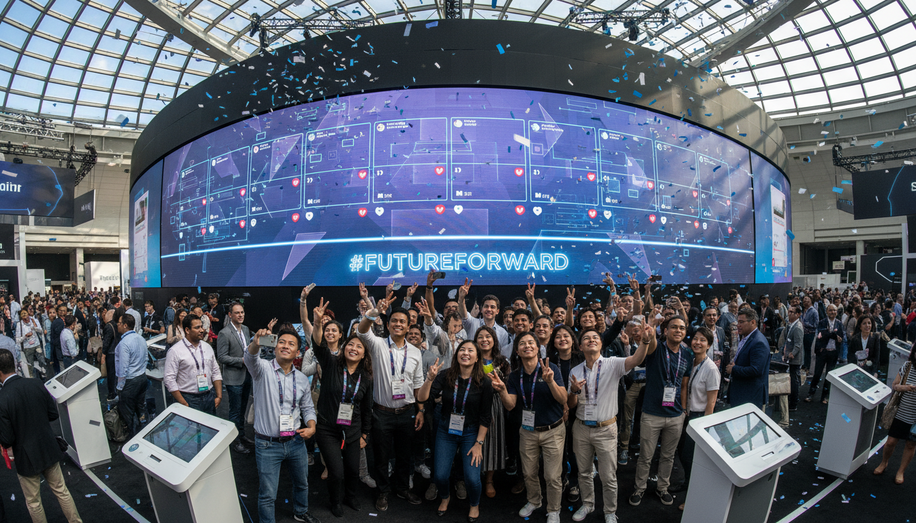

The convergence of out-of-home advertising and social media represents one of the most transformative shifts in modern marketing strategy. Rather than operating as separate channels, forward-thinking brands are discovering that offline billboards and digital platforms create a powerful synergy that drives measurable engagement and extends brand conversations far beyond the physical advertisement itself.
The fundamental principle behind this integration is straightforward: outdoor advertising provides high visibility in the physical world, while social media extends that visibility into the digital space. When designed intentionally, an OOH campaign becomes a gateway to digital interaction. A billboard is no longer simply a passive message delivery system—it becomes an invitation to participate, share, and engage online. This transformation fundamentally changes the value proposition of outdoor advertising in an increasingly digital-first marketing landscape.
Successful integration begins with strategic calls-to-action that bridge physical and digital experiences. Research demonstrates concrete results from this approach. Mobile click-through rates increase by up to 15% when supported by OOH, according to recent industry analysis. More dramatically, augmented reality billboards that incorporate social media generate 4.7 times more impressions than traditional billboard campaigns alone and see a 342% increase in social sharing compared to standard digital OOH installations.
Contest-driven campaigns exemplify how this synergy translates into tangible business growth. Mr. Charlie’s Chicken Fingers combined social media and billboard advertising to support expansion across multiple locations, encouraging online participation while enhancing outdoor visibility and driving measurable business results. Similarly, a regional retailer announced a new store opening through billboards, then reinforced the message with Instagram ads featuring behind-the-scenes launch videos, resulting in higher in-store foot traffic and stronger brand interaction online.
The real power emerges when campaigns are designed to generate user-generated content. Rather than asking consumers to simply notice an advertisement, brands can create experiences that compel people to document and share them. Hashtag strategies prove particularly effective for this purpose. Hashtag-Vape connected physical ads with active social media feeds through strategically placed billboards and clear calls-to-action, increasing brand visibility and interaction while maintaining budget efficiency. Continental Tyres took a different approach during Euro 2016, integrating football-related questions into OOH ads and asking people to tweet answers using a branded hashtag, directly folding social participation into the advertising experience itself.
A compelling example of organic social amplification occurred when reality television fans created a coordinated billboard campaign expressing their outrage over a storyline. Digital billboards were designed and posted within four hours, ultimately garnering over 760 million press and social media impressions plus prominent television coverage. This case demonstrates that when OOH and social media align authentically, the amplification can exceed even carefully planned campaigns.
Interactive AR billboard experiences take engagement even further. Nike’s integration of AR billboards with social campaigns generated 1.2 million AR interactions across physical locations and 680,000 social shares, producing 42 million organic impressions and a 3.4x ROI compared to traditional billboard campaigns. These experiences attract over 30 seconds of active engagement—a tenfold improvement compared to the 2-3 seconds captured by conventional billboards.
The most successful campaigns recognize that consistency across platforms reinforces brand recognition while driving action. A teaser launched on social media before unveiling a major DOOH billboard creates anticipation and extends the conversation beyond physical locations to digital spaces, increasing overall campaign visibility. This coordinated approach ensures the message resonates across all platforms rather than competing for audience attention.
As advertising continues to blur the lines between physical and digital experiences, OOH campaigns designed to encourage social media interaction represent not an emerging trend but a marketing imperative. Brands that transform their outdoor advertisements into conversation starters—rather than mere announcements—unlock the full potential of integrated marketing. The data is clear: when OOH and social media work together strategically, the results extend far beyond what either channel could achieve independently.