
In the high-stakes world of live events, where sold-out crowds and blockbuster sponsorships define success, out-of-home (OOH) advertising stands as an unmissable force. Billboards towering over cityscapes, transit wraps flashing past commuters, and digital displays pulsing in high-traffic zones don’t just promote concerts, festivals, and sporting spectacles—they ignite attendance surges and supercharge sponsor visibility. With outdoor advertising delivering the lowest cost per thousand impressions (CPM) at $2 to $7 among major media, event organizers and brands leverage its massive reach to turn buzz into bodies in seats.
Consider the anatomy of an event campaign. For a major music festival or championship game, OOH placements strategically blanket fan corridors, airports, and urban hotspots weeks in advance. These formats excel in event promotion by prioritizing dwell time and frequency—key performance indicators (KPIs) that ensure messages stick. Research shows optimal recall hits with 5-7 exposures per person, far surpassing fleeting digital scrolls. A billboard near a stadium or festival grounds, for instance, captures slow-moving traffic, extending viewer engagement and priming impulse decisions like ticket buys. When paired with QR codes or dynamic digital out-of-home (DOOH) screens, these assets drive immediate action: scans lead to sales, while geo-targeted extensions track visit lifts of 10-30% in nearby zones.
Real-world proof abounds. At the U.S. Grand Prix in Austin, Cash App deployed billboards, building murals, and wild postings across six high-dwell locations for four weeks, generating 15.5 million impressions. This OOH blitz not only amplified the event’s energy but funneled qualified traffic into brand conversions, demonstrating how precise placements maximize return on investment (ROI). Broader data underscores the pattern: billboards yield an average 497% ROI, with every dollar spent returning $6, per Out of Home Advertising Association of America (OAAA) figures. Adding OOH to mobile campaigns boosts ROI by up to 316%, making it indispensable for time-sensitive event pushes.
Sponsors reap outsized rewards from this visibility machine. Events thrive on partnerships, which account for 88.4% of revenue generation and can spike engagement by 98%, according to event marketing surveys. OOH elevates sponsors from logo placements to cultural icons. A festival headline act sponsored by a beverage giant? Giant wraps on buses and transit hubs ensure the brand dominates the attendee journey—from awareness en route to the venue through post-event recall. DOOH takes it further: a new study reveals 73% of consumers view these ads favorably, ranking them tops for driving action over TV or social. Unlike skippable online banners, OOH commands 100% viewability and 47% ad recall—double social media’s rate—embedding sponsors in the event narrative.
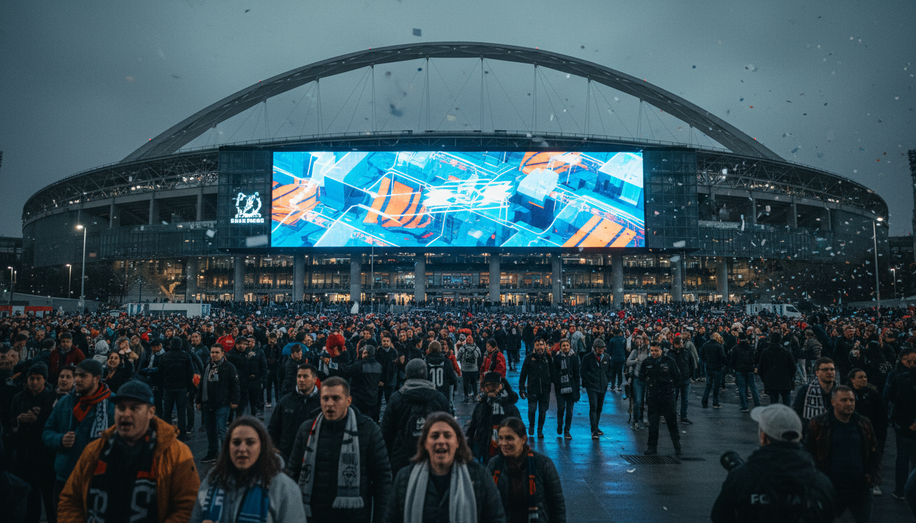
Festivals like Coachella or Glastonbury, and sports juggernauts such as the Super Bowl or Olympics, routinely deploy OOH to shatter attendance records. Organizers report attendance as their top success metric at 19.3%, with OOH’s hyper-local targeting—via tools like Location Performance Index (LPI)—honing in on demographics primed for turnout. In one fitness chain campaign, billboards exposed 480,000 devices, tracing 18,000 gym visits and 9% of new memberships directly back to the exposure. Translate that to events: a concert series billboard flight can swell gates by correlating impressions to ticket spikes, while sponsors bask in the halo of 20-40% brand recall lifts.
Yet OOH’s edge sharpens in a fragmented media landscape. While social media hogs budgets, its 70-80% viewability pales against OOH’s ironclad delivery, and CPMs hover at $10—double outdoor’s efficiency. Event marketers increasingly blend channels, but OOH anchors the “real-world” push: it primes digital handoffs, like search volume surges or app downloads post-exposure. For sponsorships, this means amplified value—brands gain not just logos on programs but pervasive presence that outlives the event via earned media. A viral billboard sparking TikTok trends? That’s free ROI extension, turning paid impressions into millions more.
Challenges persist, from measuring intangibles like buzz to navigating urban saturation, but advancements in analytics are closing gaps. Geofencing ties OOH to foot traffic; surveys quantify recall; and AI-enhanced targeting predicts high-LPI spots. Globally, the OOH market swells—projected from $60.7 billion in 2024 to $62.52 billion in 2025—fueled by urbanization and DOOH’s precision. For events, where 80% of marketers deem live gatherings mission-critical, OOH isn’t optional; it’s the spectacle’s spotlight.
As 2025 data cements, OOH transforms event promotion from scattershot flyers to surgical strikes on attendance and sponsor equity. In an era craving authentic experiences, its bold, unavoidable presence ensures crowds flock and brands flourish—proving once more that the biggest wins happen outside the screen.