
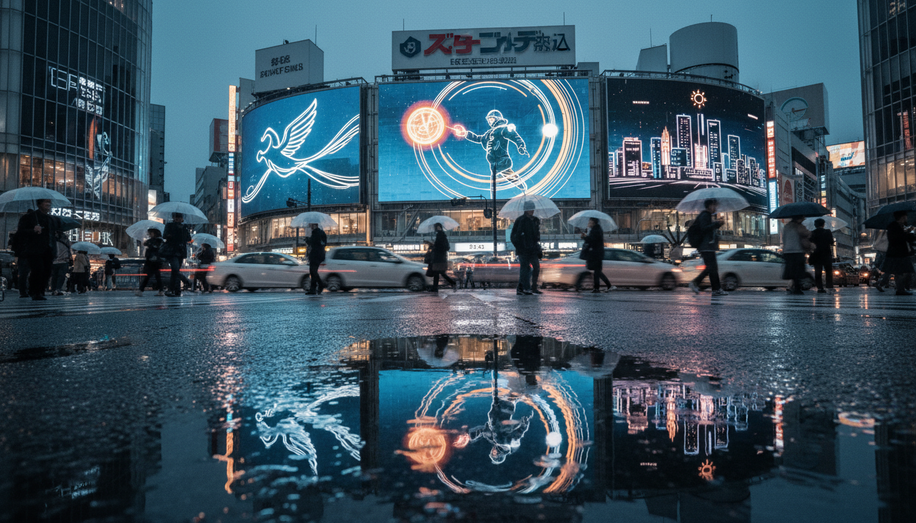

In the bustling corridors of urban life, where commuters rush past billboards and shoppers glance up from sidewalks, out-of-home (OOH) advertising has evolved from static messages into dynamic storytelling canvases. Brands are increasingly harnessing the power of sequential narratives across multiple sites, transforming isolated ads into interconnected chapters that guide audiences through a compelling journey. This multi-site approach leverages the natural flow of public movement—along streets, through transit hubs, and across neighborhoods—to build suspense, reveal plot twists, and deliver emotional payoffs, fostering deeper engagement than single-exposure campaigns ever could.
Consider the inherent drama of a city commute: a pedestrian encounters the first “scene” at a subway entrance, sparking curiosity, then spots the continuation on a bus shelter en route to work, and finally reaches the climax at a digital billboard near their office. This serialization mirrors binge-worthy television series, where each placement serves as an episode in a larger arc. Pioneering examples illustrate the technique’s potency. Netflix’s launch in France deployed GIF-enabled outdoor boards that reacted to real-time events, creating a live narrative thread across 100 sites; messages shifted within hours to topical news, pulling passersby into an unfolding story tailored to the moment. Similarly, activists in one campaign stretched a silent demonstration across dozens of urban screens, with images evolving as viewers moved through the city, turning passive observation into a participatory march.
The mechanics of such campaigns demand meticulous planning. Media planners map audience paths using geolocation data, commuter patterns, and footfall analytics to sequence placements optimally. Digital OOH (DOOH) amplifies this with triggers like weather, time, or proximity. B&Q, the UK hardware retailer, swapped creatives based on local forecasts, promoting barbecues under sunny skies and indoor projects during rain, effectively narrating a “weather-responsive shopping story” across sites. Guinness took it further during the RBS 6 Nations rugby tournament, directing fans via dynamic London billboards to nearby pubs; as venues filled, sensors rerouted the narrative to alternatives, creating an interactive plot where the audience became protagonists.
HOKA’s Mafate X sneaker launch in Manhattan exemplified immersive serialization on a grand scale. For two days, the brand converted streets into a desert track: sand, rocks, and wind effects built the setup, while a central treadmill with Unreal Engine visuals shifted landscapes in real-time—morning light to twilight—as runners engaged. Surrounding DOOH screens served as narrative extensions, displaying pro-runner footage during pauses, weaving product immersion into the urban fabric. This multi-site saga didn’t just advertise; it scripted a full brand experience, encouraging shares and discussions that extended the story online.
Yet storytelling succeeds only with narrative discipline. Simplicity reigns supreme—Netflix’s “Binge Responsibly” near gyms used three words to imply a cautionary tale of excess, contextually placed for ironic resonance. Spotify’s billboards, with high-contrast yellow fields, serialized quirky listener habits like “Dear person who played ‘Sorry’ 42 times on Valentine’s Day,” unfolding personalized anecdotes across the city to spark relatability and social buzz. Contrast this with cluttered messages that dilute impact; experts emphasize bold visuals, minimal text, and cliffhangers to propel viewers forward. O2’s Samsung S8 campaign tracked Bluetooth device IDs at OOH sites, then geofenced digital radio ads within 500 meters, bridging physical encounters to multichannel sequels that measured store visits.
Transit environments offer prime real estate for progression. Subway wallpaper ads, bus wraps, and station billboards form natural sequences for daily riders who can’t scroll away. Pepsi’s augmented reality bus shelter in London surprised commuters with “unbelievable” illusions tied to its Max tagline, turning waits into viral story moments that spread via YouTube. PLUS supermarkets in the Netherlands gamified an entire town as a Monopoly board, with streets and buildings as purchasable properties; residents navigated the narrative physically, bidding and interacting across sites to boost store traffic.
Challenges persist: ensuring creative consistency across disparate providers, syncing digital triggers without glitches, and measuring uplift beyond impressions. Tools like API-linked flight data at Heathrow allowed the Financial Times to target transatlantic travelers with city-specific narratives on Terminal 5 screens, sold by passenger volume for precision. Metrics evolve too—footfall sensors, geofencing, and cross-media attribution reveal how sequential exposure lifts recall by 30-50% over static ads, per industry benchmarks.
Dreamies cat treats brought whimsy to London’s facades with 3D sculptures of felines scaling buildings toward giant treat packs, each installation a chapter in the “Cats Will Do Anything” saga; photo ops turned viewers into storytellers. Such campaigns prove that when OOH transcends promotion to narrate authentically—evoking laughter, intrigue, or urgency—it embeds brands in cultural memory.
As urban spaces densify and DOOH networks expand, multi-site storytelling stands poised to redefine engagement. Brands that master this craft don’t just capture eyes; they command journeys, turning fleeting glances into lasting loyalty. In an era of fragmented attention, the sequential billboard series emerges as advertising’s most captivating script.