
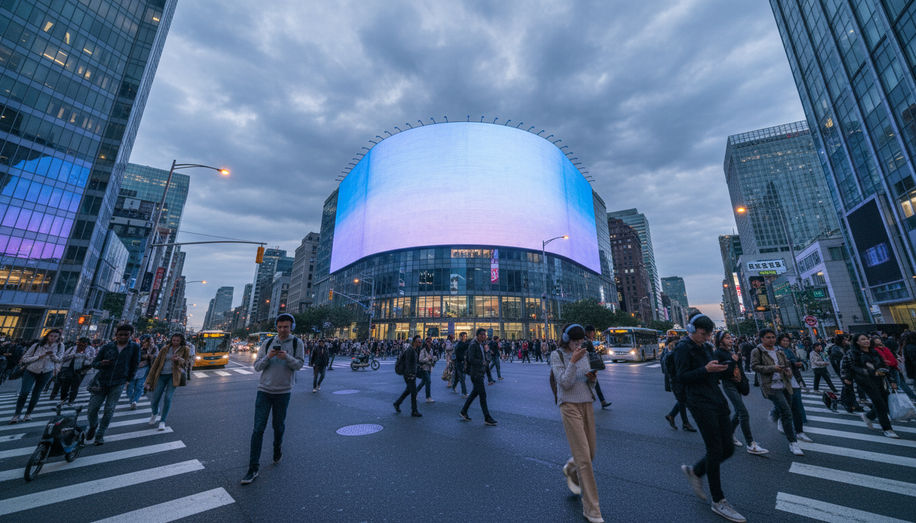

In the bustling urban landscape where eyes dart between billboards and screens, out-of-home (OOH) advertising has long reigned as a visual powerhouse, capturing fleeting moments of attention amid the chaos of daily commutes. Yet as consumer habits evolve, savvy marketers are discovering that pairing these static or digital visuals with audio campaigns—through radio spots, podcasts, or even emerging streaming platforms—unlocks exponential impact, boosting message recall by embedding brands deeper into the listener’s psyche. This multisensory fusion transforms passive glances into active memories, amplifying reach across channels that complement rather than compete.
Consider the science behind it: human brains process audio and visual stimuli differently, with sound forging emotional connections and visuals anchoring specifics. When synchronized, they create a reinforcement loop. A commuter spotting a digital OOH billboard promoting a new energy drink might forget it by lunchtime, but if that same message echoes through a targeted radio ad en route home or a podcast episode later that evening, recall surges. Studies in neuromarketing underscore this synergy; audio alone achieves about 75% message retention after 30 days, while visuals hover around 65%, but combined, they can exceed 90%. OOH’s strength lies in its unskippable presence—billboards seen by millions daily, digital screens delivering dynamic content via data-driven targeting—making it the perfect visual anchor for audio’s intimate storytelling.
Real-world deployments illustrate the potency. In Los Angeles, a static and digital OOH campaign featuring wrapped electric buses and posters not only spiked sales by 42% but also grew TikTok followers by 14%, partly by tying into broader media narratives that included audio elements for sustained buzz. The visual spectacle of mobile billboards, enhanced with rotating visuals, live-streaming, and onboard audio, turns streets into immersive experiences, drawing crowds and extending dwell time for message absorption. Similarly, Peerless-AV’s outdoor digital signage at venues like BigFoot Java’s Pacific Northwest locations paired high-brightness displays with operational audio cues, elevating customer engagement in real-time environments where visual OOH meets ambient soundscapes.
Strategic integration demands precision. Brands begin by mapping audience journeys: OOH excels in high-traffic zones like highways and transit hubs, where visuals must be bold and concise—think 7-10 word headlines on LED screens. Audio platforms then extend the narrative. Radio, with its 90% weekly U.S. reach, delivers frequency; podcasts, surging among 42% of Americans monthly, offer niche targeting via host endorsements. The key is creative harmony: a visual campaign for an automotive launch might feature sleek car renders on airport digital walls, synced with radio spots dramatizing the engine’s roar or podcast interviews with drivers sharing road-trip tales.
Timing amplifies results. Launch OOH visuals first to prime awareness, then layer audio for reinforcement. Geo-fencing technologies on digital OOH platforms trigger nearby radio buys or podcast pre-rolls, creating a “sound and sight” echo chamber. For instance, a retailer’s digital screens in malls display product close-ups, while companion podcasts unpack user stories, driving foot traffic and conversions. Level 3 Audiovisual’s video wall installations in convention centers and lobbies demonstrate this scalability, where custom digital canvases deliver branded content that pairs seamlessly with background music systems or paging audio, enhancing visitor flow and recall.
Challenges persist, but solutions abound. Audio fatigue risks message dilution, so brevity rules—15-second radio bursts mirroring OOH’s visual punch. Measurement has matured too: digital OOH tracks impressions via sensors, while audio leverages Nielsen ratings and podcast analytics for cross-channel attribution. Emerging mobile billboards with audio playback push boundaries further, as seen in campaigns where trucks broadcast tailored soundscapes synced to rotating visuals, outperforming static formats by extending engagement from seconds to minutes.
Forward-thinking agencies are experimenting with programmatic OOH, where real-time bidding serves contextually relevant visuals—weather-tied drink ads on rainy days—paired with dynamic audio inserts on streaming services. This data-driven approach, powered by platforms like The Trade Desk, ensures relevance, with reports showing 3x higher engagement for omnichannel efforts. In retail, YETI’s Chicago store wove AV into the shopping fabric, using immersive visuals that evoke outdoor adventures, ripe for audio tie-ins via adventure podcasts to stoke purchase intent.
Ultimately, sound and sight convergence redefines OOH’s role from mere visibility to visceral experience. As budgets shift toward integrated campaigns, brands ignoring this synergy risk fading into the noise. Those embracing it—for example, syncing urban digital networks with commuter radio pods—report lifts in brand lift metrics by 25-50%, proving that in advertising’s multisensory arena, hearing the message as often as seeing it seals the deal. The future beckons with even bolder hybrids: AR-enhanced OOH triggering audio via apps, or AI-orchestrated soundscapes complementing video walls. For OOH publishers and advertisers, the message is clear: listen up, look sharp, and watch impact soar.